Get a free AI visibility report

The best AEO tools for law firms track and improve how often AI platforms name a firm or legal product when potential clients and buyers ask for recommendations. This guide compares 10 options, starting with Cognizo, across features, pricing, and platform coverage.
Legal services are among the highest-stakes decisions a person or business makes, and the research increasingly starts inside an AI assistant. When someone asks ChatGPT for a "best employment lawyer in Chicago" or a general counsel asks Google AI Overviews to compare contract review platforms, the firms and products named in that answer enter the shortlist. Everyone left out is invisible at the exact moment of intent.
Answer engine optimization for law firms is what closes that gap, and dedicated AEO tools for law firms make it measurable. They reveal which prompts mention your firm, which sources the AI cites, and what to publish next to appear more often. This article explains why the legal vertical behaves differently in AI search, how to choose the right platform, and the 10 best AEO tools for law firms and LegalTech companies in 2026.
Legal queries carry professional and financial consequences, so AI platforms apply stricter sourcing standards to them than to general topics. Appearing in those answers takes deliberate answer engine optimization rather than traditional SEO alone, because the sources AI trusts in legal are narrow and the accuracy bar is high.
The behavior shift runs on both sides of the legal market. On the client side, people who once typed "divorce lawyer near me" into Google now ask conversational assistants for a recommendation and a plain-language explanation of their situation in the same session. On the practitioner side, adoption is climbing fast. The American Bar Association's 2024 Legal Technology Survey Report found that 30% of lawyers were using AI in their practice, with ChatGPT the most common tool at 52% of firms using or considering it.
For LegalTech vendors, the same dynamic drives buying research. General counsel and legal operations teams ask AI assistants to shortlist contract lifecycle management, e-discovery, and legal research platforms before booking a single demo. Thomson Reuters reports that professional AI use is climbing quickly, with its 2025 Generative AI in Professional Services report finding that 26% of professionals now use generative AI at work, nearly double the prior year. Whether the buyer is a consumer choosing a personal injury attorney or an enterprise legal team evaluating software, the AI answer now shapes the consideration set.
Law is a "Your Money or Your Life" category in how AI platforms treat it, so they lean heavily on a concentrated set of high-authority sources when composing legal answers. Bar association directories, Avvo, Justia, FindLaw, Martindale-Hubbell, and Google Business Profile appear repeatedly as citation sources for "find a lawyer" prompts, while G2 and analyst coverage dominate LegalTech software prompts.
This concentration reshapes the AEO playbook for legal. Earned citations, mentions where the AI links to a third-party source, typically outnumber owned citations by a wide margin for firms, because directories and review platforms carry more weight than a single firm's site. Consequently, an AEO tool for this vertical needs to show not just whether you appear, but which third-party sources drive your mentions, so you can invest in the profiles, directory listings, and legal publications that actually move citations.
Choosing among AEO tools for law firms comes down to matching platform coverage, tracking depth, and content capabilities to how your clients and buyers actually use AI. A litigation boutique, a multi-office regional firm, and a LegalTech vendor will weight these differently, but the evaluation criteria stay consistent.
The category has matured fast, too. Roundups of the best AI visibility tools for AEO in 2025 centered almost entirely on monitoring, whereas in 2026 content generation and traffic attribution have become baseline expectations for the same budget.
When comparing AEO tools for law firms, four capabilities matter most. First, citation source tracking: the tool should break down owned versus earned citations, since bar directories and review sites drive so many legal mentions. Second, prompt-level visibility across ChatGPT and Google AI Overviews at minimum, because those platforms carry the largest share of legal queries. Third, sentiment analysis, since how an AI characterizes a firm's reputation matters as much as whether it appears. Fourth, content production support, because spotting a visibility gap only helps if your team can publish compliant practice-area content to close it.
Jurisdiction and location tracking deserve particular attention in legal. Firms compete within defined geographies and practice areas, so a tool that tracks prompts by region reveals whether you appear for "estate planning attorney Austin" but not "estate planning attorney Dallas," which is exactly the granularity legal marketing needs.
Beyond features, coverage matters. Legal prompt universes are larger than most firms assume: every practice area, every jurisdiction and city variant, every "how much does X cost" and "do I need a lawyer for Y" question, plus competitor and directory comparisons, is a prompt a real client asks AI. A multi-practice firm easily generates hundreds of relevant prompts, and even a single-practice boutique accumulates far more than a first brainstorm suggests. Entry-level AI visibility tracking tools cap prompt counts aggressively, which forces firms to leave real client questions untracked and creates blind spots exactly where competitors get cited instead. Map the full prompt universe first, then choose a plan that covers all of it.
The 10 best AEO tools for law firms below start with Cognizo, then cover nine other tools with their features, pricing, and engine coverage so you can compare options directly. Several of the best AI tools for SEO and AEO on this list layer answer tracking on top of traditional search datasets, which suits legal teams running both channels from one stack.

Cognizo is an AI search visibility platform that pairs monitoring with automated content generation, which matters in legal because compliant content is slow to produce. Attorney advertising rules constrain what firms can claim, marketing teams are lean, and every practice area and jurisdiction needs its own answer-ready pages. Cognizo's Content Optimization module generates prioritized recommendations, briefs, outlines, drafts, and FAQs, so a small legal marketing team can produce the content AI platforms cite without adding headcount, then route it through the firm's compliance review before publishing.
On the monitoring side, the Answer Engine Insights module tracks visibility, sentiment, topical authority, and citation sources across ChatGPT, Google AI Overviews, Google AI Mode, Gemini, Perplexity, Microsoft Copilot, Meta AI, Claude, Grok, and DeepSeek. It uses UI scraping to capture the actual rendered answer a client or buyer would see, rather than relying only on API responses, which improves accuracy for legal prompts where platforms apply special handling.
Three more modules round out the platform. AI Traffic Analytics connects crawler activity from GPTBot, ClaudeBot, and other bots to sessions and conversions, so a firm can tie AI visibility to consultation requests or a vendor to demo bookings. Prompt Volumes reveals what clients and buyers actually ask AI, built on billions of real-world signals, which helps legal teams target real practice-area, cost, and software evaluation prompts. For teams running paid programs, ChatGPT Ads adds competitor ad copy visibility and unified attribution alongside the organic work.
Pricing: Growth at $499/mo includes 5 platforms, 150 prompts, and 8 AI-optimized articles per month. Pro at $999/mo raises that to 350 prompts and 20 articles. Enterprise is custom with all platforms and a dedicated AI search strategist. Every plan includes unlimited seats, regions, and languages, which suits multi-office firms where marketing, intake, and compliance stakeholders all need access.
Semrush AI Visibility extends the Semrush platform into AI answer tracking. It monitors brand mentions across 4 to 6 AI engines and connects that data to the wider Semrush toolkit for keyword research, backlinks, and site audits. Legal teams already running traditional SEO in Semrush can add AI tracking within the same account structure. Pricing starts at $99/mo per domain, so multi-domain firms and LegalTech vendors should factor per-domain costs into their comparison.
Profound tracks brand visibility across 1 to 10 AI engines depending on plan, with crawler analytics that show GPTBot, ClaudeBot, and other bot activity on your site. For legal sites, that crawler data reveals whether AI bots can reach practice-area pages, attorney bios, and product documentation in the first place. Profound also provides answer-level citation data showing which sources AI platforms reference. Pricing starts at $99/mo.
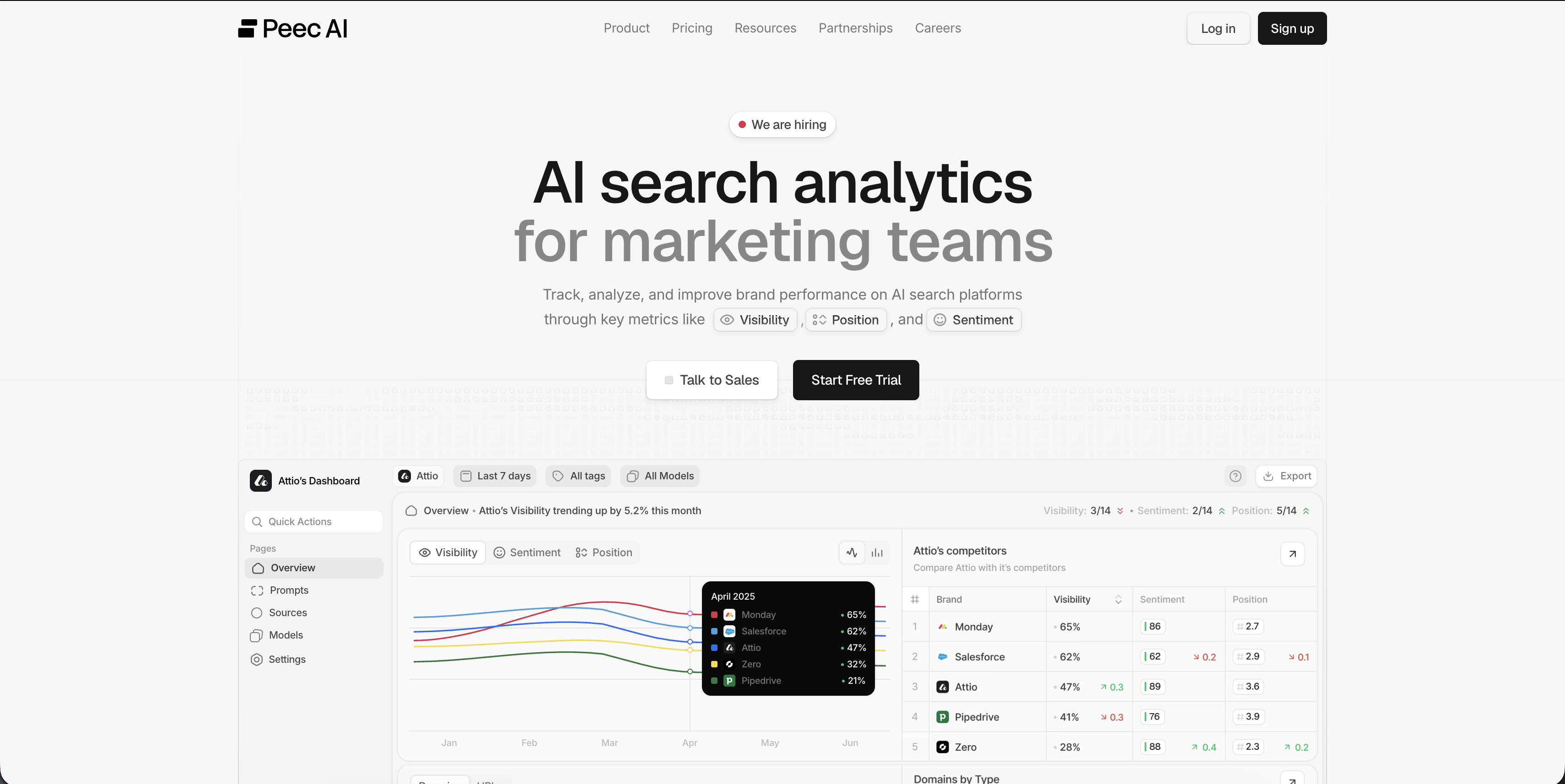
Peec AI monitors AI visibility across 3 to 7+ engines and includes unlimited users on its plans. It tracks brand mentions, sources, and competitor benchmarks at the prompt level, with dashboards that break performance down by platform. Pricing starts at €85/mo. Firms and LegalTech vendors operating across multiple countries should note the euro-denominated pricing and the platform's broad language coverage.
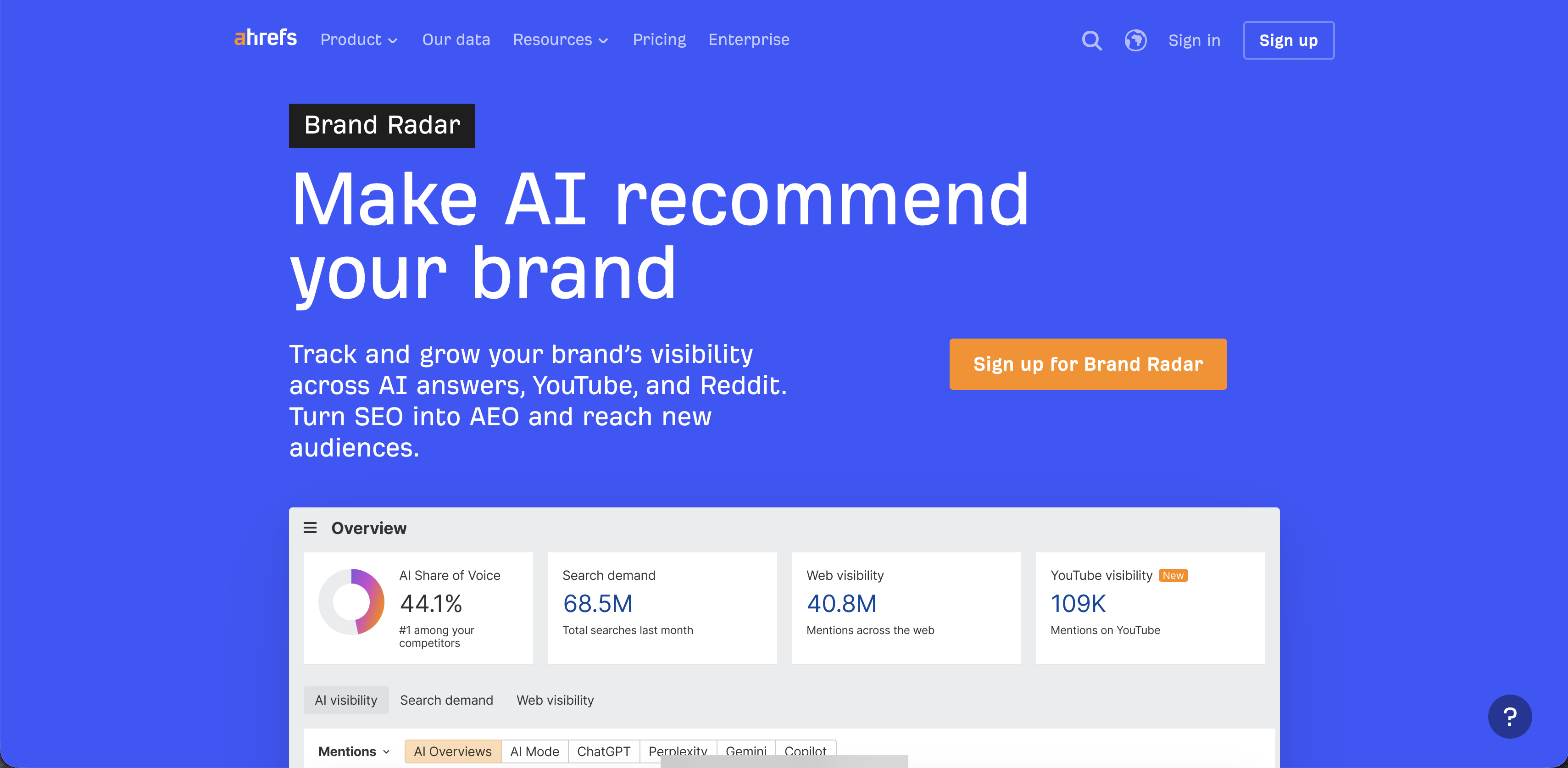
Ahrefs Brand Radar applies the Ahrefs index to AI visibility, tracking brand mentions across 6 engines. It surfaces which prompts trigger brand mentions and which pages earn citations, alongside Ahrefs' established backlink and keyword datasets. Legal teams using Ahrefs for link analysis can view AI mention data in the same ecosystem. Pricing is $199/mo per platform tracked.
AthenaHQ tracks AI visibility across 5 to 9+ engines, with its Starter plan priced at $295/mo. The platform monitors prompt-level brand mentions and citation sources, and reports visibility per platform so teams can compare where a brand appears across engines. Legal organizations tracking prompts across multiple AI platforms can consolidate that monitoring within a single dashboard.
Surfer combines its content optimization editor with AI visibility tracking across 1 to 5 engines. The platform scores draft content against top-cited pages and tracks whether published pages earn AI mentions over time. Legal content teams producing practice-area guides or plain-language explainers can run drafts through Surfer's editor and monitor the resulting AI visibility in one workflow. Pricing starts at $99/mo on the Standard plan.
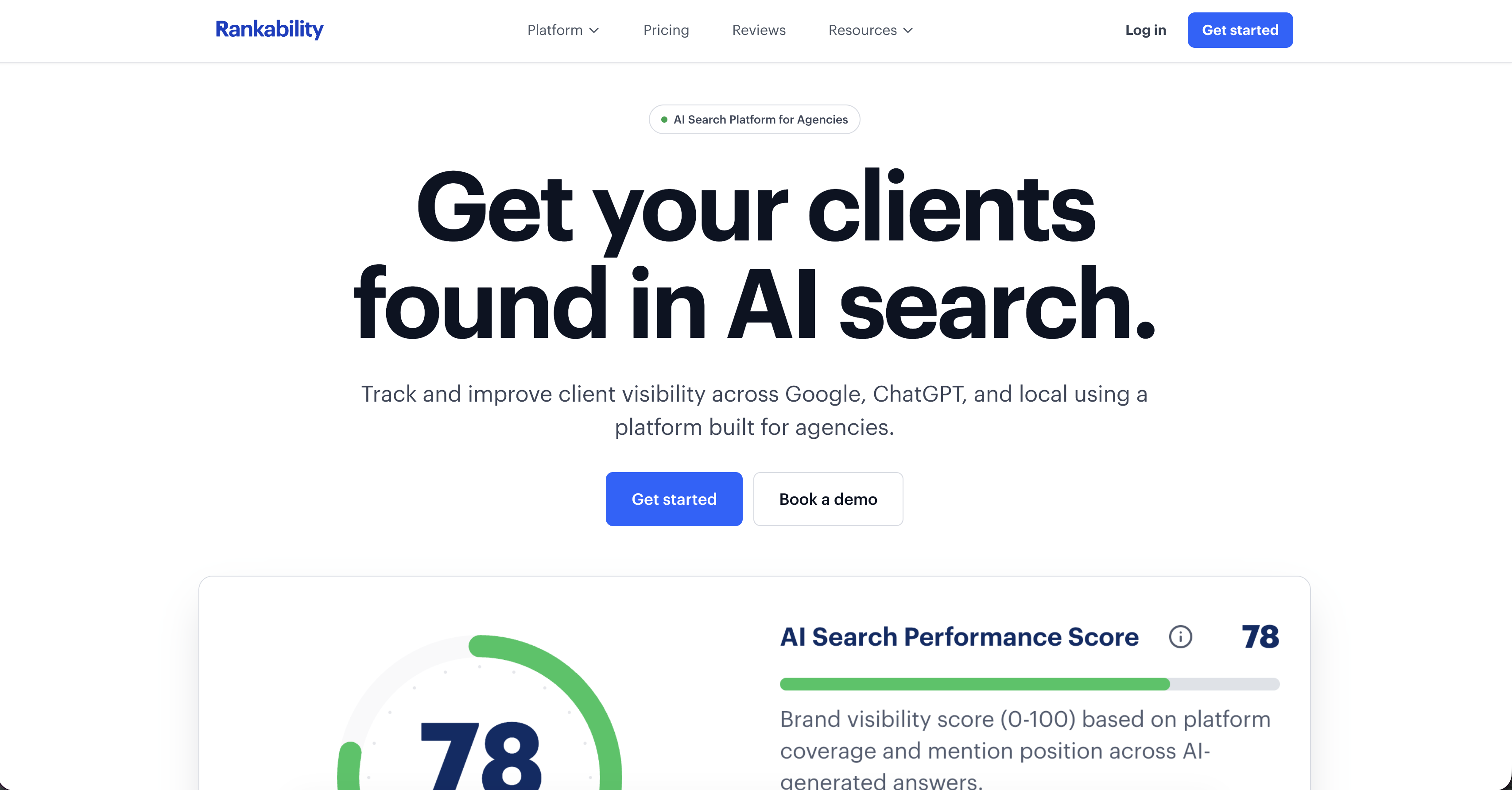
Rankability tracks AI visibility across 7 engines and pairs it with content optimization workflows. It generates content briefs from ranking and citation data, then monitors whether published pages appear in AI answers. Pricing starts at $79/mo. The brief-generation workflow maps to legal content calendars built around practice-area and jurisdiction pages.
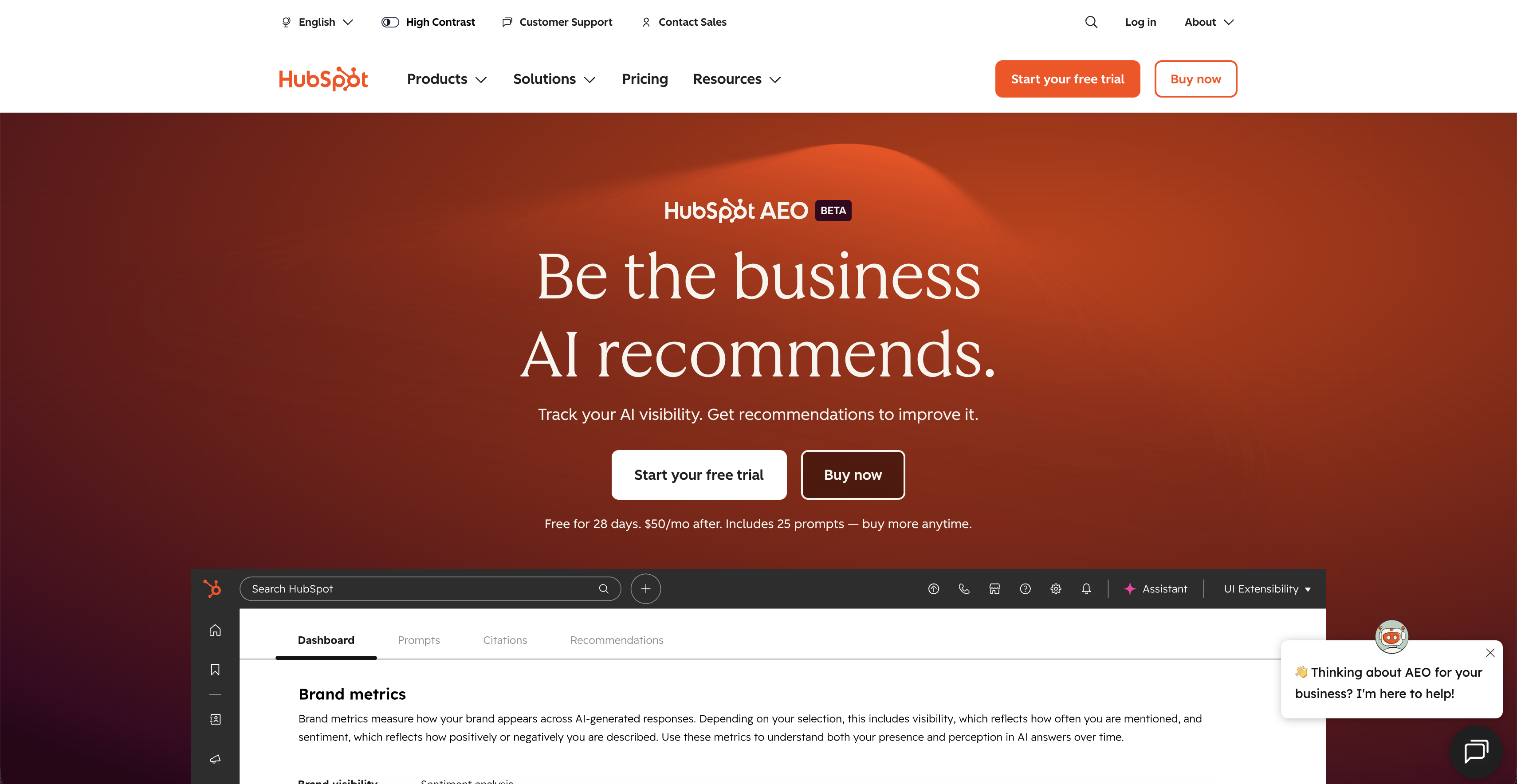
HubSpot AEO adds AI visibility tracking to the HubSpot ecosystem, covering 3 engines at $50/mo. It monitors brand mentions in AI answers and connects that data to HubSpot's CRM and marketing hub. LegalTech companies already running demand generation through HubSpot can view AI visibility alongside existing funnel reporting without adding a separate vendor.
ZipTie tracks brand mentions across 3 AI engines, starting at $69/mo. It monitors configured prompts and reports whether a brand appears in the generated answers, along with the sources those answers cite. Smaller firms tracking a focused set of local and practice-area prompts can run that monitoring within ZipTie's plan limits.
| Tool | Starting price | AI engines covered |
|---|---|---|
| Cognizo | $499/mo | 5 to 10, all major platforms |
| Semrush AI Visibility | $99/mo per domain | 4–6 |
| Profound | $99/mo | 1–10 |
| Peec AI | €85/mo | 3–7+ |
| Ahrefs Brand Radar | $199/mo/platform | 6 |
| AthenaHQ | $295/mo | 5–9+ |
| Surfer | $99/mo | 1–5 |
| Rankability | $79/mo | 7 |
| HubSpot AEO | $50/mo | 3 |
| ZipTie | $69/mo | 3 |
Most AEO tools for law firms let you choose which platforms to track, so prioritize them in this order.
ChatGPT carries the largest assistant user base and handles everything from "do I need a lawyer for this" questions to LegalTech shortlists. It should be the first platform any legal brand tracks.
Google AI Overviews sits on top of the world's largest stream of legal queries, including the local "attorney near me" searches that drive client intake. For firms, it is the second mandatory platform.
Google AI Mode and Gemini extend Google's AI answers into conversational sessions, where follow-up questions about a firm's practice areas and fees are common.
Microsoft Copilot and Claude matter most for B2B LegalTech and in-house legal teams, since enterprise buyers and lawyers use them in professional and research contexts.
Perplexity, Meta AI, Grok, and DeepSeek round out coverage. They serve smaller audiences, so track them once the primary platforms are covered rather than leading with them.
Measurement with AEO tools for law firms follows a two-stage funnel, similar to impressions and clicks in traditional SEO. Stage one is mentions and citations: your firm or product appears in AI answers. Visibility Score, the percentage of tracked prompts where your brand is mentioned, is the KPI here, supported by Sentiment Analysis and the split between Owned Citations and Earned Citations. Stage two is AI-referred traffic: UTM-tagged visitors arriving from AI platforms, which will always be a smaller number because most AI answers include no clickable link.
UTM tracking, common across AEO tools for law firms, has a blind spot that matters in legal. A client who sees a firm named in a ChatGPT answer will often search the firm's name directly later, or simply call the office, and that contact never shows up as AI referral traffic. Therefore, add a "How did you hear about us?" field with an explicit AI option to intake forms, consultation requests, and demo flows.
The Hat Club case study shows why click counts alone mislead. Roughly 1 in 50 of Hat Club's visitors came from AI referral traffic, a small share by any traditional measure, yet that traffic drove 20x revenue growth in AI-driven sales while the brand tracked its visibility with Cognizo. In legal, where a single retained client or closed LegalTech deal carries high value, the same logic applies with even more force.
Cognizo tracks Claude alongside nine other AI platforms, capturing the rendered answers Claude produces for tracked prompts and breaking down mentions, sentiment, and citations per model. Claude matters for legal brands in particular, because lawyers and in-house counsel use it heavily for research-style work, and LegalTech buyers evaluate vendors on it. Several other tools on this list include Claude in their engine coverage at higher plan tiers, so verify model-level coverage before buying. For a deeper comparison of Claude-specific tracking, see our guide to the best Claude rank tracker tools.
Yes. State bar advertising rules govern how firms describe their services regardless of where the content appears, and content written to earn AI citations is still attorney advertising. That means claims about results, specialization labels, and client testimonials must meet your jurisdiction's requirements, and some states require specific disclaimers. The practical implication for AEO is that a firm cannot chase citations with unverifiable superlatives. Answer-first, factual, plainly written content tends to perform well in AI answers anyway, so compliant content and citable content usually align. Route AI-targeted pages through the same compliance review as any other marketing.
Yes. Prompts are configurable, so you can track queries like "best trademark attorney in Seattle" or a specific lawyer's name alongside firm-level prompts. Attorney-level tracking is useful for firms building individual partner reputations, since AI platforms often name specific lawyers in response to specialist queries. Because each attorney adds prompts to your tracked set, larger firms should choose a plan with enough prompt capacity to cover individual practitioners alongside firm-level and practice-area prompts rather than leaving partner reputations unmonitored.
Expect an initial baseline within days of setup, since AEO tools for law firms begin polling your prompts immediately. Moving the numbers takes longer. Content published to target specific prompts typically needs weeks to months to be crawled, indexed, and incorporated into AI answers, and earned citation work through bar directories and legal publications compounds over quarters. Legal moves slower than many verticals because AI platforms apply stricter sourcing standards to legal answers, so plan measurement around quarterly trend lines rather than weekly swings. Avoiding the common mistakes that ruin AI search optimization also shortens that timeline.
Track both from day one if your plan allows, since they serve different moments. Google AI Overviews intercepts the enormous stream of legal questions typed into Google, which skews toward local "attorney near me" and "how much does a lawyer cost" queries that drive intake. ChatGPT captures conversational research sessions, including LegalTech buying research and follow-up questions after an initial legal-issue conversation. If budget forces a choice, match the platform to your audience: client-facing firms usually see more volume from Google AI Overviews, while B2B LegalTech vendors often see ChatGPT drive more evaluations.
Each platform builds answers from different sources and retrieval systems. Google AI Overviews draws on Google's index and ranking signals, so strong local SEO and a complete Google Business Profile often carry over. ChatGPT relies on its training data plus its own browsing and source preferences, which weight bar directories, review platforms, and legal publications differently. A firm with strong Google rankings but a thin presence on Avvo, Justia, and cited legal sources can therefore appear in one and not the other. Per-platform citation reports show exactly which sources each platform pulls from, so you can close the specific gap.
The math depends on client lifetime value, not traffic volume. Even a single-office firm has a substantial prompt universe once you count its practice areas, the cost and process questions clients ask, and location variants, and a handful of retained clients attributable to AI visibility typically covers the annual cost of tracking all of it. The AI SEO tools landscape includes options across the full price range, so smaller firms evaluating AEO tools for law firms can start with focused local and practice-area prompt tracking and expand as the channel proves itself in their intake data.
.svg)

.svg)


