Get a free AI visibility report

Tracking your Visibility Score across AI platforms is now a core marketing function. This guide compares the ten best ai visibility tracking tools available in 2026, covering what each tracks, how they measure it, and what they cost.
AI answer engines have shifted the visibility question from "where do I rank on page one?" to "does my brand appear when a buyer asks an AI what to use?" These are different questions with different measurement requirements. Understanding AI SEO is the starting point: a traditional rank tracker tells you nothing about whether ChatGPT mentions your brand, what sentiment surrounds that mention, or whether the citation points to your domain or to a third-party review.
The tools below are built specifically for this new measurement layer. Each covers a different combination of platforms, methodologies, and use cases, starting with Cognizo, which combines organic AI visibility tracking with ChatGPT paid advertising in a single platform.
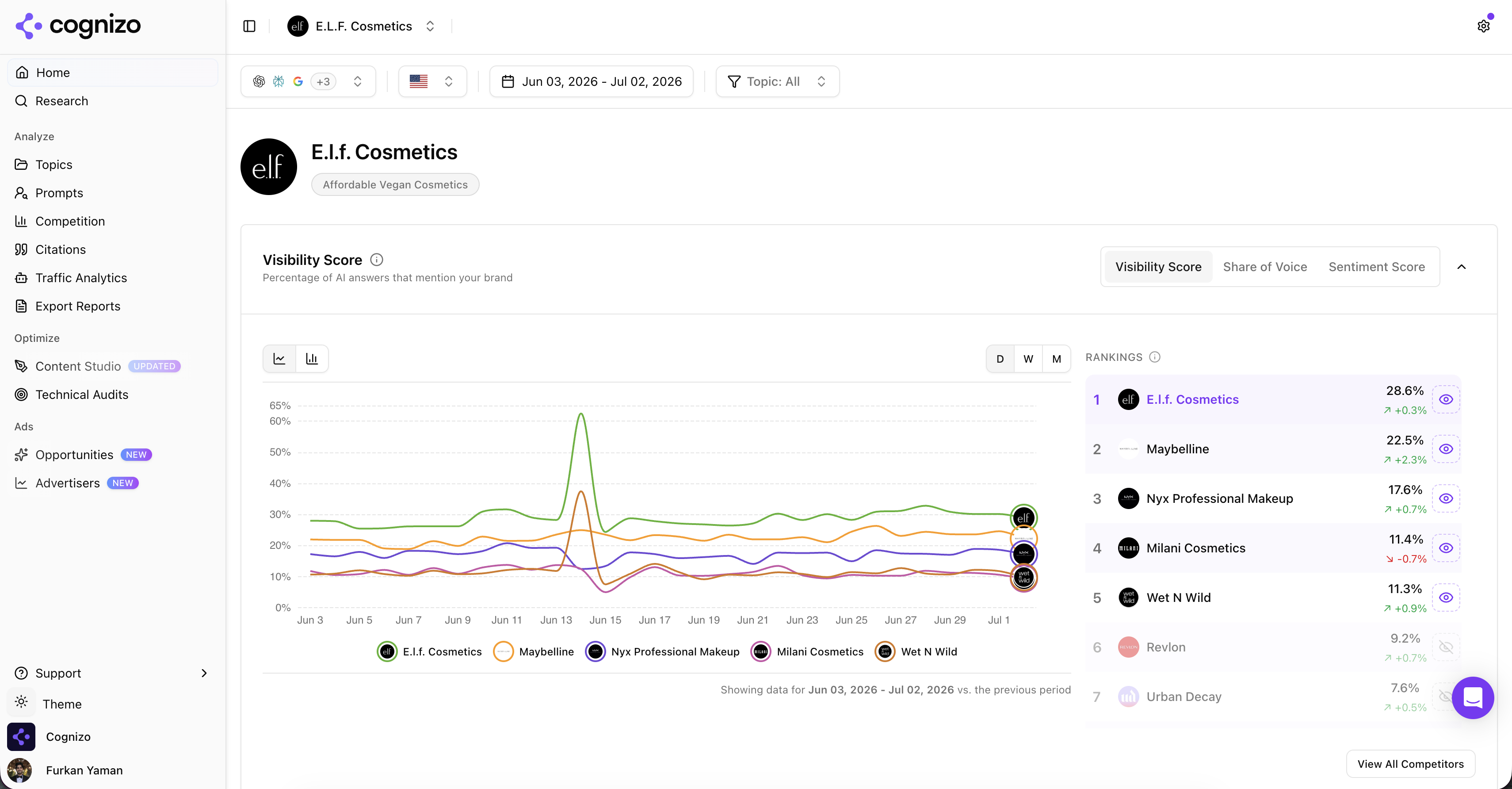
Cognizo tracks brand visibility across every major AI platform and pairs that organic monitoring with ChatGPT Ads management, the only platform currently combining both in one workflow.
Cognizo's Answer Engine Insights module monitors Visibility Score, sentiment, owned citations, and earned citations across ChatGPT, Google AI Overviews, Google AI Mode, Gemini, Perplexity, Bing Copilot, Claude, Grok, Meta AI, and DeepSeek. Results are broken down by model, topic, prompt, and region, so teams can identify exactly which prompt clusters are driving mentions and which are missing the brand entirely.
Cognizo uses UI scraping to capture the actual rendered answer a real user would see, rather than relying solely on API responses. This distinction matters because API-based sampling can miss citation formatting, source ordering, and platform-specific presentation that changes how brands appear to actual buyers.
The Content Optimization module converts tracking data into prioritized recommendations, including automated content briefs, FAQ drafts, and technical site audits for AI crawler readiness. The AI Traffic Analytics module connects GPTBot, ClaudeBot, and OAI-SearchBot behavior to session-level and conversion-level outcomes.
The Prompt Volumes module identifies what buyers are actually asking AI across billions of real-world signals, including trending topics before competitors surface them.
Cognizo's ChatGPT Ads module shows competitor ad copy, identifies high-intent buyer prompts, and integrates the OpenAI Conversions API with Google Ads and Google Search Console for unified attribution. This is the feature that separates Cognizo from every other tool in this list: organic visibility and paid AI advertising in one dashboard.
Hat Club used Cognizo to monitor its AI visibility and found that roughly 1 in 50 of its visitors arrived from AI referral traffic. That share of clicks drove 20x revenue growth in AI-driven sales, demonstrating that Visibility Score is a leading indicator of revenue impact even when click volume looks small.
All plans include unlimited users, unlimited regions, unlimited languages, all-time data history, and export capabilities.
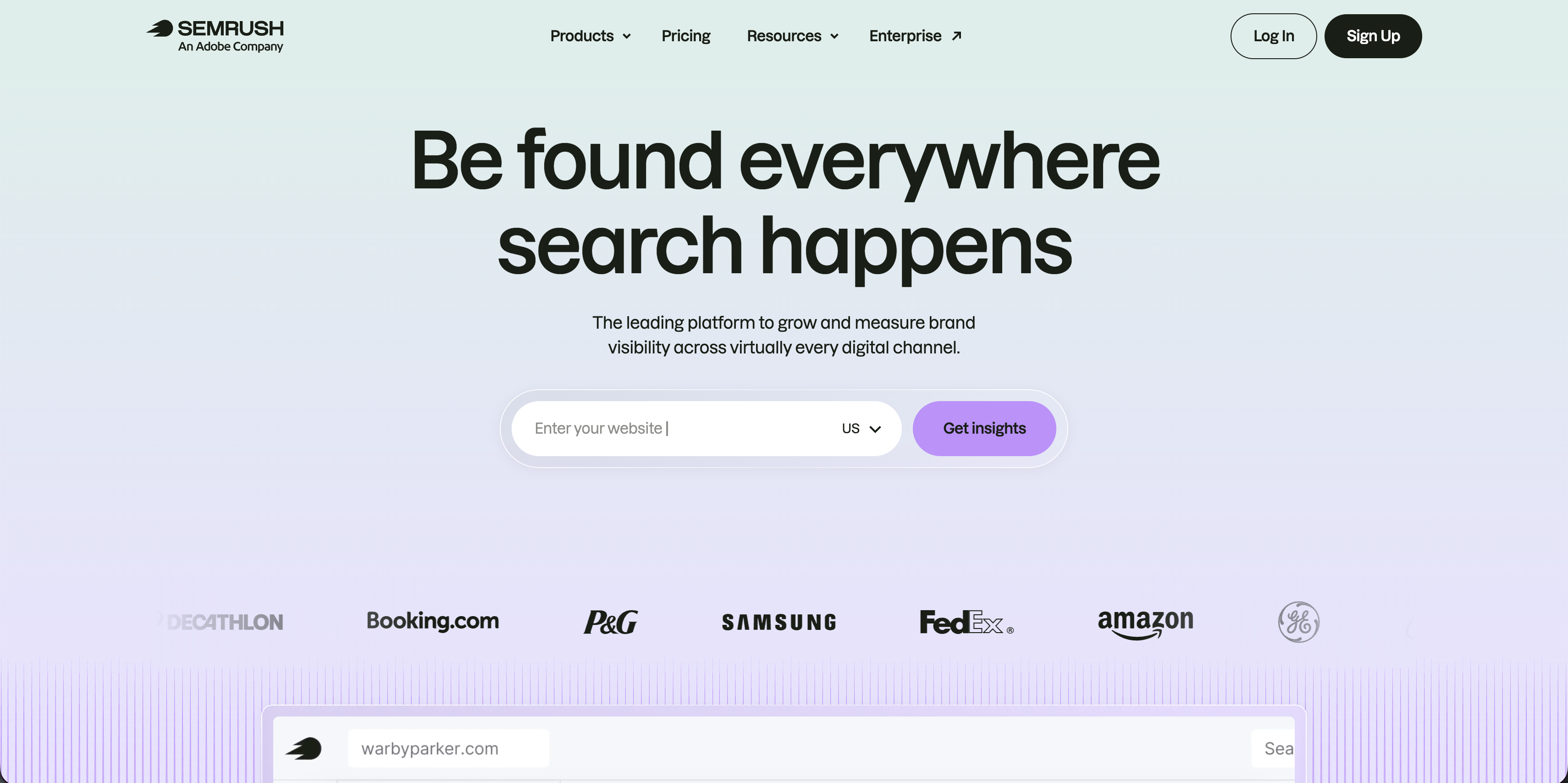
Semrush added AI visibility tracking to its existing SEO suite. The feature monitors brand mentions across a selection of AI platforms and surfaces them alongside traditional rank and traffic data already in the Semrush interface.
Semrush AI Visibility tracks brand presence in AI-generated answers and provides mention counts and share-of-voice metrics relative to tracked competitors. Coverage spans four to six platforms depending on plan configuration. The integration with Semrush's existing keyword and backlink data allows teams to compare traditional organic performance and AI visibility in one place.
Starting at $99/mo per domain.
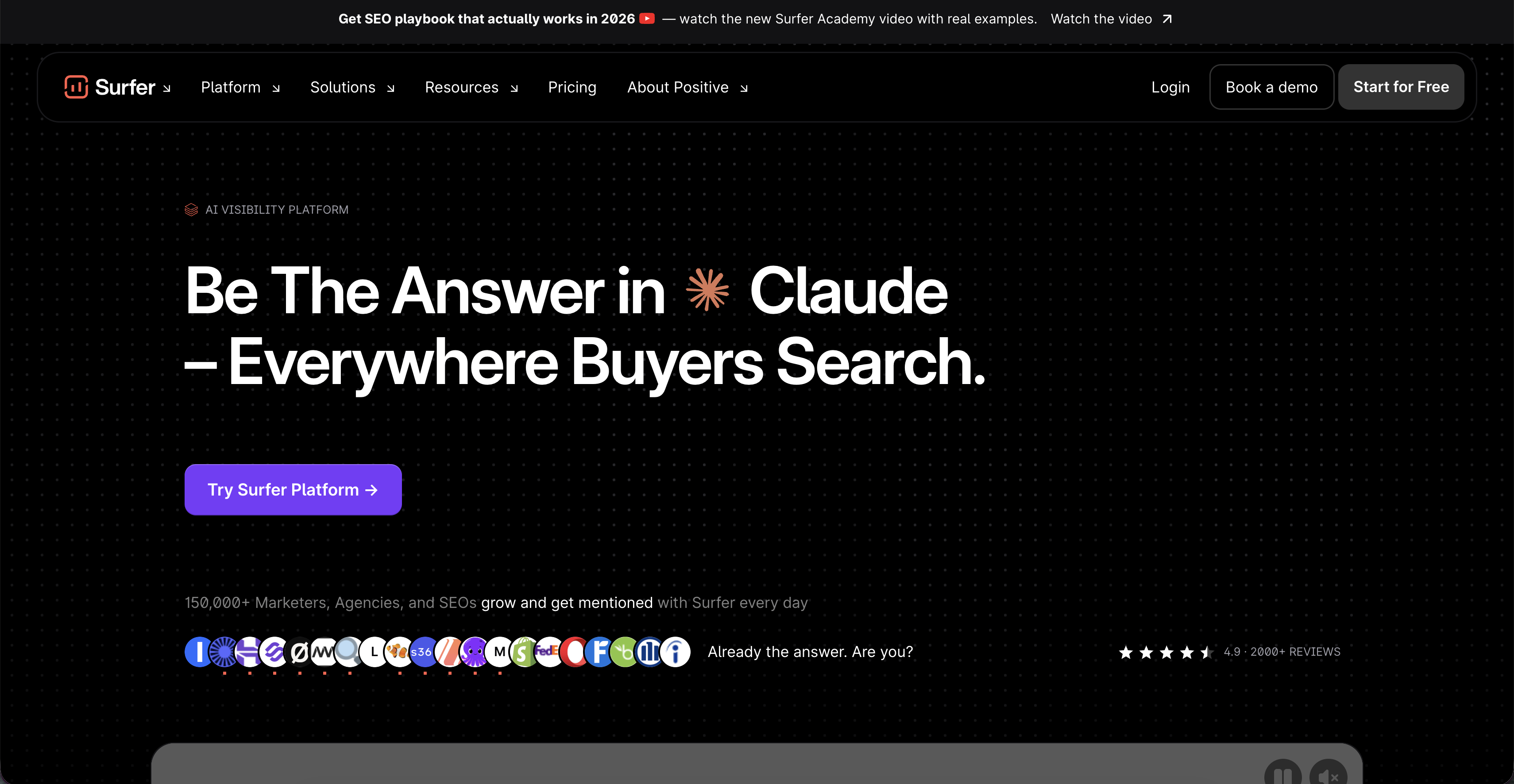
Surfer covers AI visibility monitoring across one to five platforms alongside its content optimization suite. Teams using Surfer for content scoring and briefs can access AI mention tracking within the same workflow.
Surfer tracks brand mentions across its covered AI platforms and connects that data to its content optimization layer. Teams can see where visibility gaps exist and use Surfer's content scoring tools to address them without switching platforms.
Starting at $99/mo (Standard).
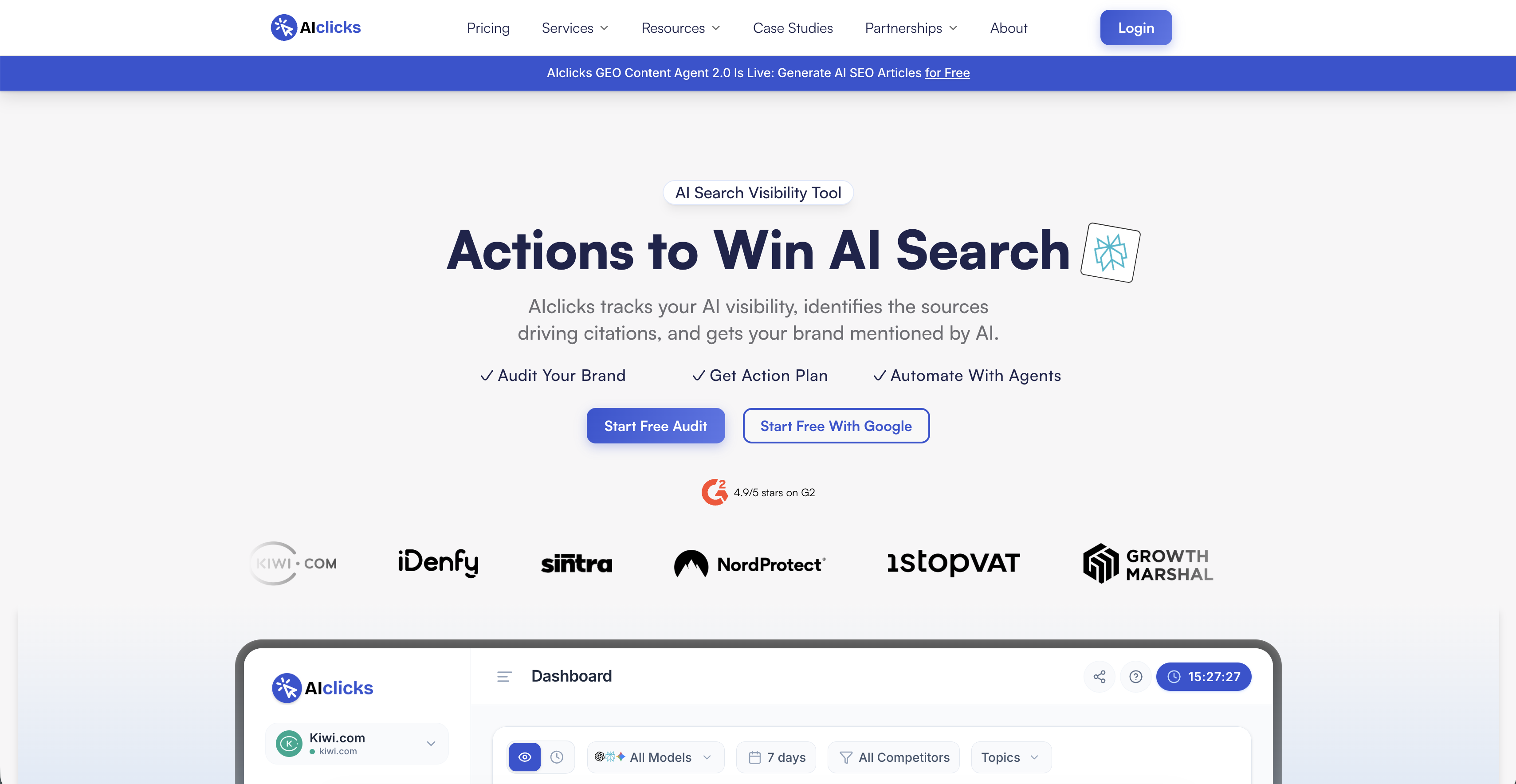
AIclicks tracks brand visibility across 10+ AI platforms as a higher-tier upgrade, and runs every tracked prompt on every enabled model daily on all plans.
AIclicks monitors visibility, sentiment, and citation sources across ChatGPT, Google AI Overviews, Google AI Mode, Gemini, Perplexity, Claude, Copilot, Grok, Meta AI, and DeepSeek, with breakdowns by model, prompt, topic, and region down to state level in four countries.
Every cited URL is classified into one of 14 page types, including listicles, comparison pages, reviews, and forums, so teams can see which format of earned citation each model draws from rather than a flat list of citing domains.
Starting at $59/mo.
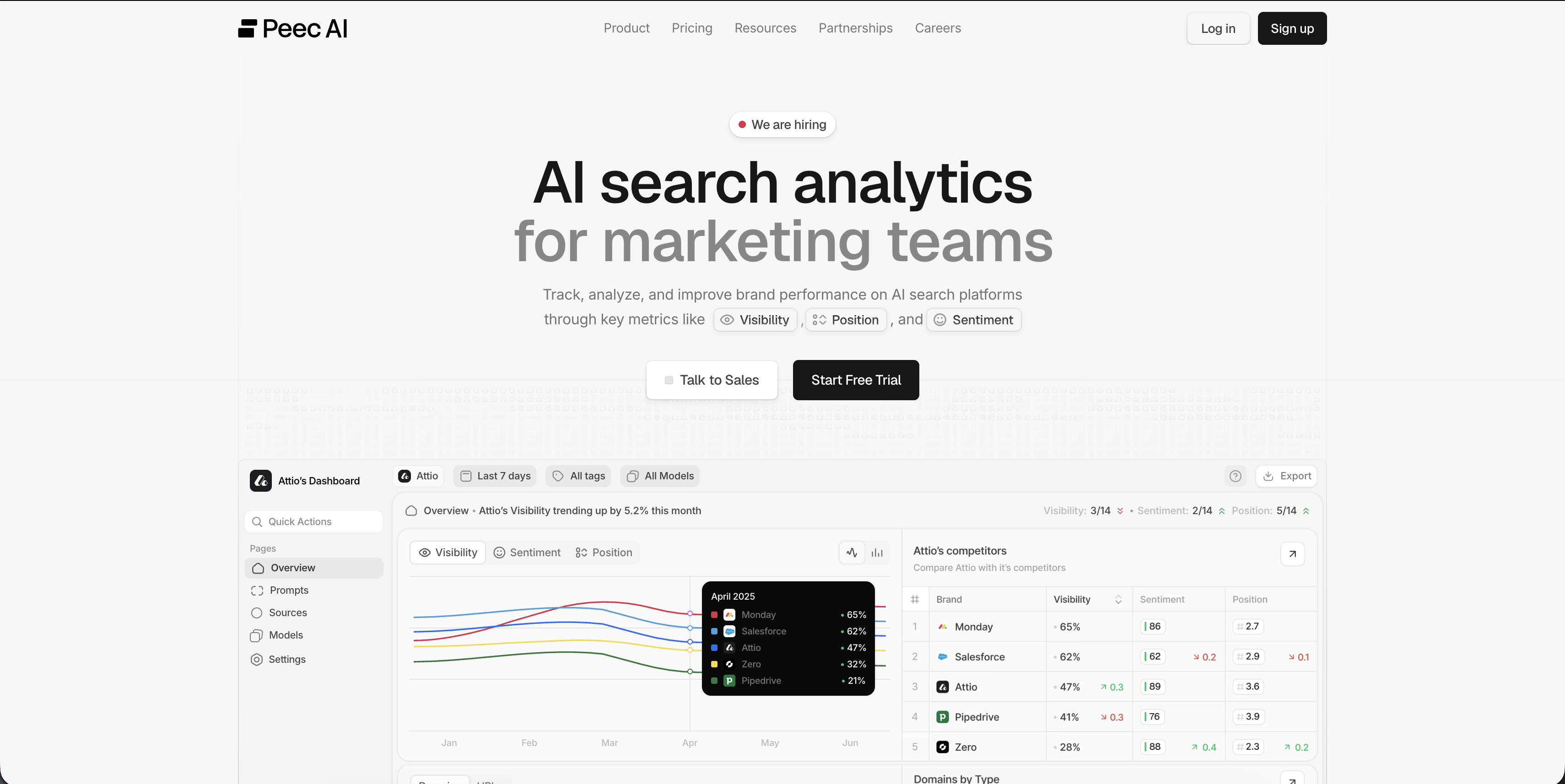
Peec AI tracks brand mentions across AI platforms with a multi-language and multi-region focus. The platform covers three to seven or more platforms and includes competitor benchmarking and sentiment tracking.
Peec AI monitors Visibility Score equivalent metrics, sentiment, and citation sources across its covered platforms. Unlimited users are included on its plans, removing per-seat pricing as team size grows.
Starting at €85/mo.
AthenaHQ offers AI visibility monitoring across five to nine or more platforms with a paid Starter plan. The platform focuses on prompt-level tracking and brand mention monitoring with competitive benchmarking included.
AthenaHQ tracks brand mentions and share-of-voice metrics across platforms including ChatGPT, Perplexity, and Google AI Overviews. The prompt library allows teams to define and track specific buyer-intent queries over time.
$295/mo (Starter).
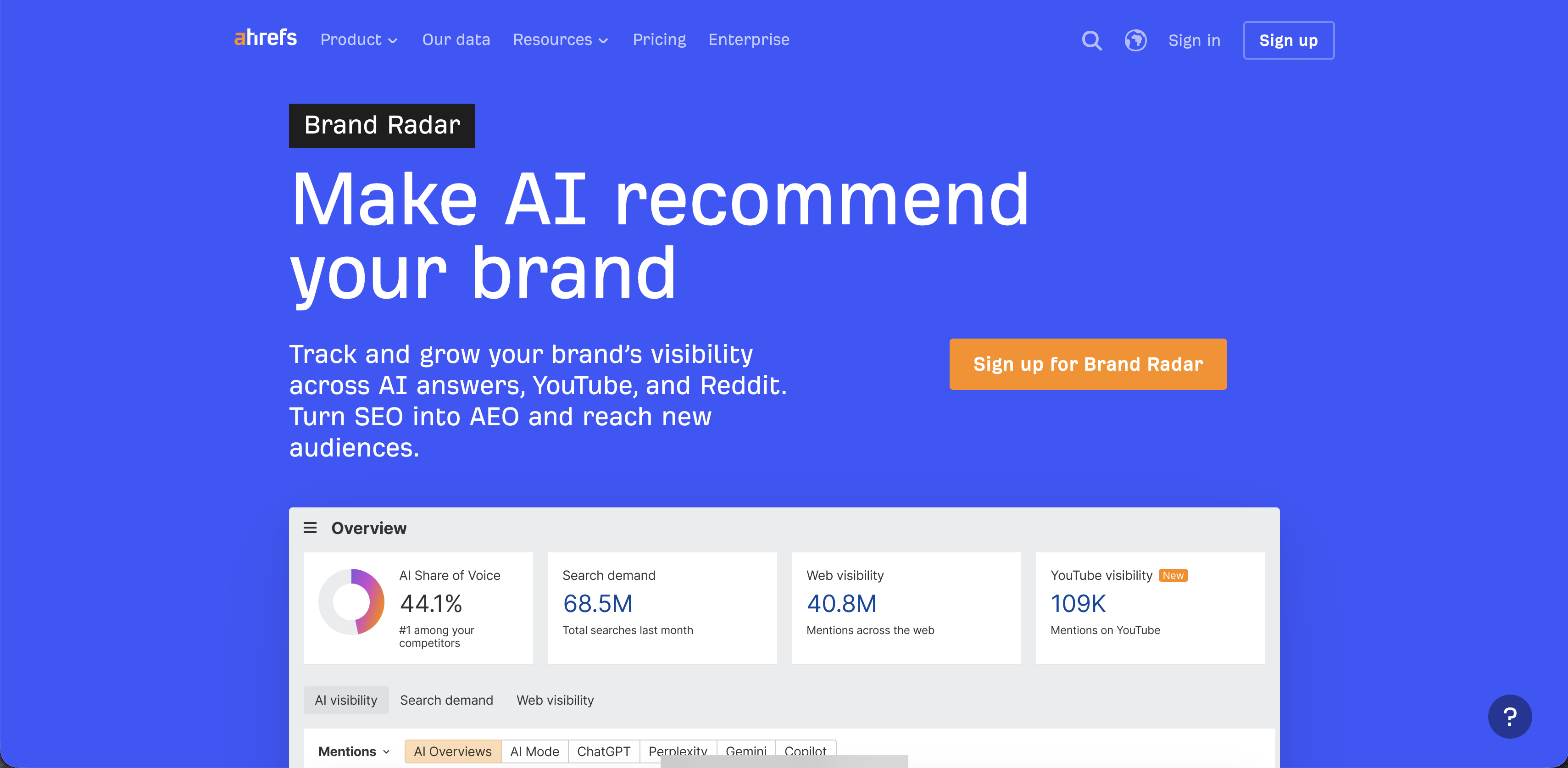
Ahrefs Brand Radar adds AI visibility tracking to the Ahrefs platform, covering six AI platforms. Teams already using Ahrefs for SEO can access brand mention tracking from within the same interface.
Brand Radar tracks brand mentions and citation frequency across six AI platforms and connects that data to the domain authority and backlink data already in Ahrefs. Pricing is structured per platform rather than as a bundled suite.
Starting at $199/mo per platform.
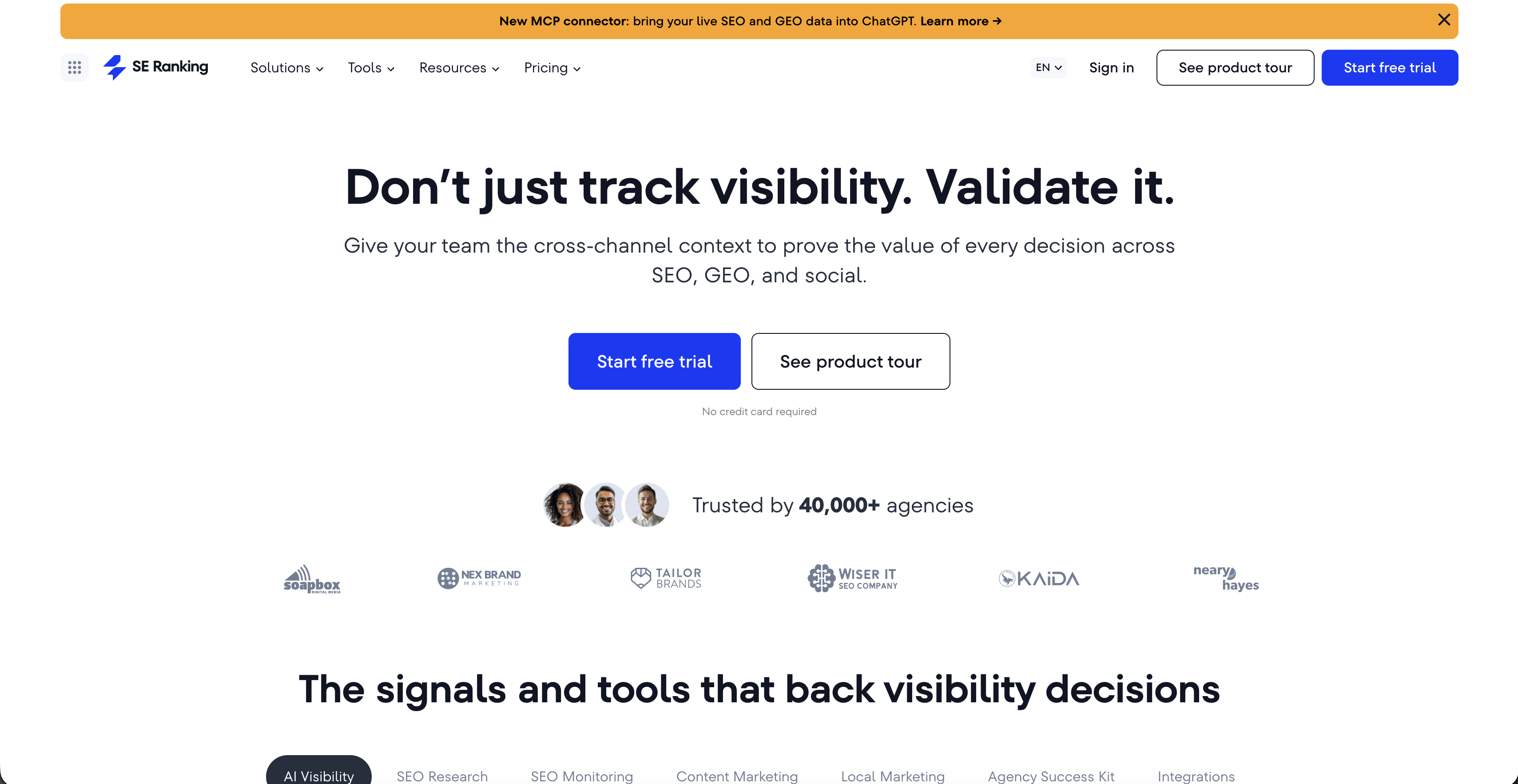
SE Ranking offers AI visibility tracking as an add-on to its core SEO platform, covering four platforms through its AI Search add-on module.
SE Ranking tracks brand mentions across four AI platforms and provides sentiment and citation breakdowns. The add-on sits within the existing SE Ranking interface alongside traditional rank tracking and site audit tools.
Starting at $103.20/mo (annual), with the AI Search add-on priced separately.
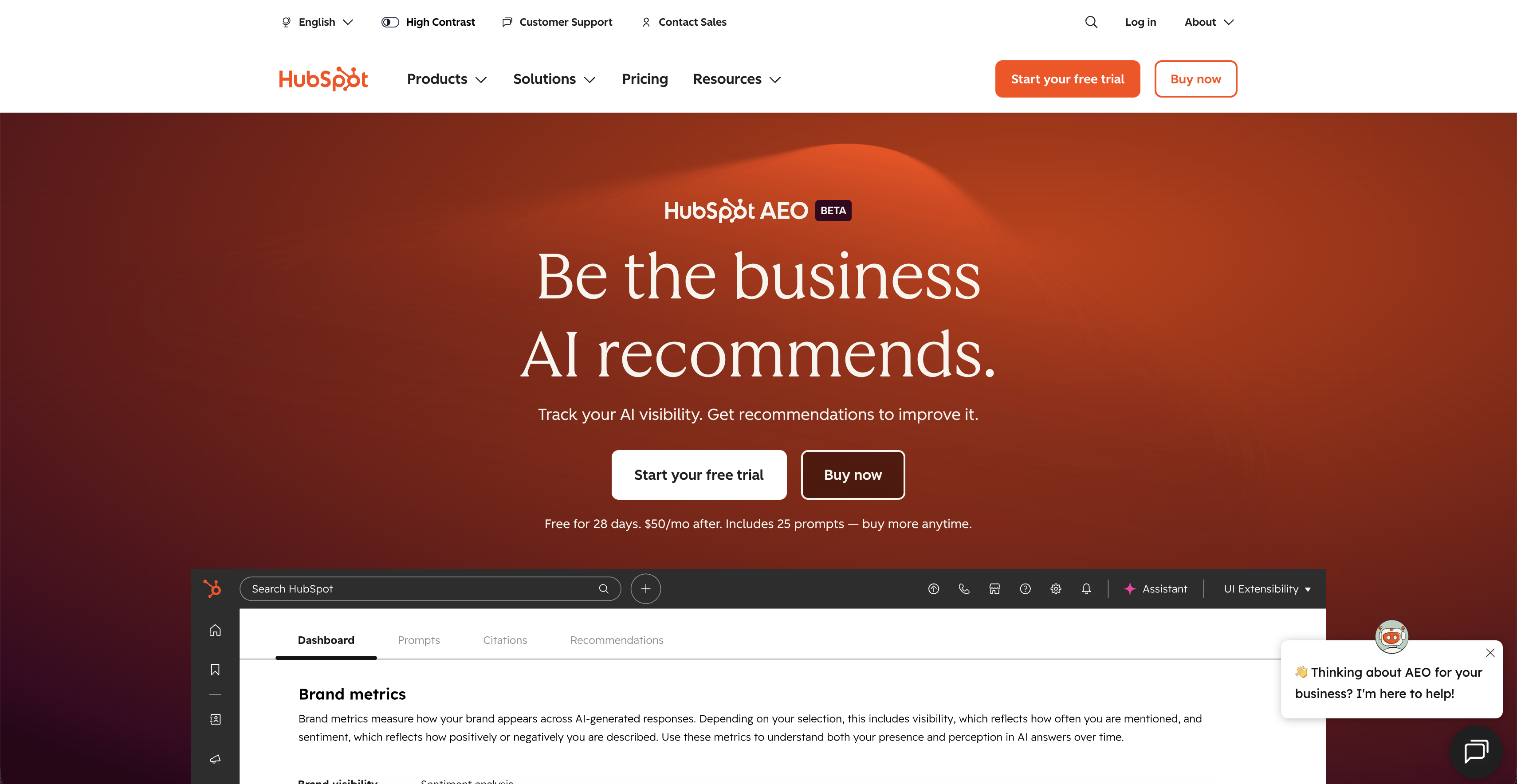
HubSpot AEO adds AI visibility monitoring to the HubSpot marketing platform, covering three AI platforms. Teams already running campaigns inside HubSpot can access brand mention tracking without leaving the interface.
HubSpot AEO tracks brand mentions across three AI platforms and surfaces that data alongside the CRM, email, and campaign data already in HubSpot. For teams whose primary workflow lives inside HubSpot, the integration removes the need to switch between tools to review AI visibility alongside other marketing performance data.
Starting at $50/mo.
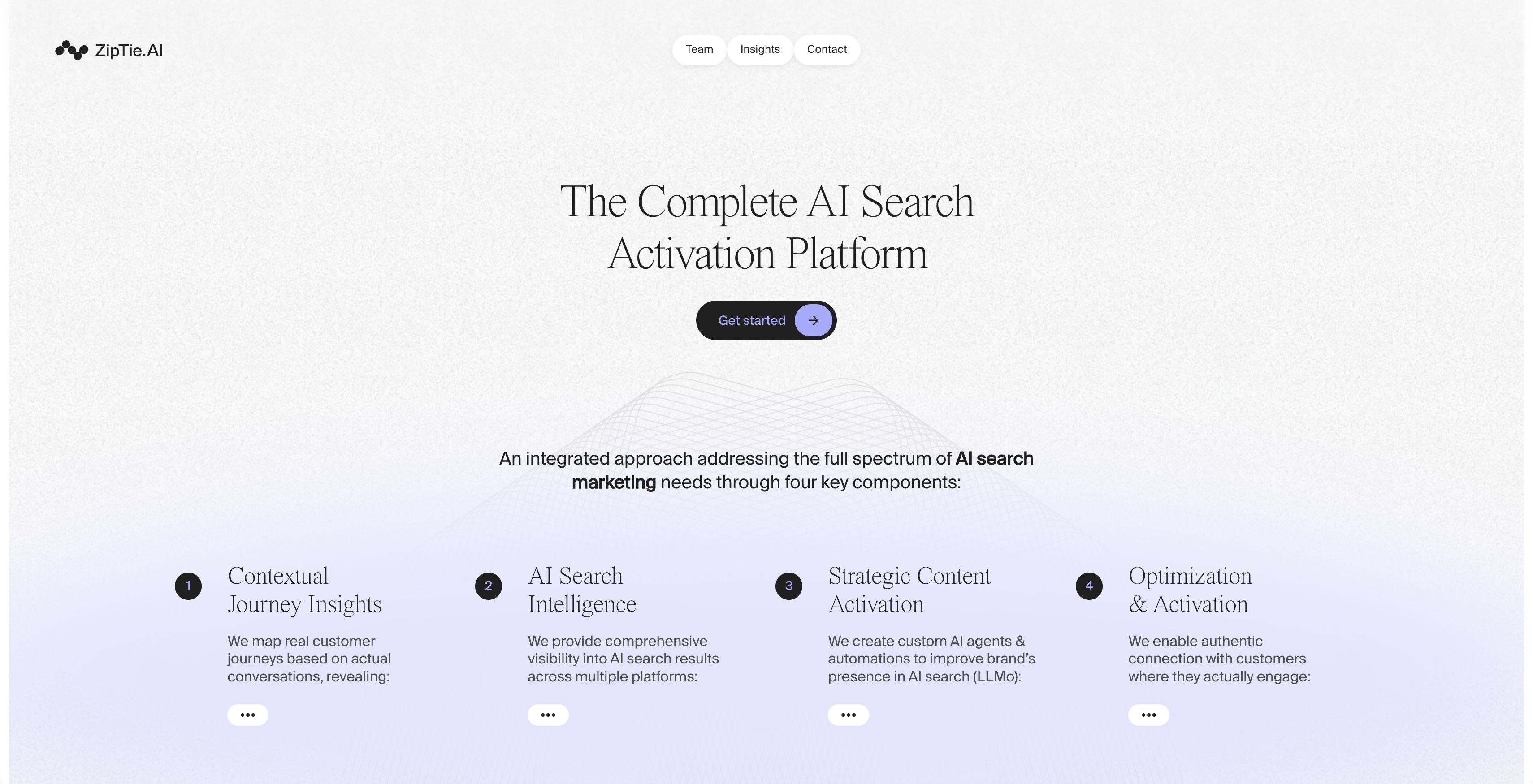
ZipTie covers three AI platforms and focuses on brand mention tracking with prompt-level monitoring and competitive citation analysis.
ZipTie tracks brand mentions across three platforms and provides citation-level data showing which sources AI is pulling from when mentioning tracked brands. Teams can use that data to identify which third-party content is driving earned citations and which competitor placements are replacing their own mentions.
Starting at $69/mo.
The right tool depends on which platforms matter most for your audience, how your team measures success, and whether you need tracking alone or optimization and paid advertising alongside it. Teams evaluating a broader set of options can also compare AI search optimization tools that combine tracking with content and technical fixes, or AI visibility tools built for marketing agencies if client reporting is part of the requirement.
Start with ChatGPT and Google AI Overviews. These two platforms reach the largest share of everyday AI search users. Any tool you evaluate should cover both as a minimum. Secondary coverage of Claude and Bing Copilot matters more for B2B and enterprise audiences; other platforms can be addressed as resources allow.
UI scraping produces more accurate results than API-only sampling because it captures what a real user actually sees, including citation formatting and source ordering. API-based tools can miss structural details that affect how brands appear in practice.
At minimum, look for Visibility Score (the percentage of tracked prompts where your brand appears), sentiment, and a distinction between owned citations (links to your domain) and earned citations (mentions via third-party sources). These three form the core measurement framework for AI visibility tracking.
Per-seat costs compound quickly as more team members join visibility reviews. Platforms with unlimited seats on every plan eliminate this friction at scale.
Tracking alone does not improve visibility. Tools that convert monitoring data into prioritized content recommendations, technical audits, and competitive gap analysis reduce the time between insight and action. For a breakdown of where most brands go wrong before they even start tracking, the 9 common AI search optimization mistakes covers the technical and content errors that suppress visibility at the source.
| Tool | Platforms | Starting price | Unlimited seats | UI scraping |
|---|---|---|---|---|
| Cognizo | 10+ | $499/mo | ✓ | ✓ |
| Semrush AI Visibility | 4–6 | $99/mo | ✕ | ✕ |
| Surfer | 1–5 | $99/mo | — | — |
| AIclicks | 10+ | $59/mo | ✓ | ✓ |
| Peec AI | 3–7+ | €85/mo | ✓ | ✓ |
| AthenaHQ | 5–9+ | $295/mo | — | — |
| Ahrefs Brand Radar | 6 | $199/mo/platform | — | — |
| SE Ranking | 4 | $103.20/mo | — | — |
| HubSpot AEO | 3 | $50/mo | — | — |
| ZipTie | 3 | $69/mo | — | — |
Visibility Score is the percentage of tracked prompts where your brand appears in an AI-generated answer. It functions like impressions in traditional SEO: a measure of how often your brand is present in the conversation before a buyer makes a decision. It is the primary KPI because most AI answers do not include a clickable link, so referral traffic in GA4 significantly undercounts total brand exposure from the channel.
Traditional rank trackers report position in a paginated list of results. AI visibility tracking measures whether a brand appears at all inside a generated answer, what sentiment surrounds the mention, which source the AI cites (owned or earned), and how that varies by platform, topic, and region. There is no equivalent of "position 1 to 10" in AI responses, presence, sentiment, and citation quality are the relevant dimensions.
Think of it this way: every prompt you track is a buyer conversation happening right now, and your brand is either in that conversation or it isn't. The question isn't how few prompts you can get away with, it's how much of that buyer activity you want to capture. A narrow B2B product should be tracking 100 to 150 prompts at minimum to get a representative picture across awareness, comparison, and purchase intent. A broad consumer brand should be tracking 200 or more. Start with the highest-intent prompts at each funnel stage, then expand coverage as you identify gaps. The more prompts you track, the more of the actual buyer conversation you can see, influence, and win.
Yes. Most tools on this list include competitive benchmarking that shows which brands appear in the same prompts where yours does not. That data identifies which specific prompt clusters competitors are winning, making it possible to target content and PR efforts at the exact gaps affecting your Visibility Score.
Coverage varies. Cognizo distinguishes between owned citations (links directly to your domain) and earned citations (mentions via third-party sources such as review sites, comparison articles, and press coverage). Not all tools in this list separate these two citation types, which matters because earned citations often make up the larger share of total AI mentions in practice.
The connection runs through two stages. First, visibility drives awareness: buyers who see a brand mentioned by AI are more likely to search for it directly or include it in their evaluation. Second, that awareness drives pipeline and revenue, even when it does not produce a direct UTM-tracked click. Complement GA4 referral tracking with a "How did you hear about us?" field in demo or signup flows, buyers who saw a mention and later searched directly will not appear in referral data otherwise.
It depends on audience overlap. A platform with a smaller overall user base may still index heavily into a specific professional or enterprise audience that is disproportionately relevant to your category. Start with ChatGPT and Google AI Overviews, add Claude and Bing Copilot for B2B coverage, then assess whether smaller platforms serve a meaningful share of your target buyers before investing tracking resources there.
Cognizo tracks Claude alongside nine other platforms in a single dashboard, breaking down Visibility Score, sentiment, and citation sources by model. Profound, AthenaHQ, and Peec AI also include Claude in their platform coverage. The key distinction to look for is whether the tool tracks Claude through UI scraping, capturing what a real user sees, rather than API-only sampling, which can miss how Claude formats citations and orders sources in practice.
AEO tools built for Claude visibility need to do more than detect a brand mention, they need to surface whether the mention is positive or negative, whether it links to your domain or a third-party source, and how it compares to competitors across the same prompts. Cognizo covers all of these dimensions for Claude and pairs that tracking with content optimization recommendations that directly address why Claude may be citing a competitor instead of your brand. Profound adds crawler-level data showing whether ClaudeBot is actually reaching your pages, which is the prerequisite Gate 1 check before diagnosing any content quality issue.
.svg)

.svg)


