Key findings
- LinkedIn is the 4th most cited source by AI search engines, so it is vital for brands to know what type of Linkedin content they need to create
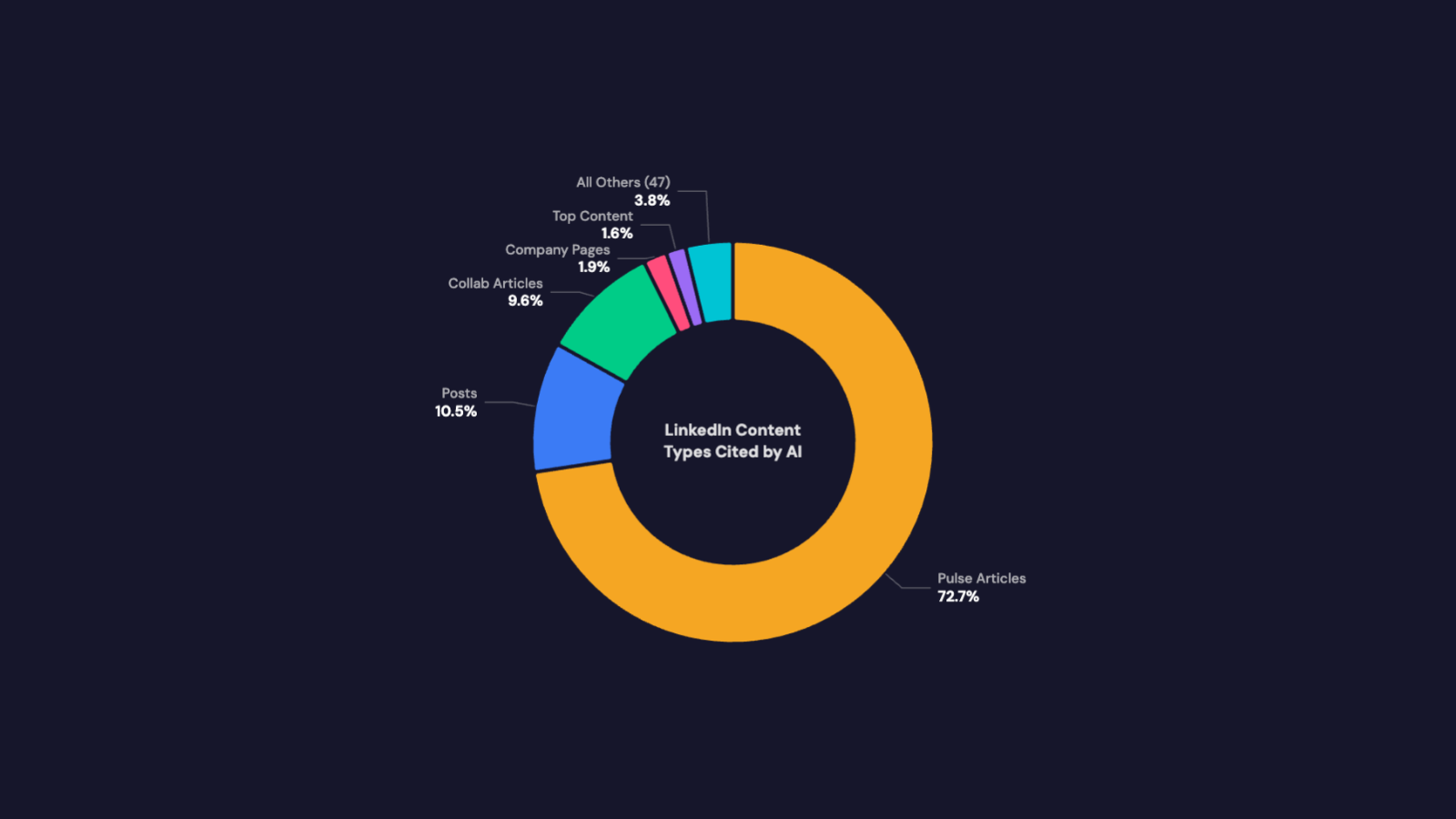
- Pulse Articles account for 73% of all LinkedIn citations across major AI search engines, totaling 3,349,887 citations in this dataset out of 4,600,000 citation data points
- LinkedIn posts account for just 10.5% of citations despite being the most commonly published content type on the platform
- LinkedIn Collaborative Articles (the /advice format) account for 9.6% of citations
- Company pages, profiles, and all other LinkedIn content types combined account for less than 7% of total citations
- Long-form, structured content on LinkedIn is significantly more likely to be cited by AI than short-form updates
Introduction
Most LinkedIn content advice is about posting frequency and hook writing. As AI search becomes a primary discovery channel, another important question emerges: what type of LinkedIn content does AI actually cite?
We analyzed 4.6 million AI citations that referenced LinkedIn across major AI providers and found that pulse articles are the most cited type of content by AI.
Methodology
This research examines citation patterns across leading AI assistants through comprehensive URL-level tracking. By analyzing the specific content types referenced by each platform using our proprietary Prompt Volumes and Answer Engine Insights, we gain insight into how different AI systems prioritize and surface LinkedIn content in their responses.
To classify the diverse range of LinkedIn URLs in our dataset, we employed a systematic taxonomy based on URL path structure. This approach enabled us to distinguish between distinct content formats and user types:
- Pulse Articles (/pulse) – Long-form thought leadership and professional insights
- Posts (/posts) – Regular feed content and timely professional updates
- Collaborative Articles (/advice) – Crowdsourced expertise and community-driven guidance
- Company Pages (/company) – Organizational profiles and corporate information
- Professional Profiles (/internal-comms) – Individual creator and thought leader profiles
- Ancillary Content – Additional LinkedIn properties including job listings, learning resources, product pages, newsletters, groups, and other supplementary features
This granular categorization allows for precise measurement of what type of LinkedIn content each AI system prioritizes when responding to user queries.
Results and Cognizo’s Take
| Content Type |
Citations |
Share |
| Pulse Articles |
3,349,887 |
72.7% |
| Posts |
483,166 |
10.5% |
| Collab Articles |
441,496 |
9.6% |
| Company Pages |
85,217 |
1.9% |
| Top Content |
73,621 |
1.6% |
| All Others (47) |
176,305 |
3.8% |
The data is clear. Pulse Articles are the primary surface AI uses for LinkedIn citations. Investing in a strategy where subject matter experts consistently contribute long-form articles is the highest-leverage move a brand can make on LinkedIn right now.
- Identify content gaps first: Before writing Pulse Articles, analyze where your visibility gaps are so you build the right content plan from the start.
- Make Pulse Articles a core format: Not occasional long reads. Consistent publishing with real editorial attention. Each article should answer a specific question your audience is searching for.
- Structure for AI readability: Clear headings, direct answers at the start of each section, specific data points, and authoritative citations increase the likelihood AI will cite your content.
- Use posts to distribute long-form: Short-form content is still valuable for reach. Use it as a distribution channel for Pulse Articles rather than treating it as the end product.
Conclusion
Of 4.6 million LinkedIn citations analyzed, 73% came from Pulse Articles so brands need to start allocating their resources to content types that actually matter. The formats that perform in human engagement and the formats that get cited by AI are not the same thing.That gap will only matter more as AI search becomes a bigger part of how brands get discovered.
Want to build a media strategy AI likes?
Cognizo analyzes data from AI so that your social media team knows exactly what to write with the highest chances of success.
If you want to learn what your next Linkedin Pulse Article should be, get a custom AI visibility report to understand your performance below.
Data source: Cognizo Citation Analysis module. Dataset covers 4,591,888 LinkedIn citations aggregated across Cognizo's platform. Study published March 2026.

.svg)

.svg)


