Get a free AI visibility report

Cybersecurity buyers now ask ChatGPT, Claude, and Google AI Overviews for vendor shortlists before they ever talk to a salesperson. These are the 10 best AEO tools for cybersecurity companies in 2026, ranked by AI platform coverage, features, and pricing.
Cybersecurity purchasing has always involved heavy research before a sales conversation starts, and that research has moved into AI chat. A security buyer evaluating an EDR platform, a SOC-as-a-service provider, or a zero trust vendor is increasingly likely to ask an AI system for a comparison before scheduling a demo. This vertical guide sits alongside the broader AI search optimization pillar, which covers the discipline end to end for readers who want the full picture beyond cybersecurity specifically. Search Engine Journal's coverage of enterprise AEO investment in 2026 points to data quality, crawlability, and scalable content creation as the top challenges facing teams trying to keep up with that shift, and cybersecurity vendors face all three, often complicated further by compliance documentation and technical accuracy requirements that make content harder to produce quickly.
AEO tools for cybersecurity companies need to track not just whether a brand is mentioned, but how accurately technical claims are represented, since a hallucinated feature or an outdated compliance certification repeated by an AI system can cost a deal. If the concept of answer engine optimization itself is still new to your team, this breakdown of what AEO actually involves covers the fundamentals before diving into the vertical-specific angle here. Teams researching this category often search under related phrasing, including ai tools for seo and aeo, best ai visibility tools for aeo, best ai tools for seo and aeo, or best tools for improving ai visibility aeo, all of which point to roughly the same shortlist of platforms covered below. The 10 tools below cover the range from lightweight monitoring to full visibility-and-content platforms, evaluated specifically against the technical, compliance-heavy buying process that defines cybersecurity sales cycles rather than generic B2B software categories.

Cybersecurity buyers ask layered, technical questions: which XDR platform integrates with a specific SIEM, which vendors meet SOC 2 Type II and ISO 42001 requirements, or which MSSP has the strongest incident response SLAs. Cognizo's Answer Engine Insights module uses UI scraping to capture the actual rendered answer a real buyer would see across ChatGPT, Google AI Overviews, Google AI Mode, Perplexity, Copilot, Meta AI, Claude, Grok, and DeepSeek, rather than relying solely on API responses. That matters for cybersecurity specifically because Claude and Copilot see disproportionate use among security engineers and compliance teams doing technical research, and a monitoring approach that only samples ChatGPT would miss a meaningful share of the buyer journey.
Features:
Pricing: Growth $499/mo (5 platforms, 150 prompts, 8 AI-optimized articles/month), Pro $999/mo (5 platforms, 350 prompts, 20 AI-optimized articles/month), Enterprise custom (all platforms, dedicated AI search strategist).
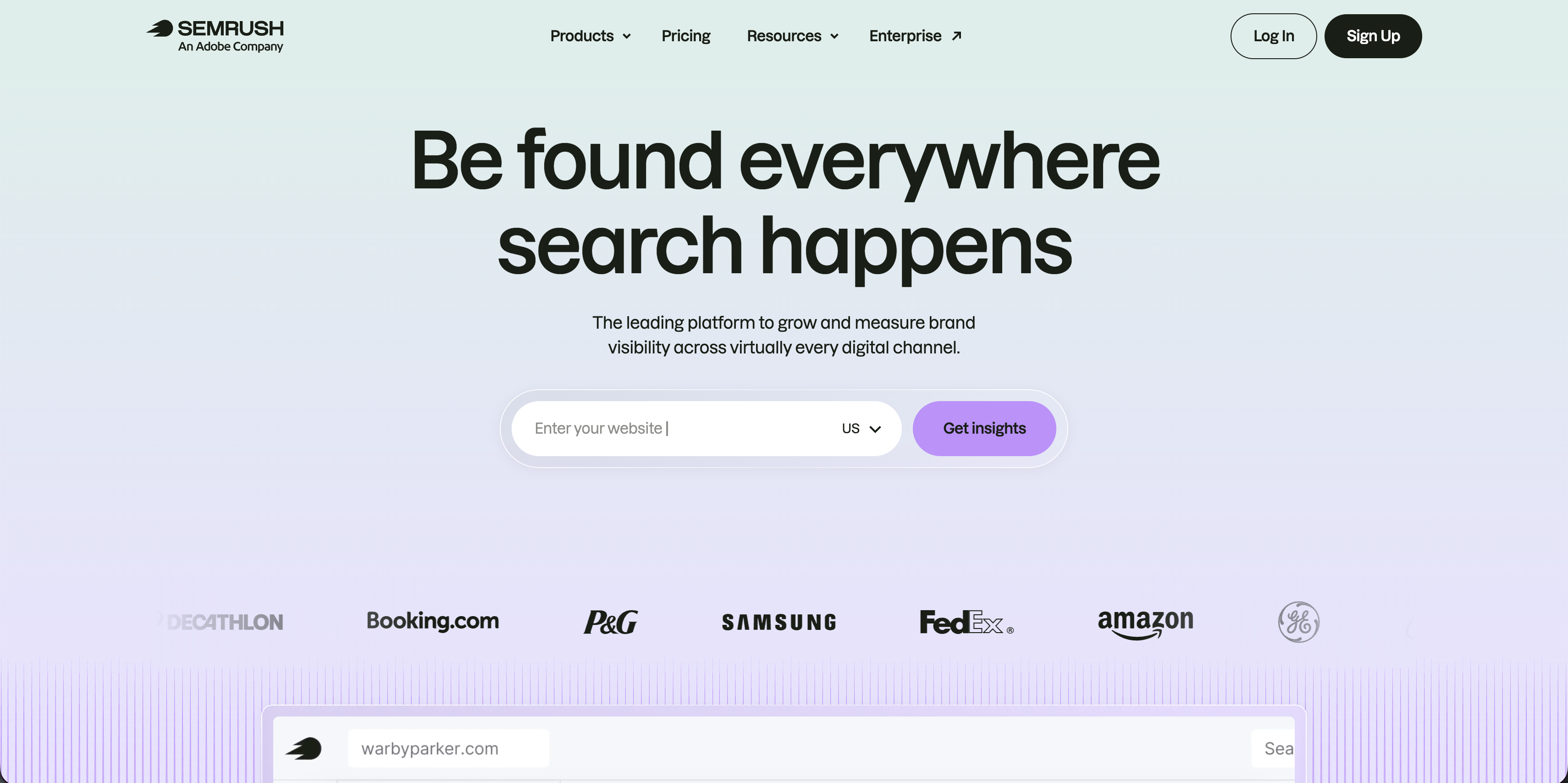
As an AEO tool for cybersecurity companies already running Semrush for organic search, this extends the same account to AI visibility tracking. The tool covers Visibility Score, share of voice tracking, sentiment analysis, and a site audit that flags AI crawler blockers.
Features:
Pricing: Starts at $99/mo per domain, covering 4 to 6 engines, with additional costs of $99 per additional domain and $60 per 50 extra prompts.
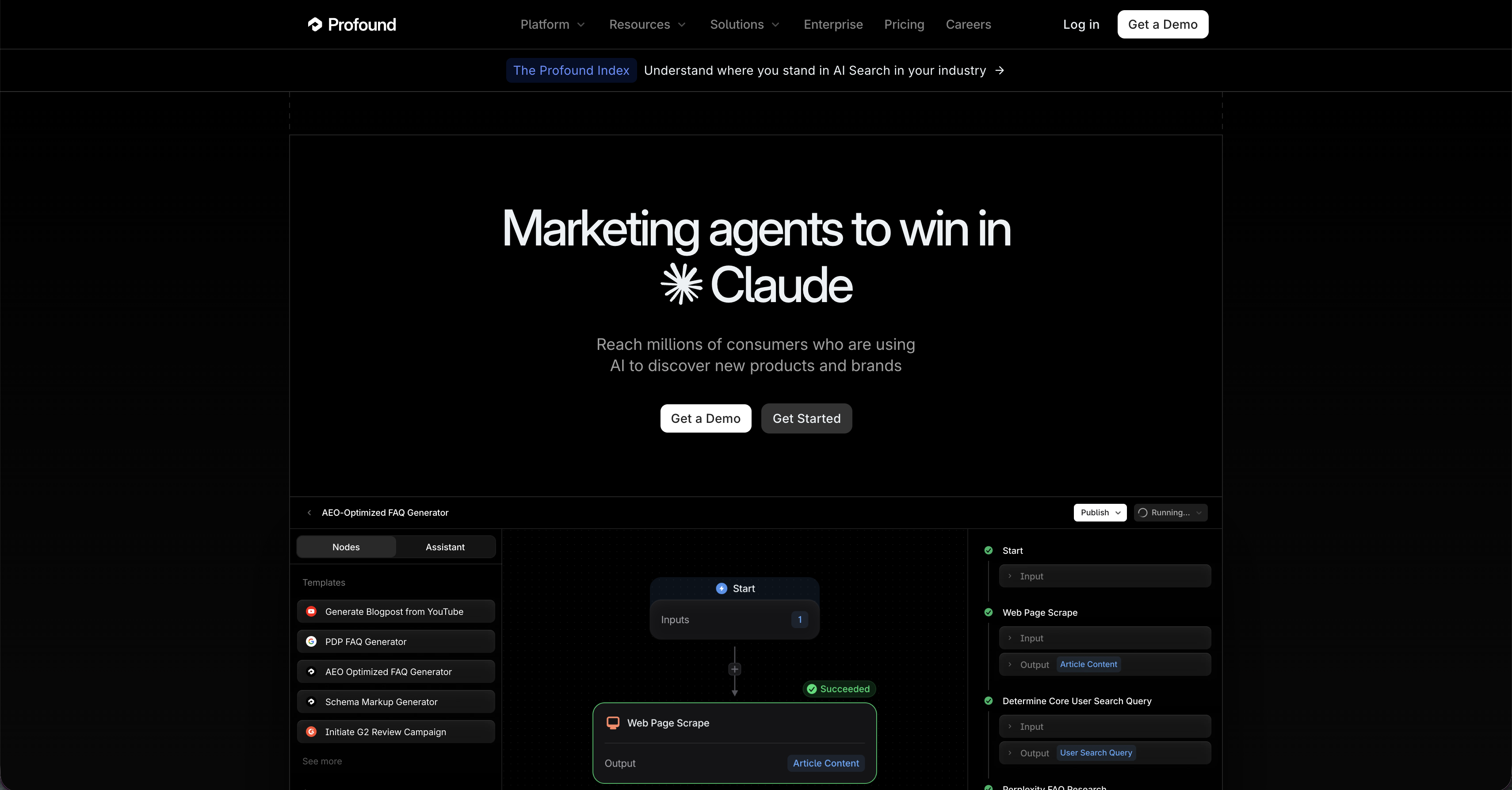
Profound functions as an AEO tool for cybersecurity vendors that need crawler-level analytics, tracking GPTBot and ClaudeBot activity specifically. The platform includes a customizable workflow builder for content pipelines.
Features:
Pricing: Starts at $99/mo.
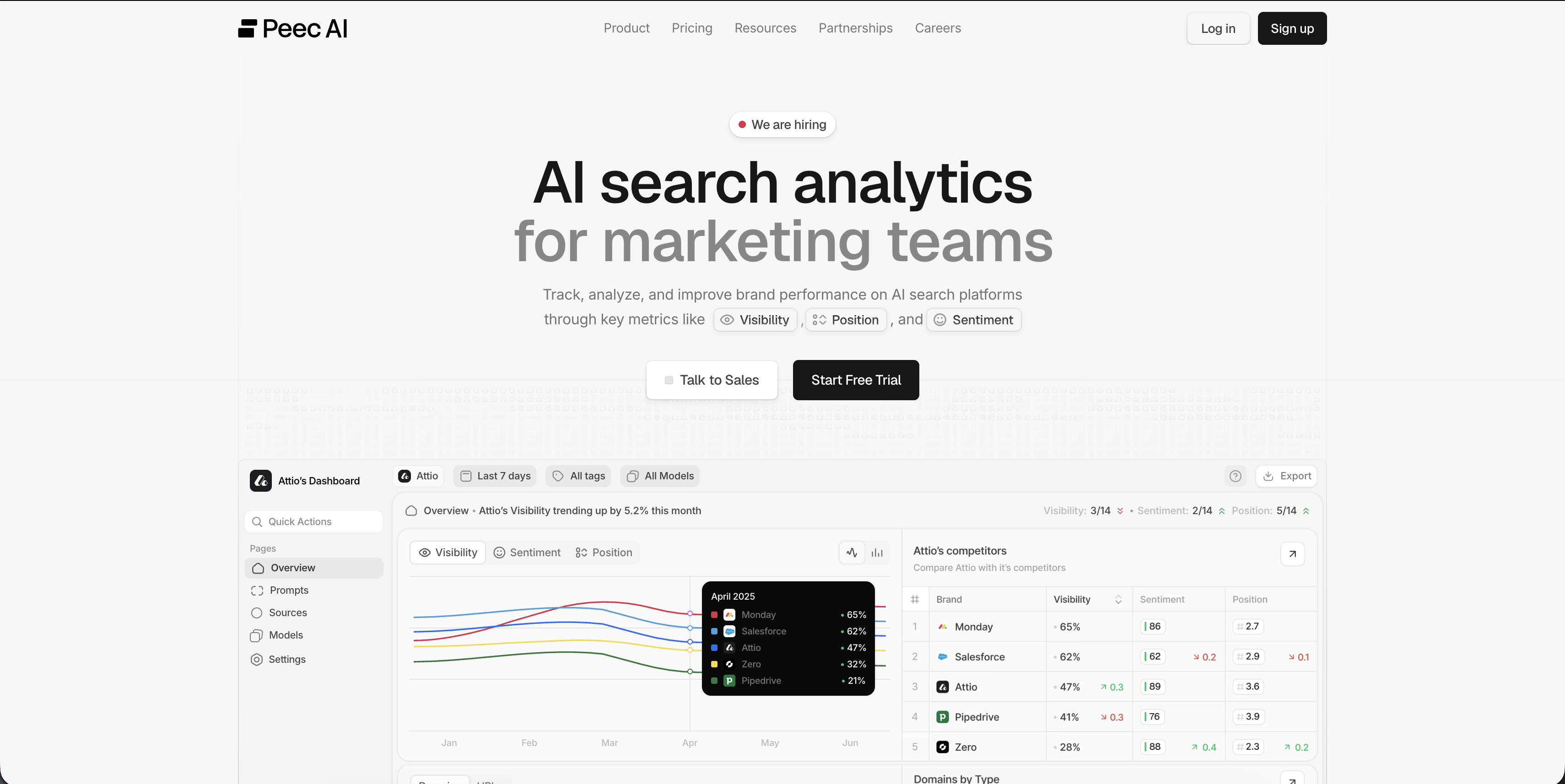
Peec AI supports 115+ languages and includes unlimited users on all plans.
Features:
Pricing: Starts at €85/mo.
AthenaHQ's Action Center uses autonomous agents to draft content optimizations based on identified visibility gaps.
Features:
Pricing: $295/mo (Starter). Enterprise custom.
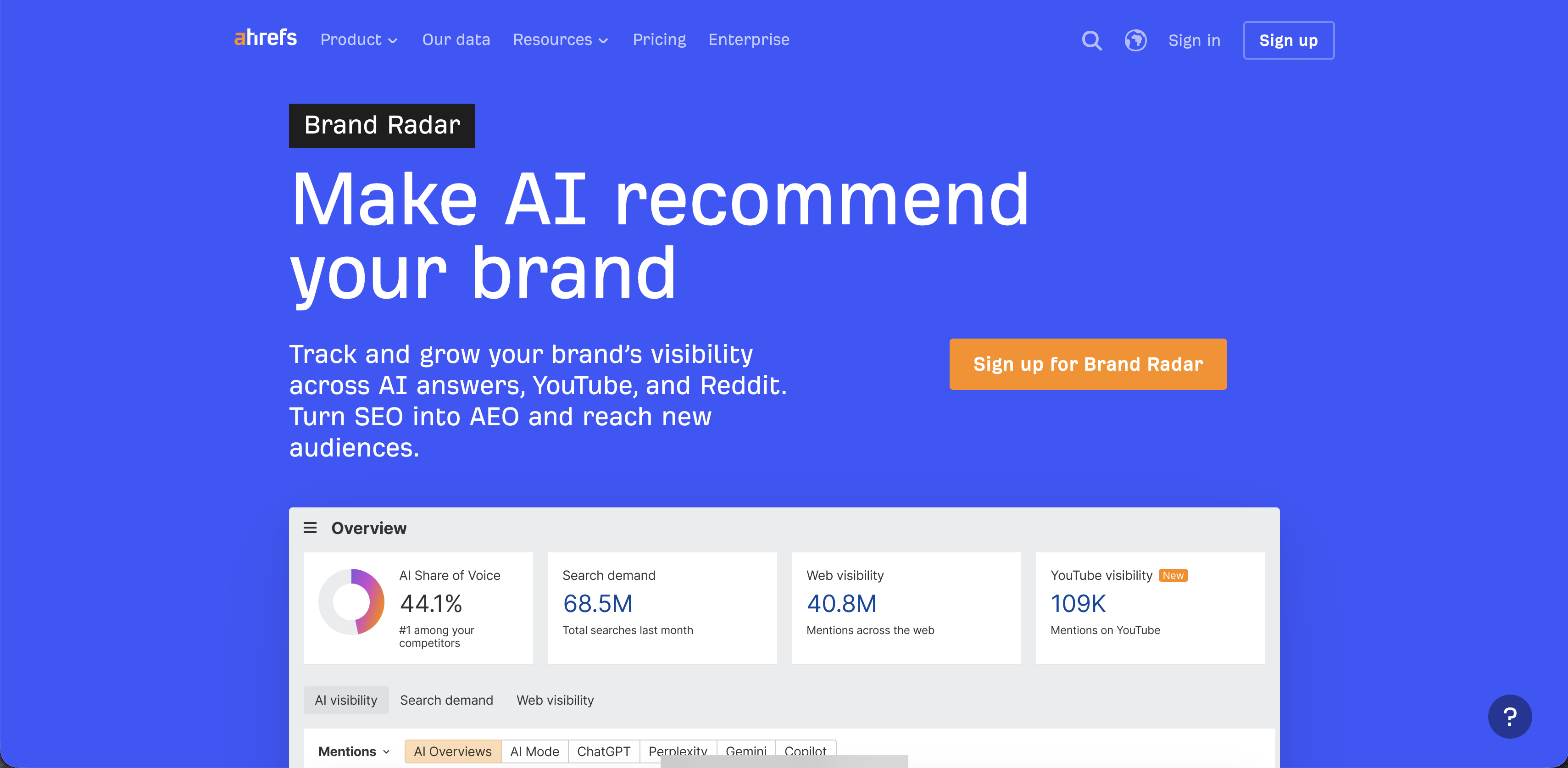
Ahrefs Brand Radar works as an AEO tool for cybersecurity companies that already rely on Ahrefs for backlink and domain authority data, adding AI citation tracking to the same platform.
Features:
Pricing: Starts at $199/mo per platform.
SE Visible, built by the SE Ranking team, offers this AEO tool for cybersecurity companies as an add-on to an existing SE Ranking account. Coverage includes ChatGPT, Perplexity, Google AI Overviews, Gemini, and Google AI Mode.
Features:
Pricing: $103.20/mo (annual) for the AI Search add-on.
ZipTie is a lower-cost AEO tool for cybersecurity companies covering 3 engines at an entry-level price point.
Features:
Pricing: Starts at $69/mo.
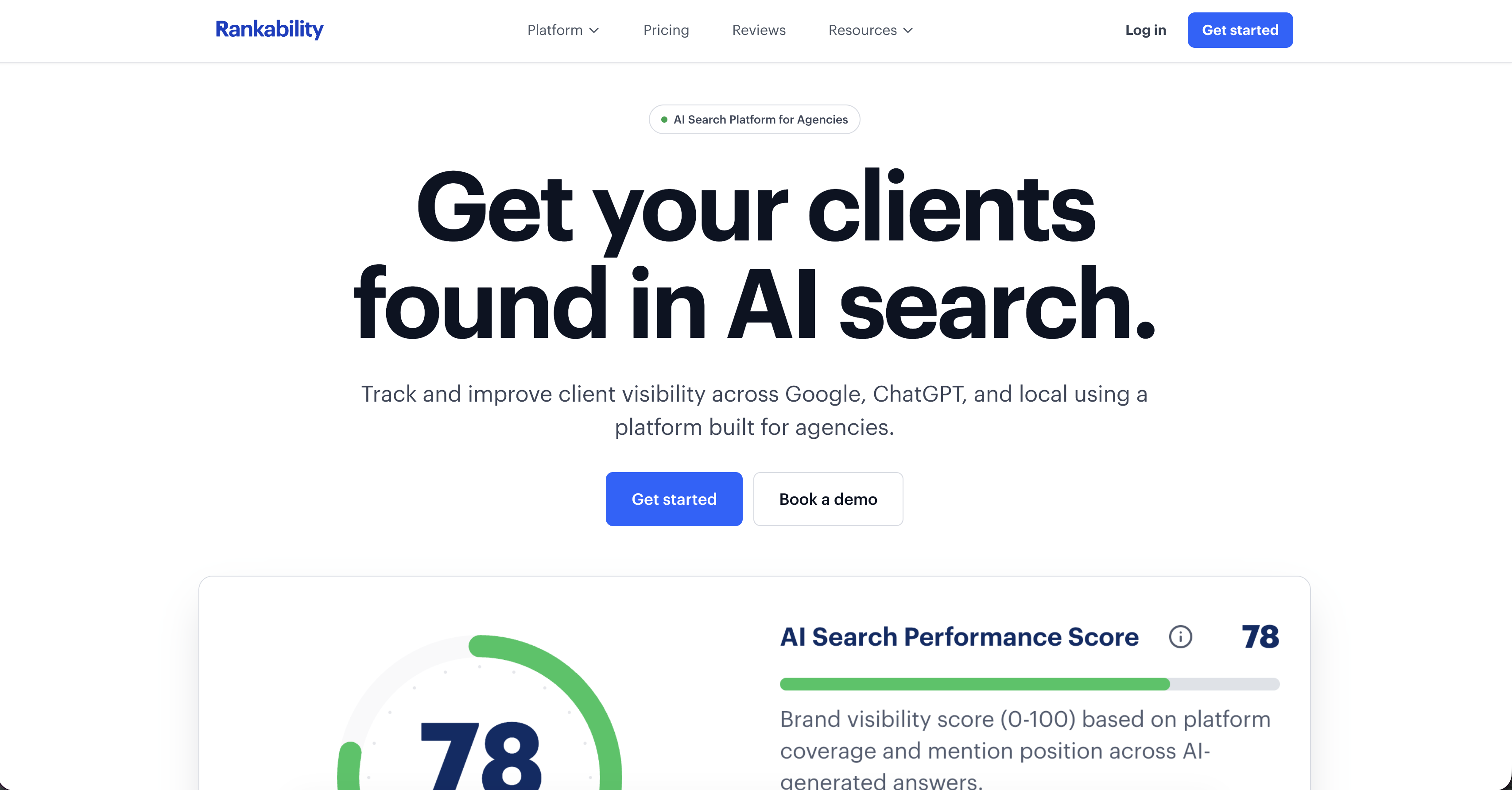
Rankability functions as an AEO tool for cybersecurity companies alongside its broader content optimization and keyword research features, covering ChatGPT, Perplexity, Gemini, and other AI platforms alongside traditional search tracking.
Features:
Pricing: Starts at $79/mo.
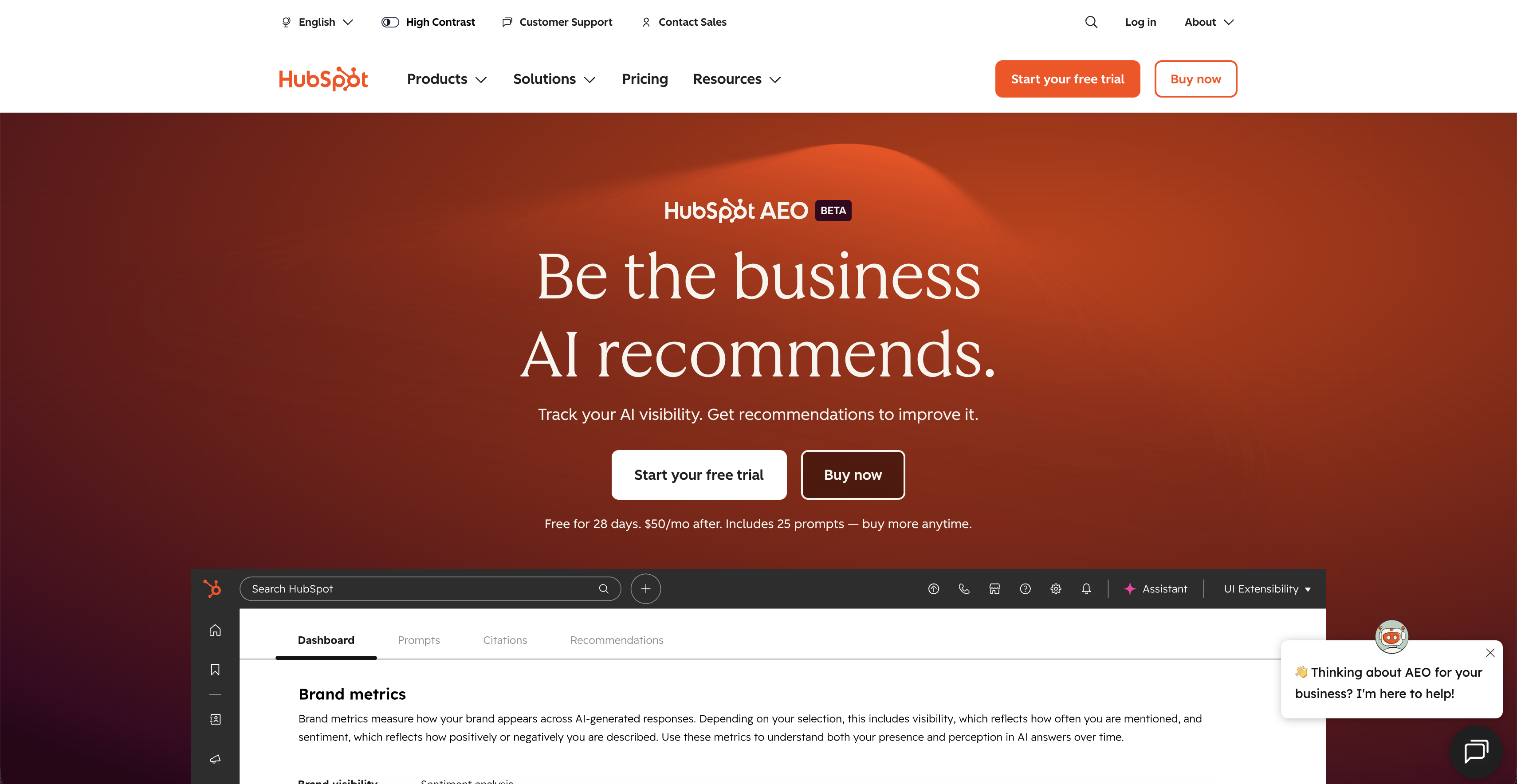
HubSpot AEO functions as an AEO tool for cybersecurity companies already running marketing and sales through HubSpot, adding AI visibility tracking within the same account and integrating with existing CRM and marketing data.
Features:
Pricing: Starts at $50/mo.
| Tool | Starting price | Engines covered |
|---|---|---|
| Cognizo | $499/mo | Up to 10 — ChatGPT, Google AI Overviews, Google AI Mode, Perplexity, Copilot, Meta AI, Claude, Grok, DeepSeek |
| Semrush AI Visibility | $99/mo per domain | 4 to 6 |
| Profound | $99/mo | Up to 10 |
| Peec AI | €85/mo | 3 to 7+ |
| AthenaHQ | $295/mo (Starter) | 5 to 9+ |
| Ahrefs Brand Radar | $199/mo per platform | 6 |
| SE Ranking (SE Visible) | $103.20/mo (annual) | 4 (AI Search add-on) |
| ZipTie | $69/mo | 3 |
| Rankability | $79/mo | 7 |
| HubSpot AEO | $50/mo | 3 |
ChatGPT and Google AI Overviews should still anchor most cybersecurity AEO strategies, since they carry the largest share of overall AI search volume and increasingly surface in Google's standard results page. But the platform mix skews differently for this vertical than for consumer categories. Gartner projects that traditional search engine volume will decline as generative AI solutions become substitute answer engines, and cybersecurity buyers, who tend to be technically sophisticated and research-driven, have been early adopters of that shift toward AI-assisted research. Claude and Microsoft Copilot both see meaningfully higher usage among security engineers, compliance teams, and enterprise IT buyers than they do in consumer-facing categories, which makes tracking those platforms a higher priority for cybersecurity vendors than the general AEO playbook would suggest. For a closer look at tracking Claude specifically, see how Claude rank tracking works.
Third-party reputation carries unusual weight in this vertical too. A cybersecurity vendor's own website rarely settles a buyer's evaluation on its own, since security purchasing decisions get scrutinized by procurement, legal, and technical stakeholders who each want independent verification. Analyst write-ups, G2 and Gartner Peer Insights reviews, and public incident response case studies often shape what an AI system says about a vendor more than the vendor's own marketing pages do. Keeping tabs on how those third-party sources describe a brand, not just what the brand's own site says, is part of why tracking brand mentions across the web matters as much as monitoring AI platforms directly. A vendor with excellent AI Overviews visibility but a cluster of unresolved G2 complaints about support response times will still see that friction surface inside AI-generated answers eventually, since AI systems increasingly weigh recency and consistency across sources rather than any single page.
Cognizo ranks first on this list for combining AI visibility monitoring with a built-in content workflow, which matters in a category where closing a citation gap requires accurate technical content, not just a dashboard showing the gap exists. Semrush AI Visibility and Profound follow as strong monitoring-focused options for teams that already use those platforms for traditional SEO or crawler analytics. The right pick still depends on which AI platforms your specific buyers use, how much of the work needs to be automated versus handled in-house, and budget, which is why the full comparison above breaks down features and pricing tool by tool rather than naming a single universal answer.
Cognizo and Profound both track ClaudeBot crawler activity and Claude-generated answers directly. Cognizo captures the actual rendered Claude response through UI scraping and pairs that with citation source tracking, while Profound focuses more narrowly on crawler-level analytics showing whether ClaudeBot is reading a given page. For cybersecurity vendors specifically, tracking Claude matters more than average, since Claude sees disproportionate use among security engineers and compliance teams doing technical vendor research.
Start with which AI platforms your actual buyers use for research, not which platforms are most popular overall. Cybersecurity buyers lean more heavily on Claude and Copilot than typical B2B categories, so a tool with narrow platform coverage that excludes those two is a weaker fit even if it's cheaper. After platform coverage, weigh whether the tool stops at monitoring or also helps produce the technical content needed to close a citation gap, since cybersecurity content often requires more specialized writing than a general content template can handle.
Citation source identification matters more in this category than most, since knowing whether AI mentions come from your own documentation, a G2 review, or an analyst report determines what to fix. Crawler analytics that specifically track ClaudeBot and GPTBot activity against gated technical content, such as whitepapers or compliance documentation, help identify whether that content is even reachable. Sentiment tracking also carries more weight in cybersecurity, since a neutral or slightly negative AI-generated summary of a security incident response can influence a buying decision more than in most other software categories.
The mechanics are the same, but the emphasis shifts. Cybersecurity buyers verify claims more aggressively before purchasing, so third-party sources, analyst reports, and independent test results carry more weight in what gets cited than a vendor's own marketing content. Compliance and certification details, such as SOC 2, ISO 42001, or FedRAMP status, also need to be kept current across every source AI systems pull from, since an AI system citing an outdated certification status can create a compliance conversation that derails a deal.
Technical, high-consideration categories like cybersecurity typically move slower than consumer or lower-complexity B2B categories, since the content involved requires more accuracy review before publishing. Most vendors see initial Visibility Score movement within 4 to 8 weeks of consistent content and technical documentation work, with meaningful citation share shifts on competitive comparison queries taking closer to 2 to 3 months as third-party sources catch up to updated positioning.
Yes, most platforms on this list include competitive benchmarking within the same tracked prompt set, showing which competitors get cited alongside or instead of your brand for the same queries. Cognizo specifically breaks this down by platform, topic, and region, so a cybersecurity vendor can see whether a competitor is winning citations on ChatGPT but losing ground on Claude for the same comparison query. For cybersecurity specifically, this is useful for identifying whether a competitor is winning citations on category-defining terms, such as "best XDR platform" or "top MSSP for healthcare," where losing citation share can mean losing a spot on a buyer's shortlist entirely.
Yes, arguably more so. MSSPs and resellers compete on trust and service quality rather than a single differentiated product, which means third-party reputation, client case studies, and community discussion carry even more weight in how AI systems describe them. An MSSP with strong service delivery but weak AI visibility risks losing shortlist consideration to a competitor with a more consistent presence across the review sites and comparison content that AI systems draw from. The same applies to value-added resellers and channel partners representing multiple security product lines, since a buyer asking an AI system which reseller to work with in a specific region or industry is effectively running a shortlist prompt that a well-optimized competitor can win by default if the reseller has no structured content addressing that exact question. Agencies and consultancies managing AEO across several MSSP or reseller accounts at once should also consider Cognizo, which lets teams manage all client accounts from a single hub and share reports in the agency's own branding.
One additional consideration for teams evaluating this list: pricing and engine counts change frequently in this category as platforms add new AI engines and adjust tiers. Confirm current pricing and platform coverage directly with each vendor before making a purchase decision, since the specifics in this guide reflect a snapshot rather than a permanently fixed comparison.
.svg)

.svg)


