Get a free AI visibility report


AI visibility platforms track how your brand appears in AI-generated answers across ChatGPT, Perplexity, Google AI Overviews, and every other engine where your buyers are now doing their research. As a category, these tools function as AI search visibility tracking tools first: they surface where you are mentioned, where competitors are getting cited instead, and what the gaps look like. That is genuinely useful. But most of them stop right there.
The problem is that a dashboard showing you that you appear in 11% of relevant AI answers does not write the content that gets you to 40%. That is the ceiling this guide is built around. We cover the best pure visibility tools in the market, what each one does well, and where you will need to look beyond them if you want to actually move the number.
An AI visibility platform tracks whether and how your brand shows up when people ask AI engines questions relevant to your category: how often you are mentioned, whether sentiment is positive, which third-party sources AI is citing, and how you stack up against competitors. If you want a deeper breakdown of what AI visibility means and why it matters, we covered it in full here.
What most of them are not is optimization tools. They report. They do not fix. You will find out that a competitor appears in 80% of answers while you show up in 15%, and you will see which publications AI is pulling from. What you will not get is a way to close that gap without opening three other tools.
That gap between monitoring and optimization is the most important thing to understand before spending money on any platform in this space.
We split our evaluation into two groups, which mirrors the comparison table below. The first covers what every platform in this category is supposed to do. The second covers what separates monitoring tools from platforms that can actually move the number.
Visibility tracking capabilities
Optimization-purpose capabilities
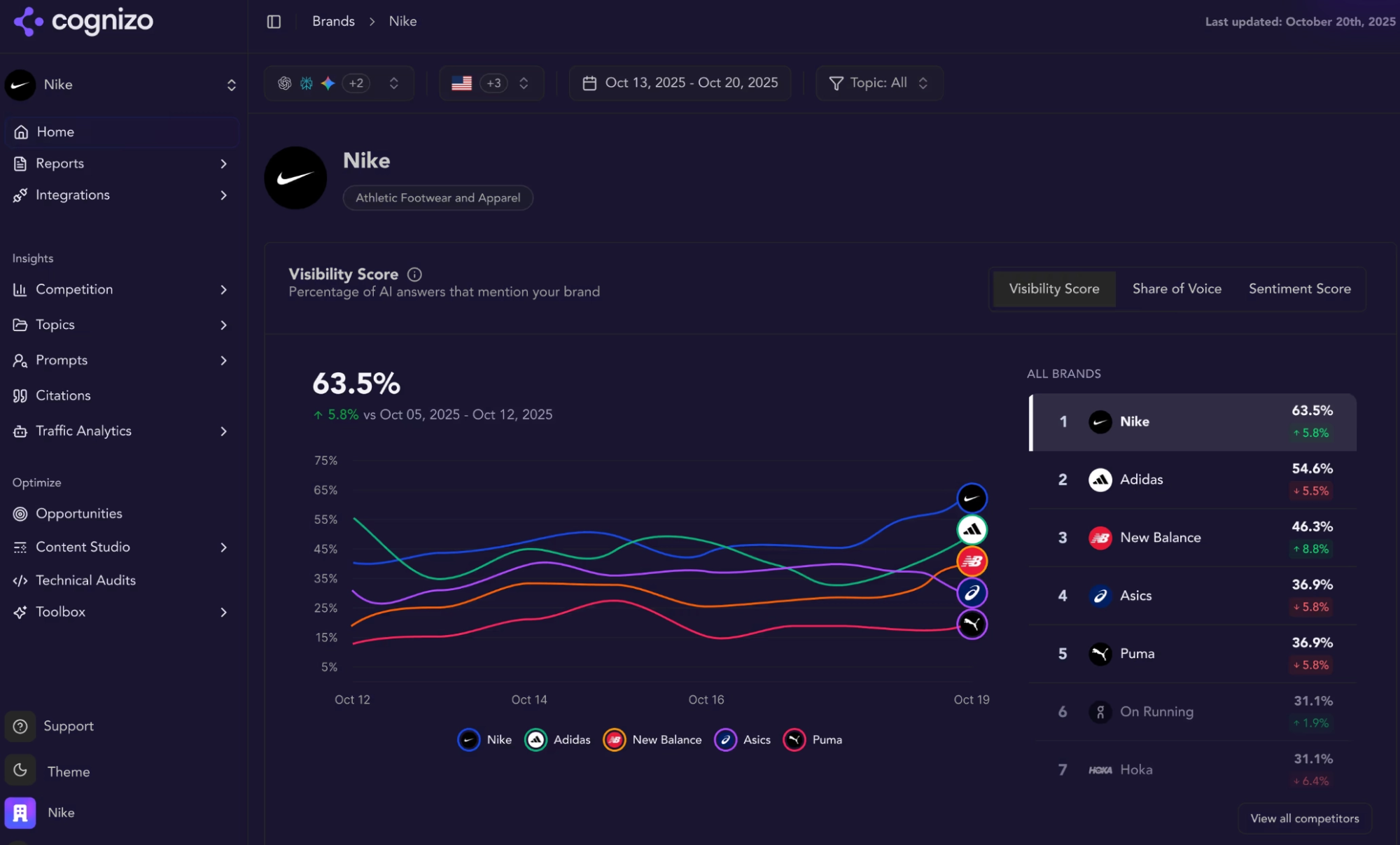
A good fit if: You want to go from knowing your visibility score to actually improving it, all from one platform.
Cognizo is the only platform in this review that covers all six criteria: visibility tracking across up to 10 AI engines, competitive and citation analysis, a built-in content studio, AI crawler analytics, and real prompt volume data. The workflow is end-to-end: find the prompts competitors are winning, trace which sources AI is citing, audit your gaps, brief or fully write content to close them, then verify AI bots are actually crawling what you published.
Clients including LG, Wellhub, and GlossGenius use it specifically to get from invisible to cited. Opal reported 30x AI visibility growth and Hat Club reported 20x revenue from AI search.
Standout capability: Cognizo is the only platform in this review with the full package on both sides of the table: visibility tracking and optimization-purpose capabilities. Most platforms give you the score. Cognizo helps you understand what your prospects are asking AI, how you show up in those conversations, what to do to improve, and how to measure it all the way to ROI. The content studio, prompt volume data, and AI traffic analytics working together in one platform is what makes that possible.
Top features
Pricing
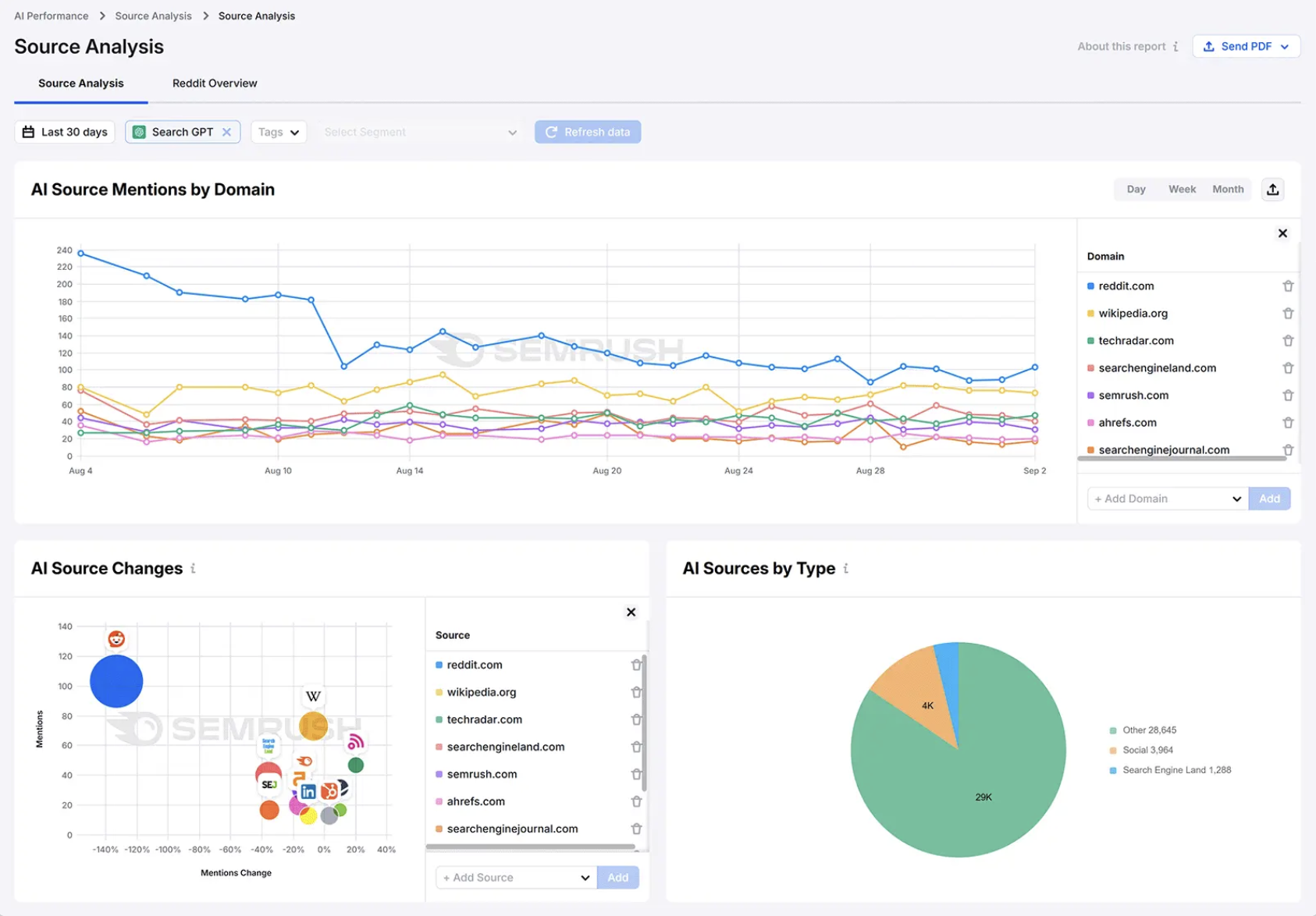
A good fit if: You already pay for Semrush and want to add AI visibility without a new vendor.
Less suited if: You need to act on the data from inside the platform. No content creation, no AI traffic attribution, no real prompt volume signals. You are only able to take action if you pay an enterprise package.
With Semrush: You get a visibility score, share of voice, sentiment analysis, competitive benchmarking, and a site audit flagging AI crawler blockers. The data scale is solid and the interface is familiar to anyone already in Semrush.
The ceiling is equally clear. Traffic estimates show zero in the dashboard, and scaling costs add up fast: $99 per additional domain, $99 per user, $60 per 50 extra prompts.
Standout capability: You can quickly apply your SEO strategies to your AI visibility optimization strategies
Pricing
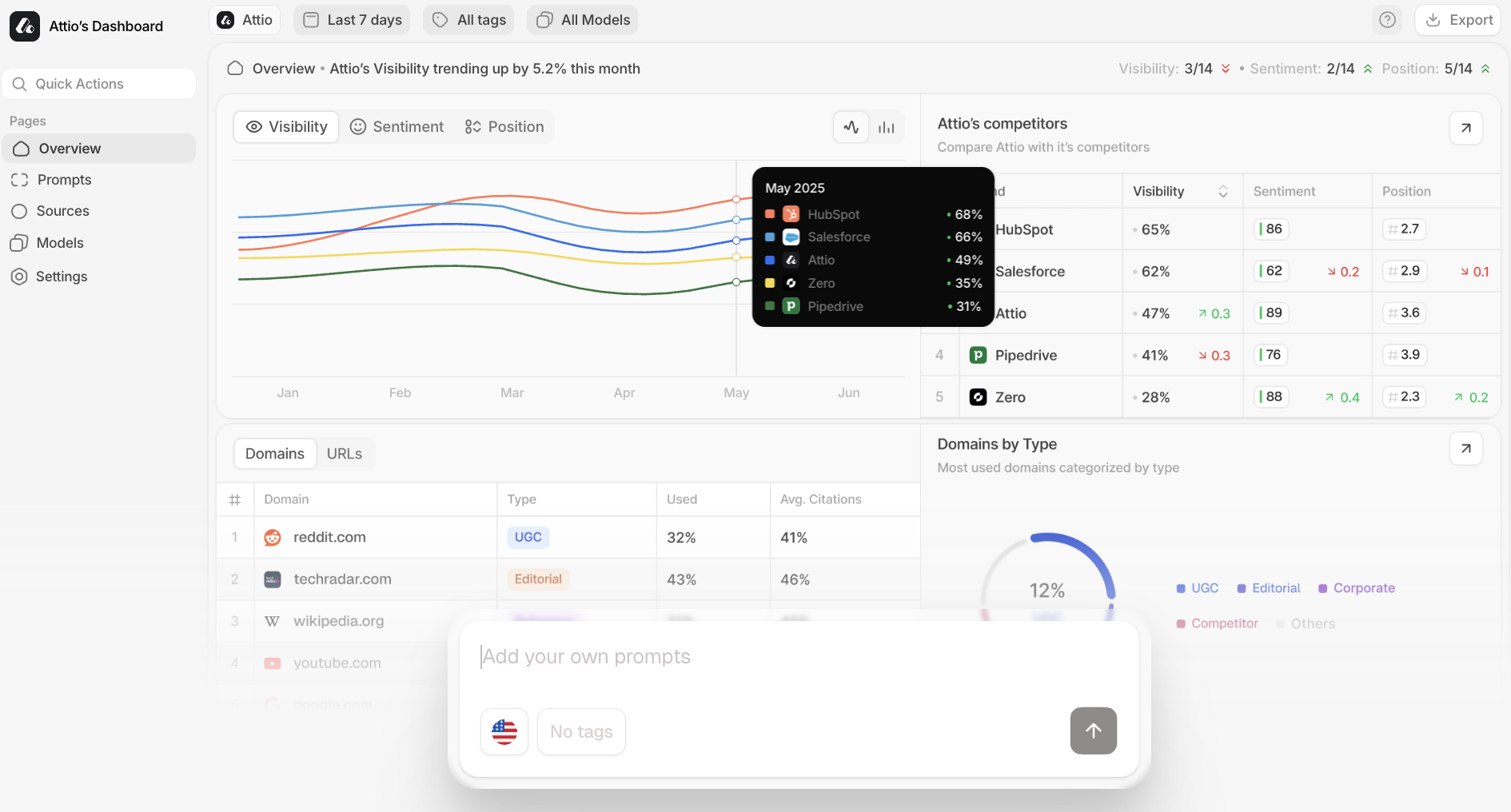
A good fit if: Great if you want a visibility only tool and are only testing if AEO is viable
Less suited if: You need the platform to do more than surface data. Peec is monitoring only.
Peec runs as a strong visibility tool. It is going to help out with seeing if AEO might be a good growth channel or not. But most customers usually tend to switch to action-taking tools later
Standout capability: 115+ language support. If you operate across global markets, with a focus on the European market.
Pricing
Note: Peec prices in EUR, USD figures are approximate.
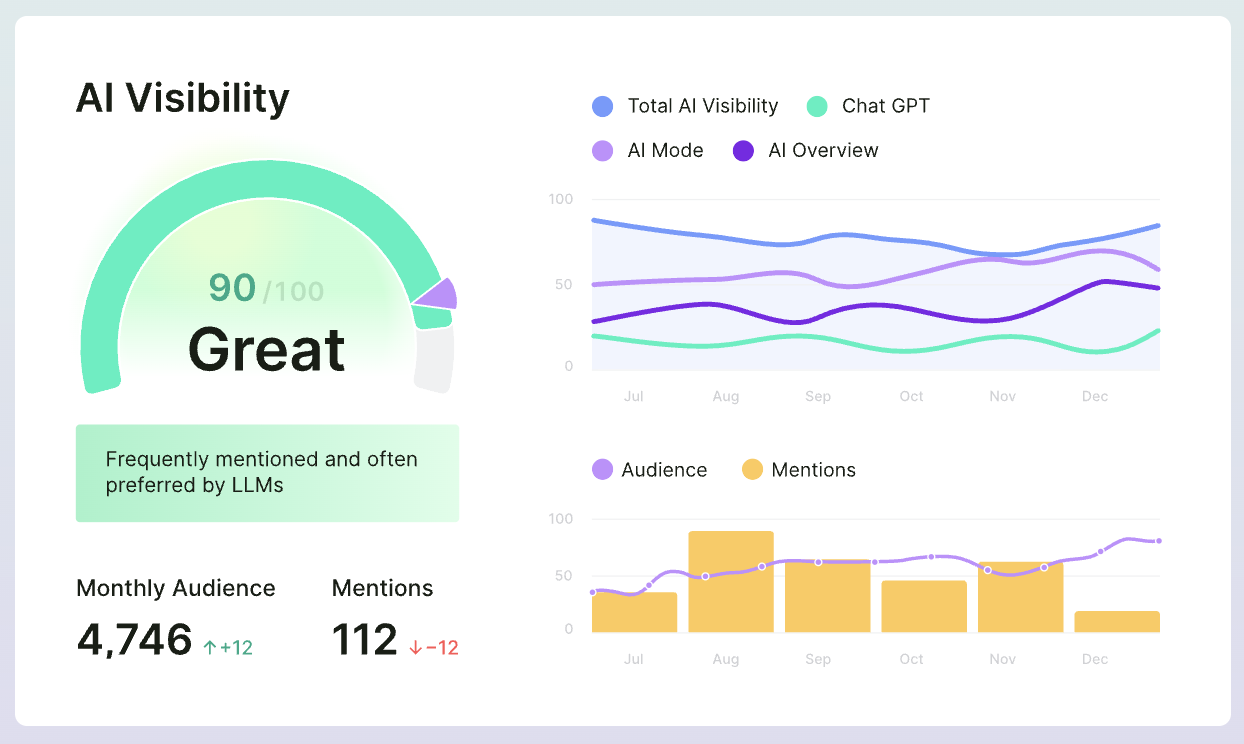
A good fit if: You want to make your website more readable to AI at the delivery layer.
Less suited if: You need content optimization now. The Agent Experience Platform is still in enterprise pilot.
Scrunch's Agent Experience Platform creates a parallel, machine-readable version of your website for AI crawlers only, without touching the human-facing site. The idea is that AI engines get a clean, structured version of what your product does rather than trying to interpret marketing copy. Still in enterprise pilot so most users will not have access to it yet.
Standout capability: The machine-readable version of your website seperate than your original website
Pricing

A good fit if: You need all AI platforms without enterprise gating and need to tie visibility to actual pipeline through GA4 or Shopify.
Less suited if: You need predictable monthly costs. The credit-based model can scale unpredictably.
All 8+ AI platforms available on the base plan without enterprise gating. Has native Shopify and GA4 integration if you need to connect visibility to pipeline. Built by ex-Google Search and DeepMind people.
Standout capability: The Athena Citation Engine (Enterprise) predicts citation probability for a page before you publish. More forward-looking than most tools in this category.
Pricing
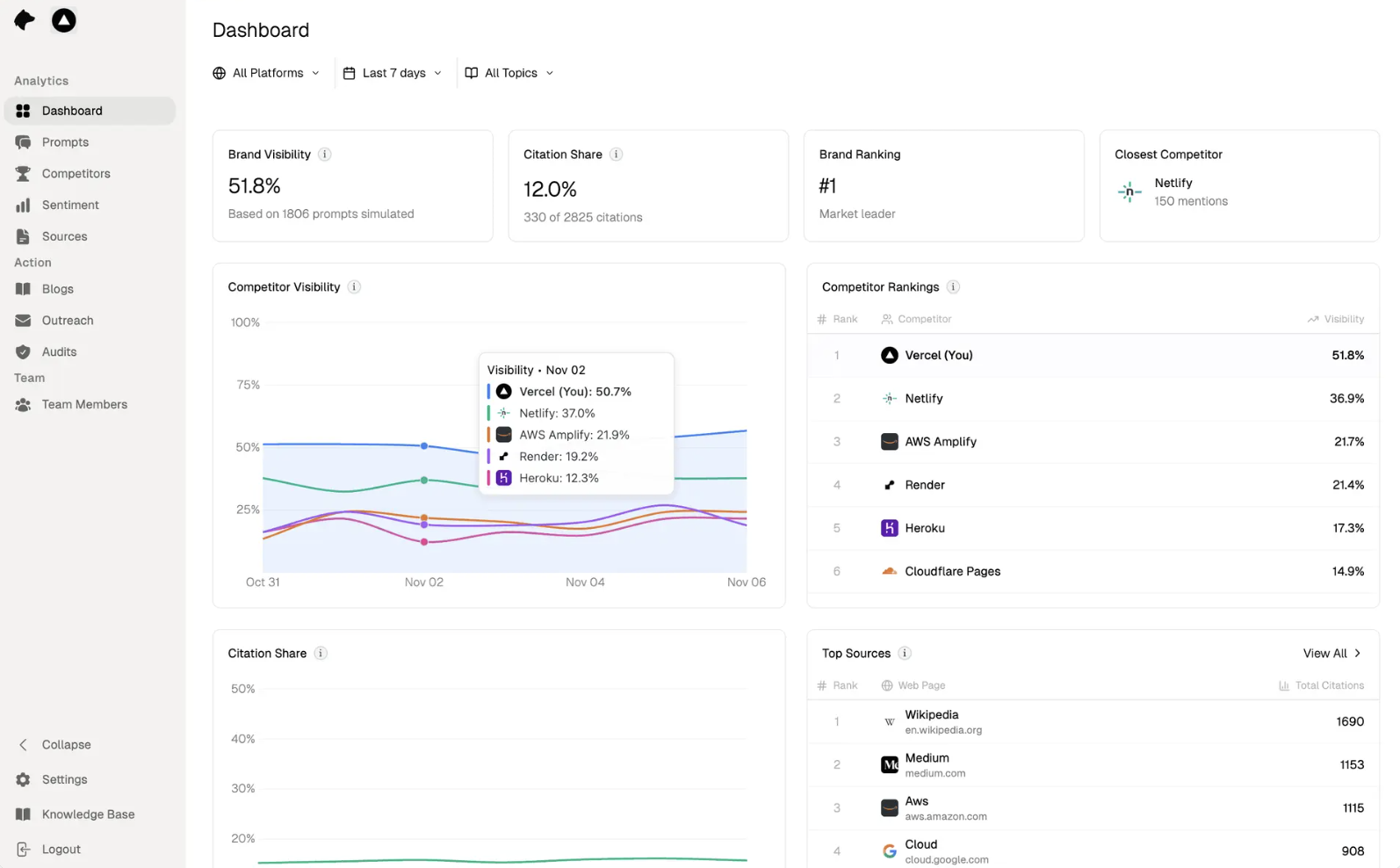
A good fit if: Your buyers use Cursor or Claude Code exclusively and you want full-funnel coverage from monitoring to lead capture.
Less suited if: You need a mature platform with documented pricing and established reviews. Bear AI is very early-stage.
Bear AI tracks Cursor and Claude Code alongside ChatGPT, Google AI Mode, Gemini, and Perplexity. If your buyers are developers using these tools daily, that coverage matters since no other platform in this review touches it. Very early-stage, backed by Y Combinator Fall 2025. Important to note that most tools also have this capability and this is not unique to them, but they are focused on this market so would likely have more experience compared to others.
Standout capability: Automated outreach to domains/publications AI is currently citing in your category. Most platforms surface this data and leave the rest to you.
Pricing

A good fit if: You use SE Ranking already( their SEO tool), and want AI visibility reporting added
Less suited if: You need content optimization or team access now. Single-user only with team features still on the roadmap.
Built by the SE Ranking team, 13 years in SEO data. Clean interface, strategic-level reporting, low setup friction. Covers ChatGPT, Perplexity, Google AI Overviews, Gemini, and Google AI Mode. The dual ecosystem is the main draw for teams already running traditional SEO through SE Ranking.
Standout capability: If you are already using their SE Ranking tool, you can get started very quickly
Pricing
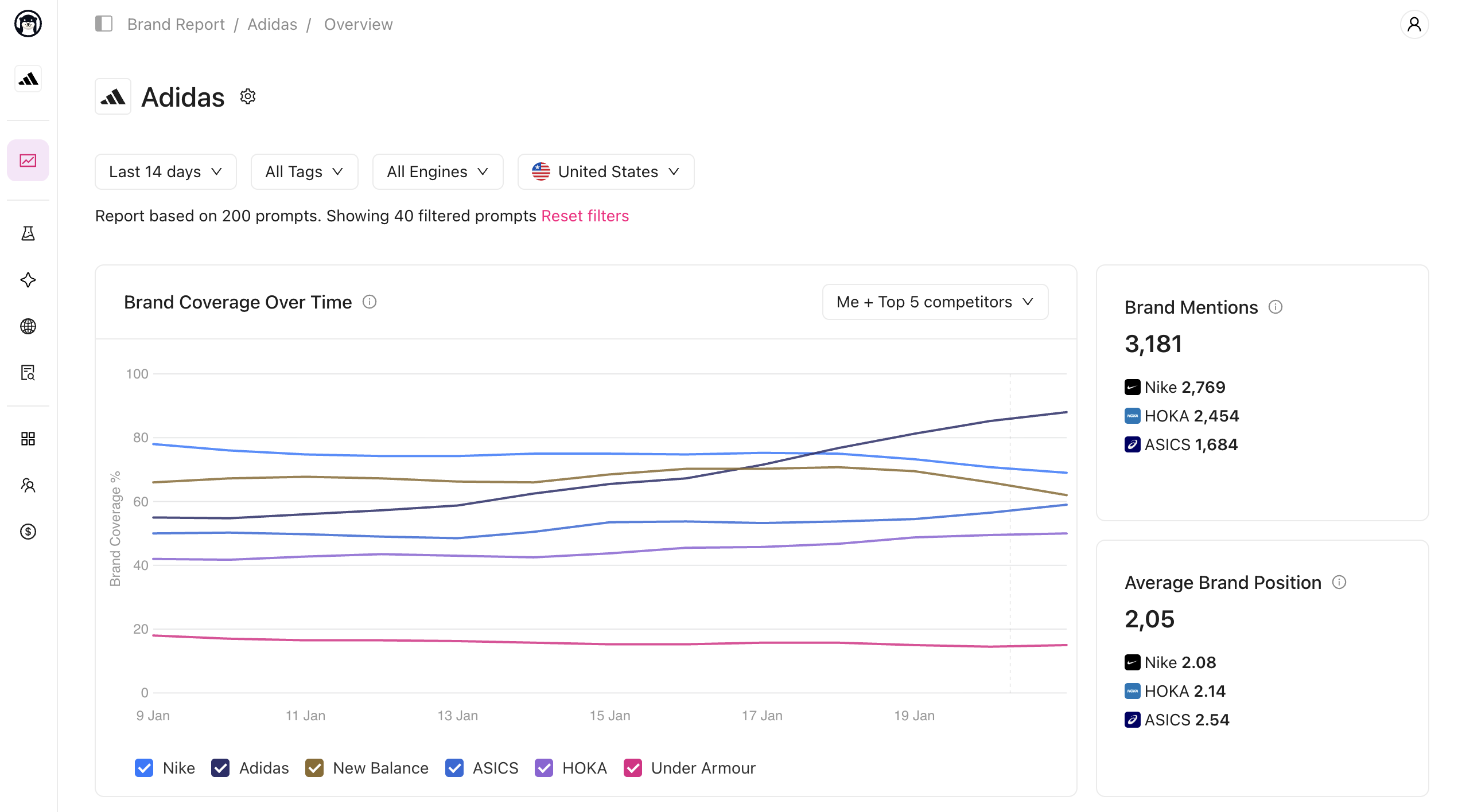
A good fit if: You are just getting started and want to spend as little as possible to get a baseline.
Less suited if: You need more than four AI engines or any path to optimization from inside the platform.
At $29/month it is the cheapest entry in this category. Covers the four main AI engines and includes a GEO audit analyzing 25+ on-page factors. Good enough for teams that just need a starting line before committing real budget.
Pricing
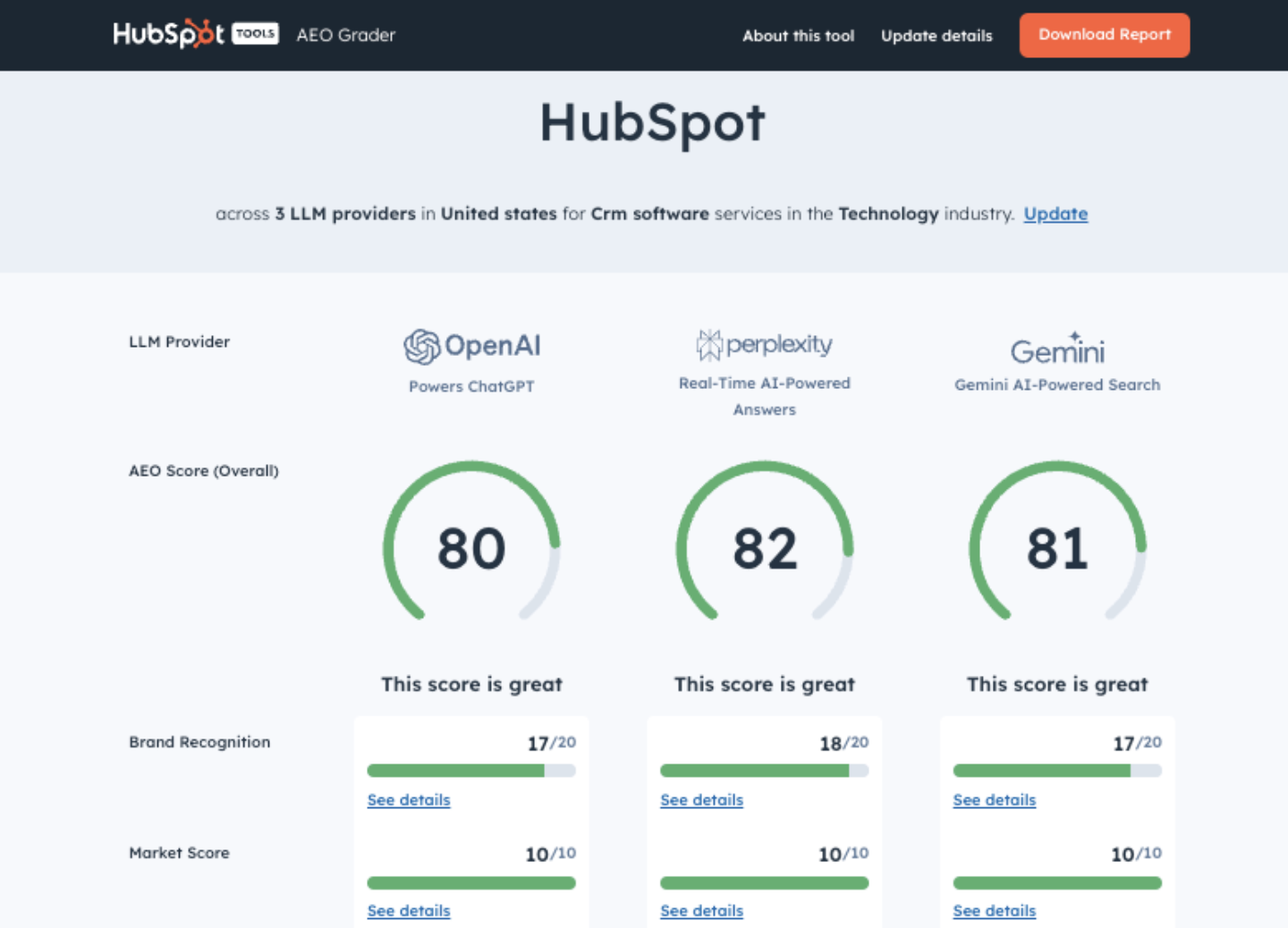
HubSpot AEO Grader is a free, one-time brand perception audit tool built for marketers who want a quick snapshot of how AI engines characterize their brand.
HubSpot AEO Grader gives you a fast, zero-cost read on how three major AI engines perceive your brand, with 15+ specific recommendations to act on. Without Claude coverage, ongoing monitoring, or citation and prompt volume data, it works better as an awareness starter than a serious AEO workflow tool.
Every platform covered so far tells you where you stand. Most of them stop there.
You will see that a competitor appears in 70% of relevant AI answers and you are at 12%. You will see which sources AI is pulling from. What you cannot do from inside most of these tools is close that gap. No content workflow, no attribution loop. Just a score.
What teams actually need is an AI brand visibility optimization tool, something that connects the data to the content actions that move it. Only one platform in this review does that end to end.
What are the best AI visibility tools?
Cognizo is the most complete AI visibility platform available, combining visibility tracking, content optimization, AI traffic analytics, and prompt volume data in one place. It is built for teams that need to go beyond monitoring and actually grow their visibility. For teams still testing whether AI search is worth investing in, Peec AI and Semrush AI Visibility Toolkit are solid starting points for pure monitoring. For developer-focused products where buyers are evaluating tools inside Cursor or Claude Code, Bear AI covers those channels.
What is an AI visibility platform?
An AI visibility platform tracks how your brand shows up in AI-generated answers across engines like ChatGPT, Perplexity, Google AI Overviews, and others. You get visibility scores, share of voice relative to competitors, citation source data, and sentiment analysis.
How do AI visibility tools track brand mentions?
They run a set of prompts across AI engines on a regular schedule and record whether your brand appears, where it sits relative to competitors, and which sources the AI cited. Some tools like Cognizo directly query engines and scan each model’s response for the brand’s mention.
What features should an AI visibility platform have?
At minimum: coverage of more than one AI engine, competitive benchmarking within the same AI responses, and citation tracking at the URL level. The features that separate a reporting tool from one that drives results are a content studio for closing visibility gaps, AI traffic analytics for attributing crawler activity and referral visits, and real prompt volume data for prioritization. Most platforms cover the basics. Very few cover all five.
Are there enterprise AI visibility solutions?
Yes. Several platforms offer enterprise tiers with expanded engine coverage, multi-brand support, dedicated onboarding, and API access. Cognizo's enterprise tier covers up to 10 AI engines including Google AI Mode, DeepSeek, Meta AI, and Grok, supports multiple brands, and includes a dedicated AEO strategist. It is also the only enterprise option that combines visibility monitoring with a built-in content studio and AI traffic analytics, so teams are not paying enterprise prices just for a reporting layer. Scrunch AI offers an Agent Experience Platform at enterprise that serves a machine-readable version of your website directly to AI crawlers.
How is AI visibility different from SEO?
SEO gets your content ranking on traditional search results. AI visibility is about whether your content gets retrieved, cited, and accurately represented when AI engines generate direct answers. The technical foundations overlap but the execution differs. AI engines reward clarity and citability over keyword density and backlink counts. SEO builds the base. AI visibility extends it into the layer where a growing share of buyers are now making decisions before they ever click a link.
How long does it take to see results from AI visibility work?
This depends on the size. Most teams make moves on individual prompts in 4 to 8 weeks of focused optimization. The fastest wins tend to come from comparison and alternatives queries where AI is currently citing competitors exclusively. Those are usually the highest-intent queries in a buying cycle, and often where a single well-structured piece of content shifts the outcome.
Most AI visibility platforms are monitoring tools. They tell you where you stand and stop there. That is useful for validating whether AI search is worth investing in, but it is not enough to actually grow your visibility.
The pattern we see is that teams start with a monitoring tool, confirm the gap is real, and then realize they need something that helps them close it. At that point, switching to a platform that combines tracking with content optimization, AI traffic analytics, and prompt volume data in one place is the logical move.
That is what Cognizo is built for. If you are past the testing stage and ready to treat AI visibility as a real channel, it is the only platform here that covers everything without requiring you to pay for separate tools to fill in the gaps.
Ready to see where your brand stands in AI search? Track your brand visibility, citation sources, sentiment, and share of voice across the AI engines your customers are already using. Get your free visibility report now below.
.svg)

.svg)


