Get a free AI visibility report

AI assistants now answer most local searches before a customer ever sees a map. This guide compares the AI visibility tools that show whether ChatGPT, Google AI Overviews and Gemini recommend your locations. It also covers what to fix when they do not.
Local search used to reward a tidy checklist. You claimed the Google Business Profile, kept citations consistent, published city pages and defended your map pack spot. That system still matters, but it no longer decides whether a customer finds you. Increasingly, the customer asks an assistant "who should I call for emergency plumbing in Austin". Then they act on the two or three names it returns.
That shift creates a measurement problem. Rank trackers report on a surface many local buyers never reach. Meanwhile, Google Business Profile insights say nothing about what ChatGPT tells someone in your service area. AI visibility tools exist to close that gap. They run the prompts your buyers actually use, record which businesses get named, and show which sources shaped the answer. Below, the ten AI visibility tools worth evaluating, what each one covers, and what it costs.
Before comparing AI visibility tools, look at what the 2026 data actually shows. The clearest evidence comes from two datasets. First, a Whitespark study reported by Search Engine Journal found AI Overviews appearing in 68% of local searches. Local packs appeared in 39%. That is a 29 point gap in which Google answers the question and the map never loads.
Second, SOCi's 2026 Local Visibility Index analyzed nearly 350,000 locations across 2,751 multi-location brands. Search Engine Land summarized the findings. ChatGPT recommended 1.2% of those locations. Gemini recommended 11%, Perplexity 7.4%. The same brands appeared in Google's local 3-pack 35.9% of the time. SOCi estimated AI visibility is three to thirty times harder to achieve than ranking well in traditional local search.
The gap is not evenly distributed, and that matters for how you build a prompt set. Simple transactional queries such as "tacos San Francisco" still lean on the local pack. Informational queries behave differently. "How long does an eye exam take near me" triggered an AI Overview 92% of the time. Hybrid queries such as "average cost of dental implants in Phoenix" hit 97% in the same Whitespark dataset.
So the businesses most exposed are the ones whose customers research before they buy. Dentists, lawyers, contractors, clinics, financial services and home services all sit squarely in that territory. Do your buyers ask about cost, duration, eligibility or process before they call? If so, most demand now passes through a generated answer.
Traditional local ranking tolerates mediocrity. Proximity and category relevance can carry a three-star business into the map pack. AI recommendations work more like a shortlist with a quality gate attached. SOCi found locations recommended by ChatGPT averaged 4.3 stars. Brands with weak profile accuracy and ratings near 3.4 stars were effectively absent from AI recommendations. So were those with review response rates below 5%.
Profile accuracy compounds the problem. SOCi reported business profile information was roughly 68% accurate on ChatGPT and Perplexity, against 100% on Gemini. Gemini is grounded in Google Maps. Inconsistent hours, an old suite number or a mismatched category do not just cost you a listing. They lower the confidence an assistant has in your entity, and low confidence means no mention.
Before comparing products, diagnose which gate is failing. Gate one is technical access: can GPTBot, ClaudeBot and OAI-SearchBot reach and parse your location pages at all? Check robots.txt, llms.txt, crawl budget and schema. Gate two is content and reputation: crawlers arrive but do not cite you. Either your pages are not extractable, or third-party sources say the wrong thing about you.
For local businesses specifically, three capabilities separate a usable platform from a demo. Regional segmentation comes first. National averages hide the fact that your Denver branch is invisible and your Dallas branch is not. Prompt breadth comes second, since local prompt universes multiply across every city, service and question variant you serve. Third-party source visibility comes last but decides the fix. Yelp, Reddit and local directory content often carry more weight than your own site.
One more filter worth applying: tracking frequency. Continuous, always-on monitoring catches a sentiment shift or a lost citation while you can still act on it. Slower cadences report history.
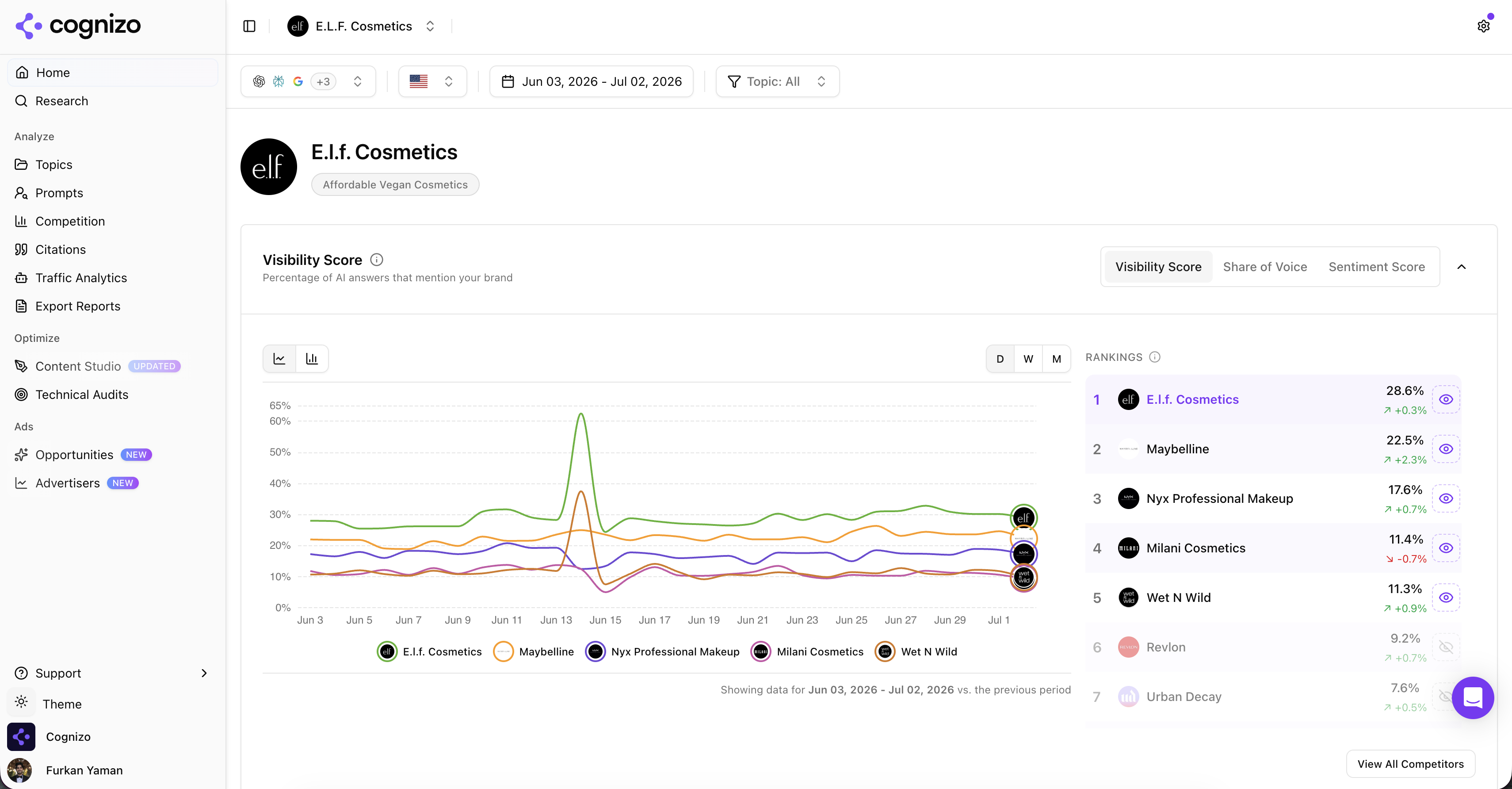
Cognizo is the strongest platform on this list for local and multi-location businesses, and the reason is Autopilot. Most platforms hand you a dashboard and leave execution to your team. Cognizo's AI agents instead run the full loop: market research, prompt planning, content production, publishing and lead attribution. For an operator with three locations and no in-house SEO team, that difference is the whole decision.
Every Cognizo plan includes unlimited regions, unlimited languages and unlimited seats, so tracking twelve cities costs the same as tracking one. Answer Engine Insights breaks results down by model, topic, prompt and region. So you can see that ChatGPT names you in Phoenix and ignores you in Tucson. From there, cite the source behind the gap. Cognizo also uses a UI scraping methodology. That captures the rendered answer a real customer sees, not only an API sample.
Beyond monitoring, Content Optimization generates briefs, outlines, drafts and FAQ blocks tied directly to visibility data. Technical site audits cover AI crawler readiness. Prompt Volumes, built on billions of real-world signals, reveals what buyers actually ask AI in your category. It also surfaces trending questions early. AI Traffic Analytics tracks GPTBot, ClaudeBot and OAI-SearchBot activity alongside real referral sessions and conversions per platform. ChatGPT Ads pairs organic visibility with paid placement. Attribution unifies through the OpenAI Conversions API, Google Ads and Google Search Console.
Platforms: ChatGPT, Google Gemini, Google AI Overviews, Google AI Mode, Perplexity, Microsoft Copilot, Meta AI, Claude, Grok, DeepSeek. Enterprise adds custom platform coverage.
Pricing: Platform $499/mo, Autopilot $899/mo, Enterprise custom. Full details sit on the Cognizo pricing page, and the Answer Engine Insights module covers the monitoring side in depth.
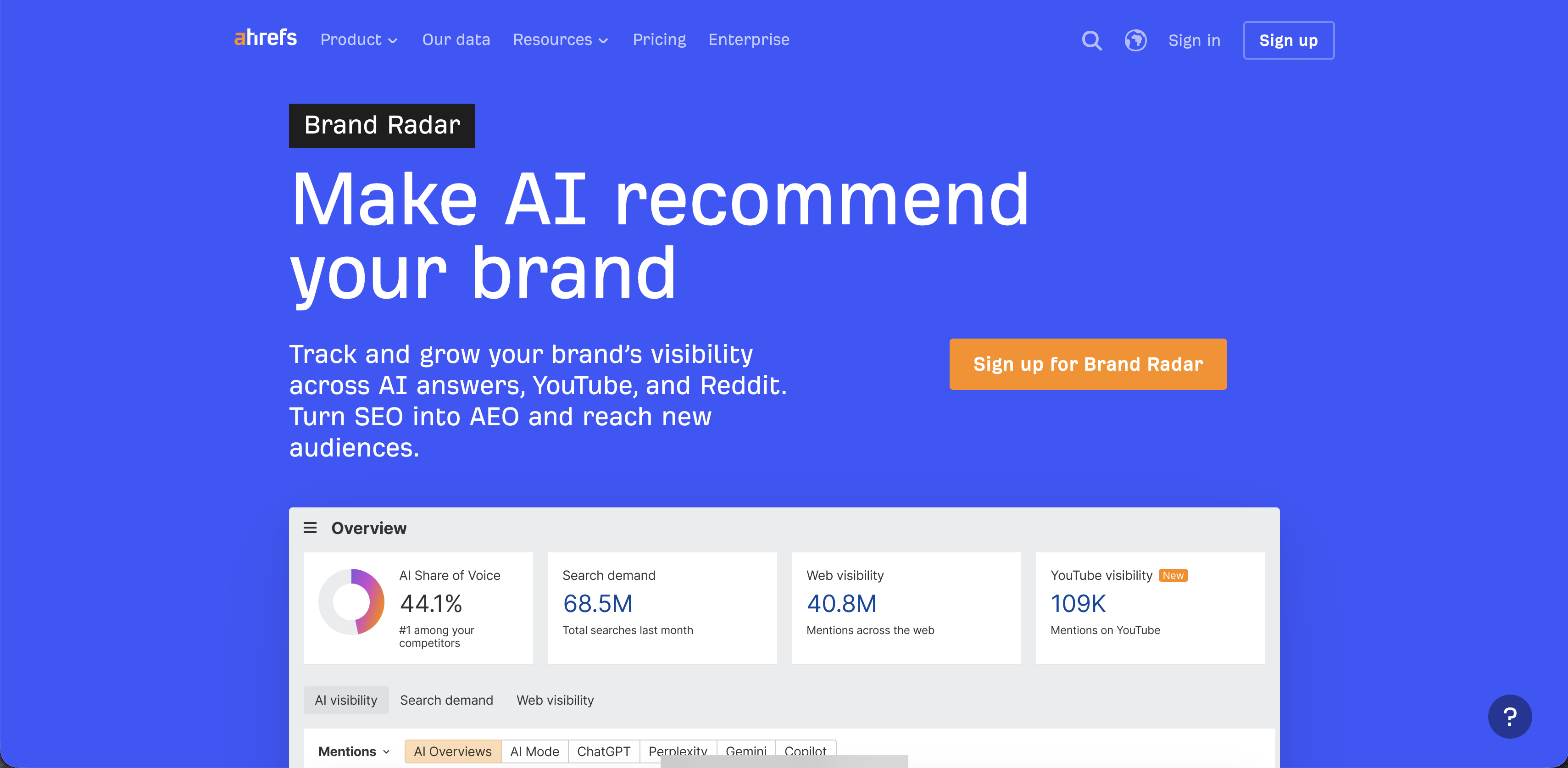
Ahrefs maintains a large backlink and keyword index alongside its AI tracking features. Meanwhile, its Brand Radar feature tracks brand mentions across AI platforms. Site audits, rank tracking and content analysis sit in the core toolset.
Pricing runs $129/mo for Lite, $249/mo, $449/mo, and $1,499/mo for Enterprise. Brand Radar AI starts at $199/mo. The Lite tier includes 5 prompts and 150 checks per month. Standalone prompt packages cost $50, $100 and $250, plus per-check overage. For a business tracking multiple cities, that prompt allocation is the number to model before signing.
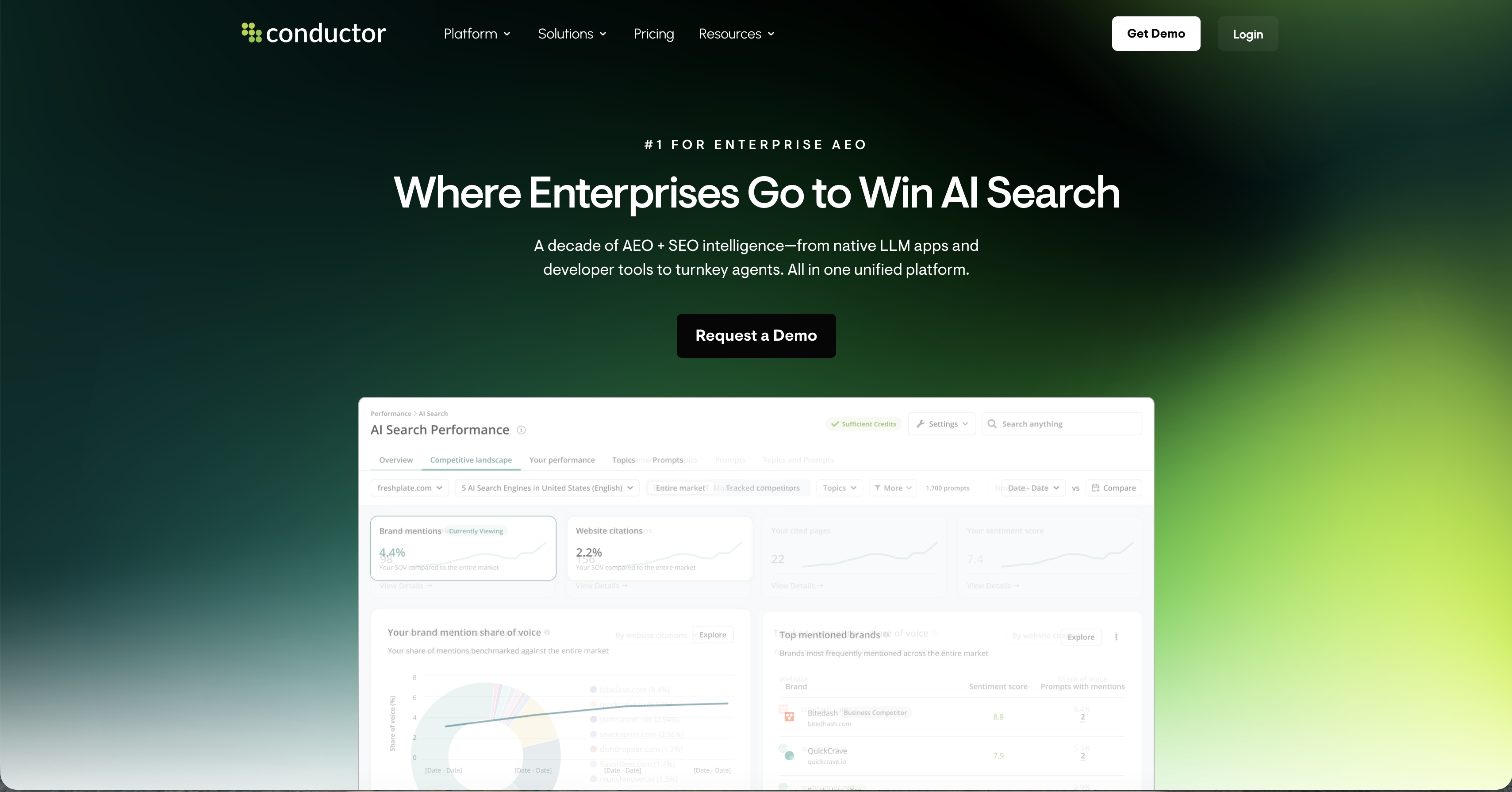
Conductor is an enterprise content and SEO platform that has extended into AI search monitoring. It covers technical audits, content intelligence and workflow management for distributed teams. Reporting is built for stakeholders outside the marketing function.
However, all Conductor pricing sits behind a sales conversation. Entry, mid and high tiers are undisclosed. The published allocation is 2,500 AI credits per year, and the platform's LLM coverage is not disclosed publicly. Any evaluation therefore starts with a call rather than a trial.
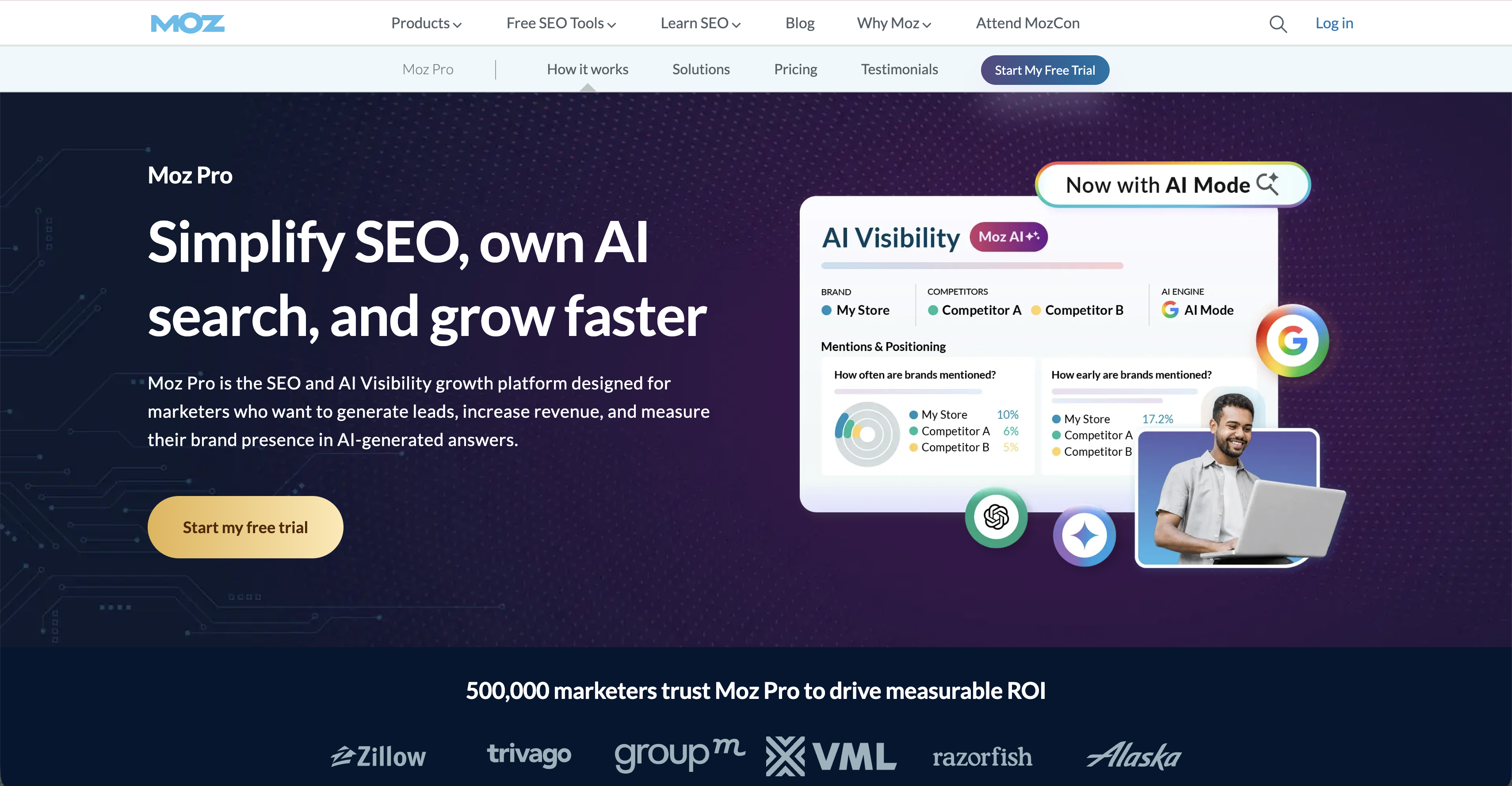
Moz Pro pairs its local SEO toolset with AI search tracking. Domain Authority, link research, keyword research, site crawls and local listing management are all present.
Pricing is $99/mo, $179/mo and $299/mo. The entry tier covers 50 prompts across 2 models, GPT and Gemini. Furthermore, prompt tracking runs weekly. Additional dashboards cost $20 each and an extra 100 prompts costs $50. Local prompt universes expand quickly across cities and services. Model the incremental prompt cost against your full location count.
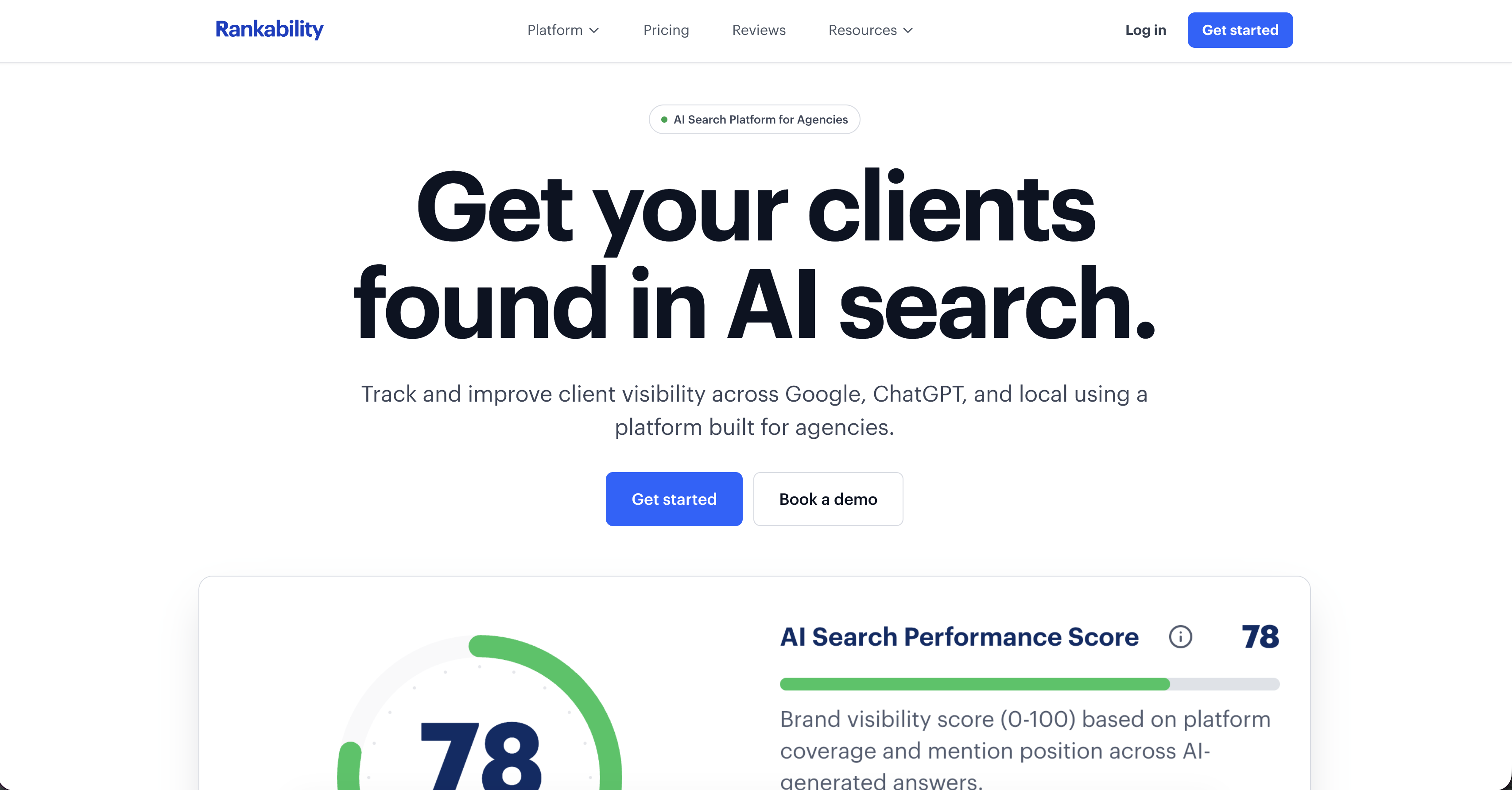
Rankability combines SEO content production with AI search tracking. It prices on a credit pool rather than a prompt cap. Content briefs, optimization scoring and editor tooling sit alongside the tracking features.
Pricing is $99/mo, $199/mo, $399/mo, and $799/mo for Agency. The entry tier includes 10,000 credits, and every tier carries unlimited clients and unlimited users with no feature gates. Rankability does not publish a prompt cap, and its LLM coverage is not disclosed. Credit-pooled pricing makes direct comparison against prompt-capped tools harder.
Chosenly operates as a service rather than software. Its team handles AI search research and content work on the client's behalf. The entry tier includes 600 prompts. Meanwhile, reporting and recommendations come through the engagement rather than a self-serve dashboard.
Pricing starts at $400/mo, with a White Glove tier at $4,000/mo carrying a three-month minimum commitment. Chosenly explicitly rejects daily prompt tracking and does not offer sentiment scoring. Its LLM coverage is not disclosed. The service model means the vendor's capacity sets how fast findings turn into published changes, not your own.
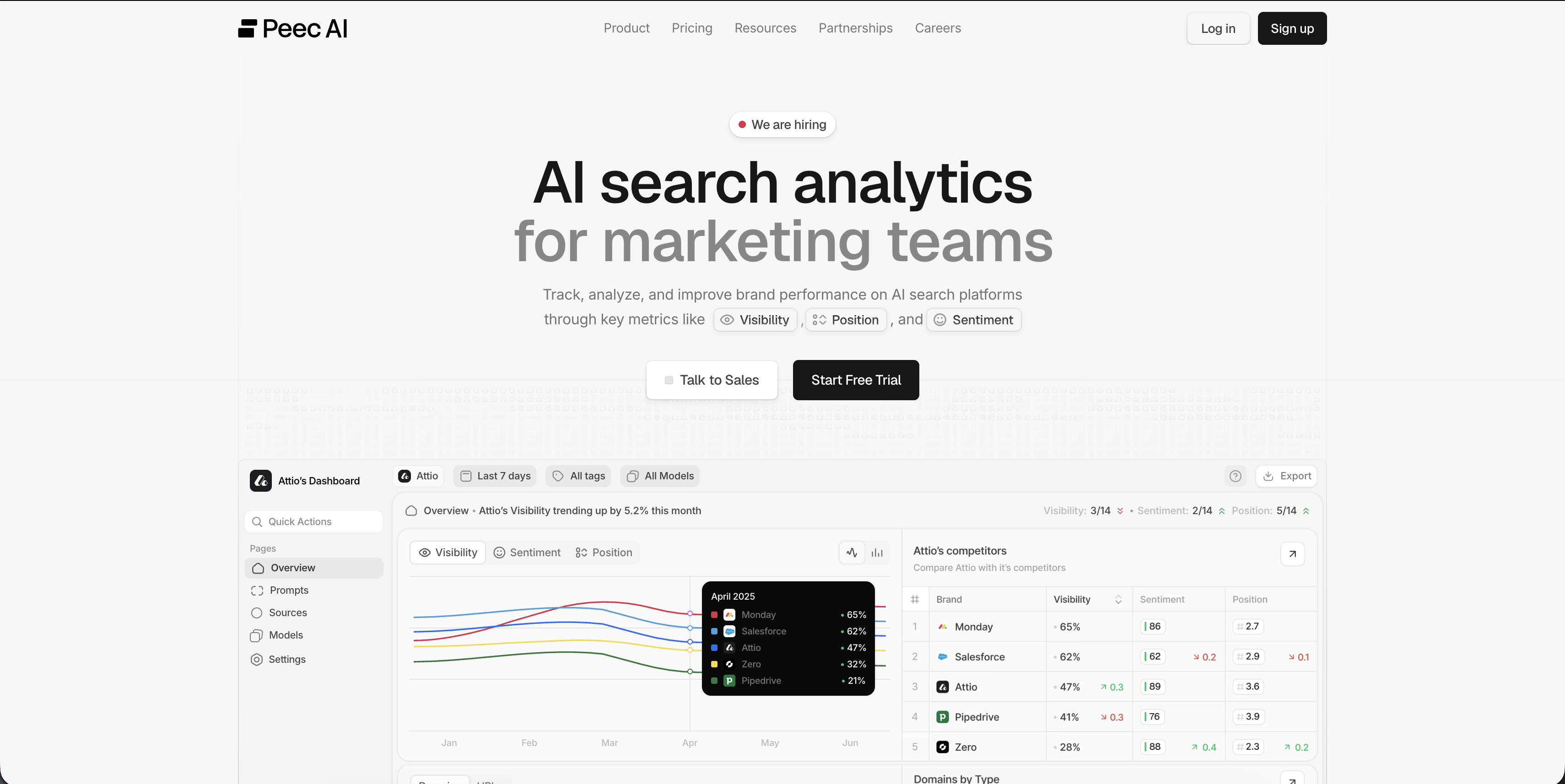
Peec AI tracks brand mentions and competitor visibility across AI platforms, with unlimited users included on its plans. The interface is built around visibility trends and competitive comparison, and it monitors responses across supported platforms.
Pricing starts at $80/mo, then $205/mo and $420/mo. The entry tier includes 50 prompts and 3 selectable models out of 6 in self-serve. Enterprise raises that to 11. Each additional model costs $30 to $140/mo depending on tier. Additionally, Peec AI produces no content output, so briefs, drafts and FAQ blocks stay with your team or another vendor.
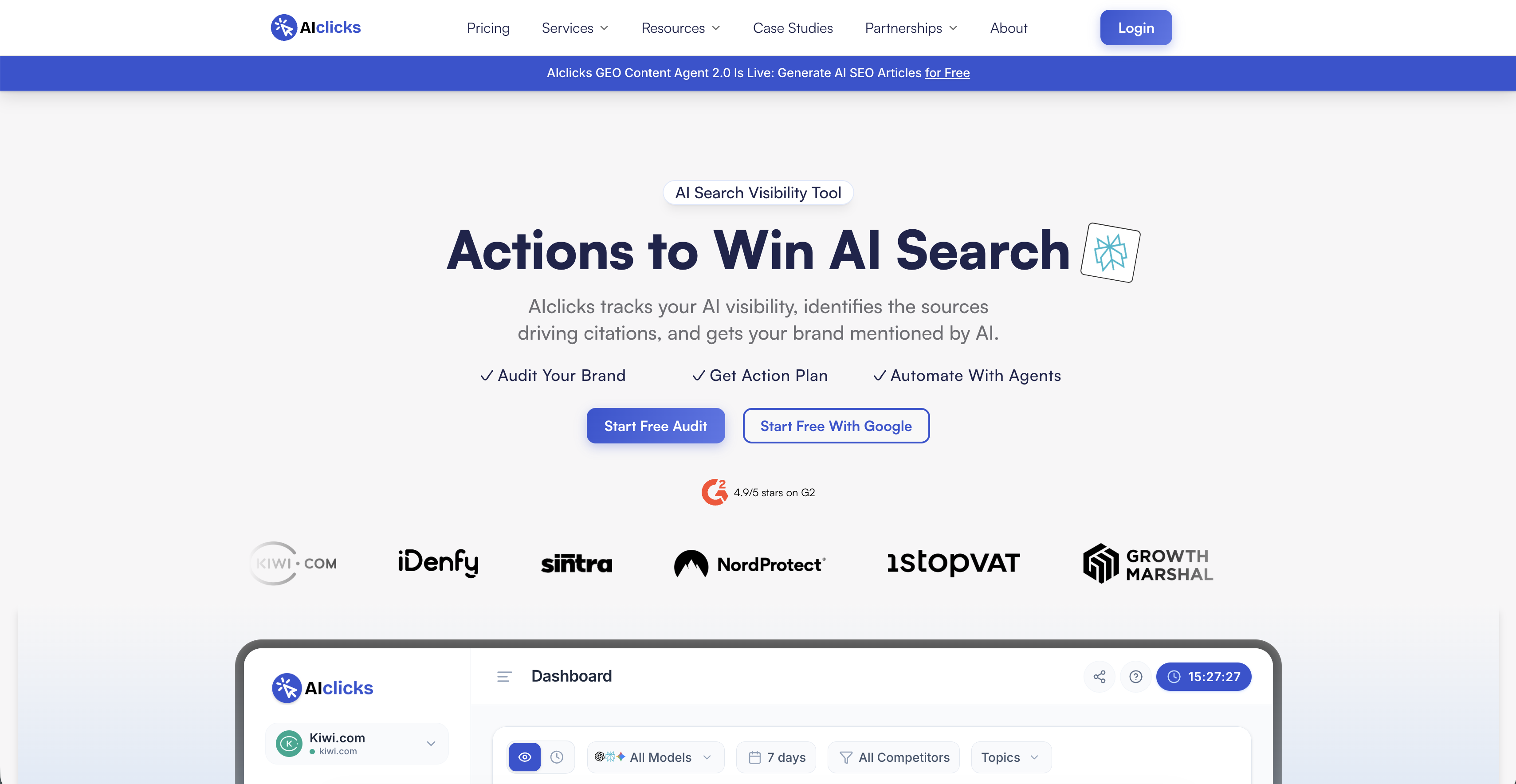
AIclicks tracks AI search visibility across a selectable model set and prices at the low end of the category. It reports prompt-level appearances and competitor comparisons, and it offers a three-day trial with no card required.
Pricing is $59/mo, $189/mo and $499/mo, with yearly billing discounted up to 29%. The entry tier includes 30 prompts and 3 selectable models out of 11. AIclicks' pricing card and comparison table disagree on the Starter website count. One lists 1 website, the other lists 3. Confirm that figure directly before purchase. Thirty prompts, though, covers a fraction of a multi-city local prompt universe.
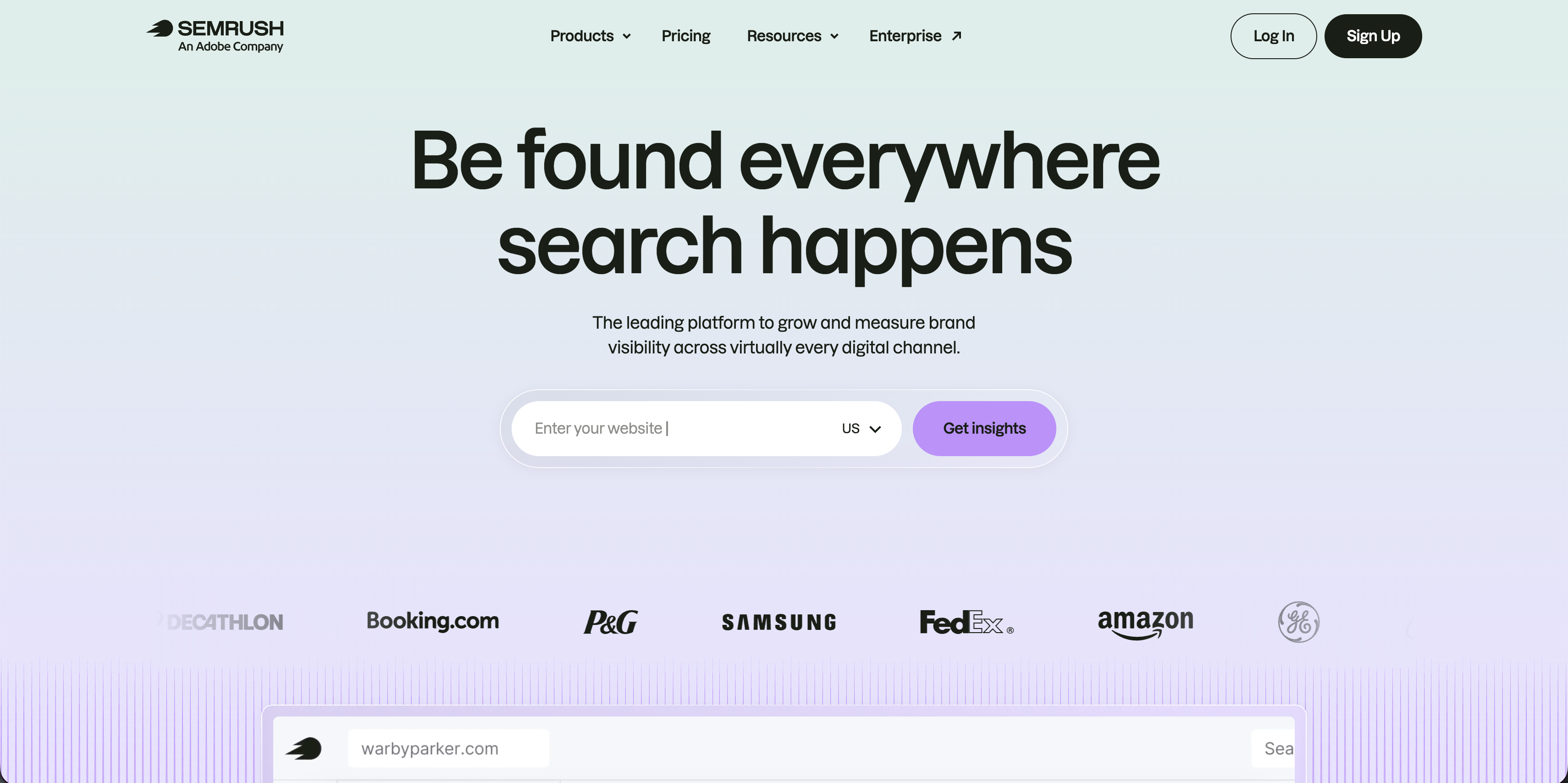
Semrush layers AI visibility tracking onto a platform many local businesses already use. Keyword research, competitor analysis and listing management sit in the same account. Its Listing Management product distributes NAP data to directories. That addresses the entity consistency problem SOCi identified as a driver of AI exclusion.
AI Visibility is sold per domain. Engine coverage runs roughly four to six platforms depending on configuration. Semrush has re-priced its AI products more than once in the past year. Pull current figures from its pricing page rather than a comparison article. Besides that, local packs, review monitoring and listing distribution sit in separate product lines with their own costs.
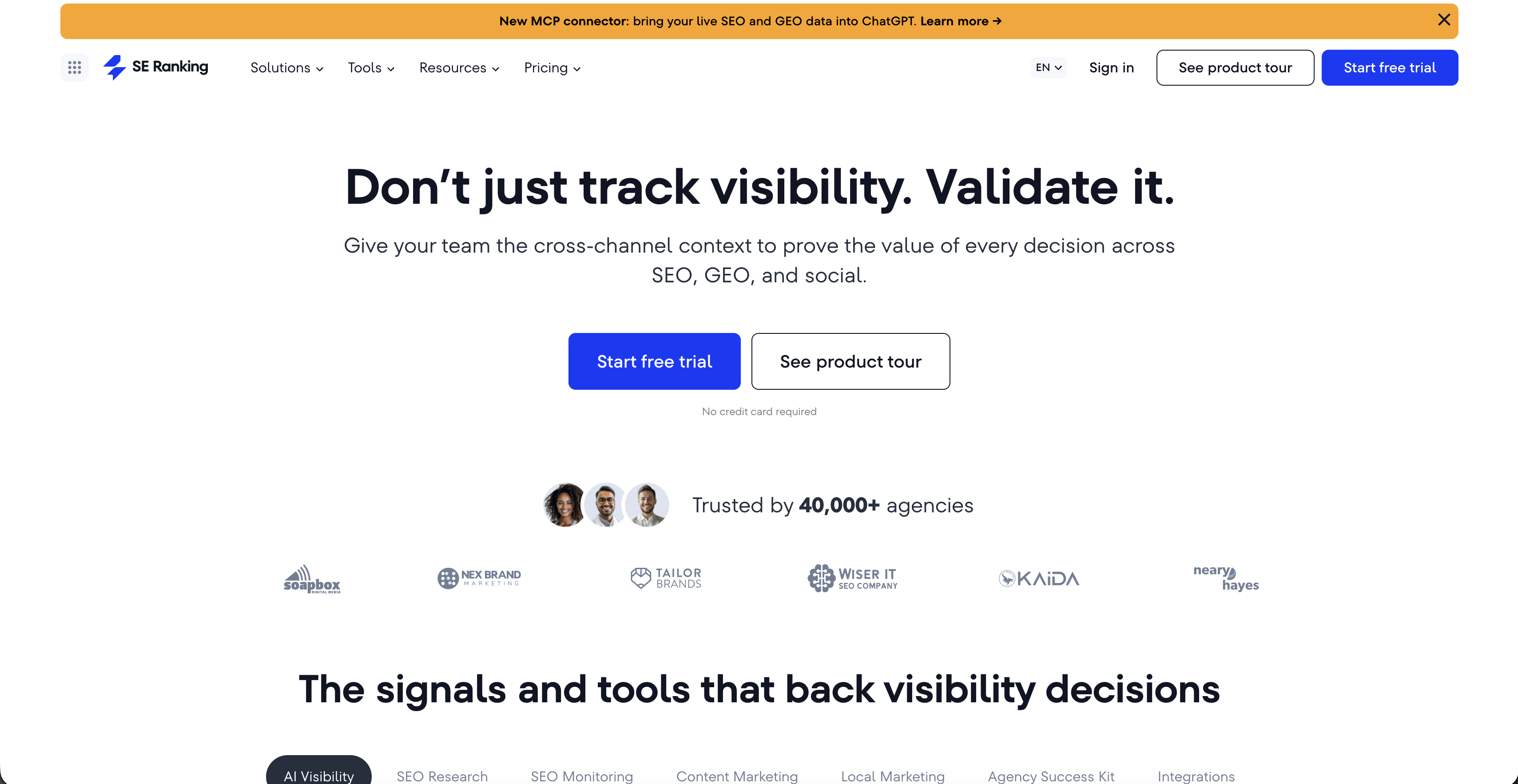
SE Ranking offers rank tracking, competitor research, site audits and a local marketing module. AI search tracking is an add-on rather than a core feature. The local module handles Google Business Profile management and review monitoring, which pairs with the AI tracking data.
Engine coverage on the AI Search add-on spans four platforms. The AI features are an add-on, so total cost depends on which base plan you attach them to. Annual billing changes the figure again. Verify both the base plan price and the add-on price on SE Ranking's pricing page. Then compare it against the platforms above.
Across these AI visibility tools, two patterns are visible. ChatGPT paid advertising appears in exactly one row, which makes it the clearest category-level gap in this market. Meanwhile, daily tracking has become table stakes rather than a differentiator. Treat its absence as a disqualifier, not its presence as an advantage.
Whichever platform you pick, use six metrics, and resist the urge to collapse them into one number. Visibility Score is the percentage of tracked prompts where your business is mentioned. It is the primary KPI, and it behaves like impressions in traditional SEO. Share of voice shows your proportion of total mentions against local competitors. Citation share shows your proportion of cited sources. Owned citations point at your own domain, while earned citations point at review sites, directories and local press.
Source mention rate tells you which third-party domains AI platforms trust in your category and city. Most local fixes live there. Sentiment captures whether the assistant describes you positively, negatively or neutrally. SOCi's rating data suggests it functions as a gate rather than a tiebreaker. Positioning accuracy catches misrepresentation, such as an assistant listing a service you dropped or a suburb you no longer cover. Our guide to tracking brand sentiment in AI-generated answers goes deeper on that fourth signal.
AI-referred traffic sits one stage further down the funnel, and it will always look small next to mention counts, because most AI answers include no clickable link. Hat Club illustrates the trap. Roughly 1 in 50 of its visitors arrived from AI referral traffic, a rounding error by traditional standards. That traffic still drove 20x revenue growth in AI-driven sales.
UTM tracking also has a structural blind spot for local businesses. Someone hears your name in an AI answer, then searches your brand or calls the number the assistant read out. That person never appears in referral data. Add a "how did you hear about us" field with an explicit AI option. Put it on your booking form, quote request and phone intake script. Pair that with the tactics in our local AI search optimization guide. Then you can attribute the channel without pretending clicks tell the story.
Even so, a single location competes in a prompt universe far larger than its keyword list. Every service, question variant and neighbourhood combination produces prompts where an assistant either names you or names a competitor. Single-location operators often see faster movement than large brands. Fixing one Google Business Profile, one set of location pages and one review flow covers the entire footprint. The work is smaller, so the compounding starts sooner. Tracking tells you which of those fixes actually changed an answer.
Timelines vary by platform, so treat any single benchmark with caution. Gemini is grounded in Google Maps, so profile corrections can surface within days once Google reflects them. ChatGPT and Perplexity depend on a mix of crawled pages and third-party sources. Changes there typically take several weeks to filter through. Earned citations on review sites or local press can take longer still. Continuous monitoring matters here precisely because the lag differs per platform. Without it, you cannot tell which change produced which result.
Indirectly, yes. ChatGPT does not read your profile the way Gemini reads Google Maps. Still, profile data propagates into aggregators, directories and review platforms that ChatGPT does draw on. SOCi found business profile information was only about 68% accurate on ChatGPT, against 100% on Gemini. That accuracy gap is largely an entity consistency problem. When your name, address, phone, categories and hours match everywhere, confidence rises. That holds on every platform, not only the Google-grounded ones.
Reviews now function closer to an eligibility filter than to a ranking factor. SOCi found ChatGPT-recommended locations averaged 4.3 stars. Brands with ratings near 3.4 stars and review response rates below 5% were effectively invisible in AI recommendations. In the map pack, proximity can still surface an average business. In a generated answer, the assistant builds a small shortlist and optimizes to avoid a bad recommendation. Middling ratings get excluded rather than ranked lower.
Track by city, always. A national prompt set averages your best and worst markets into one figure that hides both. You need to know that ChatGPT names you in one metro and ignores you in the next. The fix is usually market-specific. It might be a thin location page, an inconsistent listing, a weak review base or a directory favouring a competitor. Regional segmentation also lets you test a change in one market before rolling it across the rest.
Yes, although seat and client limits vary widely across AI visibility tools. Furthermore, the mechanics matter more than the sticker price. Some platforms charge per seat. Others cap clients per plan, or pool everything into credits that deplete unpredictably across accounts. Cognizo includes unlimited seats on every plan, which removes the per-seat penalty as an agency team grows. Our breakdown of AI visibility tools for agencies compares the account structures in more detail.
Schema helps machines parse your facts. Moreover, LocalBusiness, Service, FAQPage and Review markup all clarify the data an assistant needs. That said, schema alone rarely moves a citation. Fact density on the page itself tends to matter more. Put hours and service areas in a table, then add real pricing ranges, market-specific FAQs and named neighbourhoods. Treat schema as the labelling layer on top of substantive content, not as a substitute for it.
Expect a dip, and therefore plan for it. Every directory, aggregator and old citation carrying the previous address becomes a conflicting signal. Conflicting signals lower entity confidence across AI platforms. Update your Google Business Profile first, then Apple Maps, Bing Places, Yelp and the major aggregators. Your own site and location pages come next. Monitor positioning accuracy through the transition. Assistants keep repeating the old address until enough trusted sources agree on the new one.
.svg)

.svg)


