Get a free AI visibility report

Real-time AI brand mention alerts tell you the moment ChatGPT, Google AI, or another AI tool names your brand, so you can act before a wrong or negative answer spreads. This guide ranks the 10 tools worth knowing in 2026, starting with Cognizo.
When an AI tool gets your brand wrong, you often find out too late. A customer mentions it, a deal goes quiet, or a competitor starts showing up in answers where you used to. Real-time AI brand mention alerts close that gap by telling you as soon as your brand appears in an AI answer, along with how it is described and where the information came from. That early signal is the difference between fixing a problem quietly and cleaning up after it has spread.
The need is growing fast. McKinsey reports that just 16 percent of brands systematically track their AI search performance today, even as buyers increasingly rely on AI answers to choose what to buy. At the same time, Forrester predicts that advertisers will cut display ad budgets by 30 percent in 2026 as consumers leave the open web for AI-generated summaries and chat interfaces. The audience is moving into AI answers, and most brands still have no alarm system for what those answers say. Below are the 10 tools that give you one.
Before the list, it helps to know what separates a genuine alerting tool from a basic tracker. Coverage comes first: the tool should watch the platforms your buyers actually use, led by ChatGPT and Google AI. Speed comes next, since an alert that arrives weeks later is a report, not an alert. Depth matters too, because knowing you were mentioned is only half the story, and how you were described often matters more.
Two more things separate the strong tools from the rest. Accuracy depends on capturing the real answer a live user would see, not a simplified sample, because AI answers vary by user, model, and region. Finally, the best tools are action-oriented, pointing you toward the fix rather than leaving you with a dashboard and no next step.
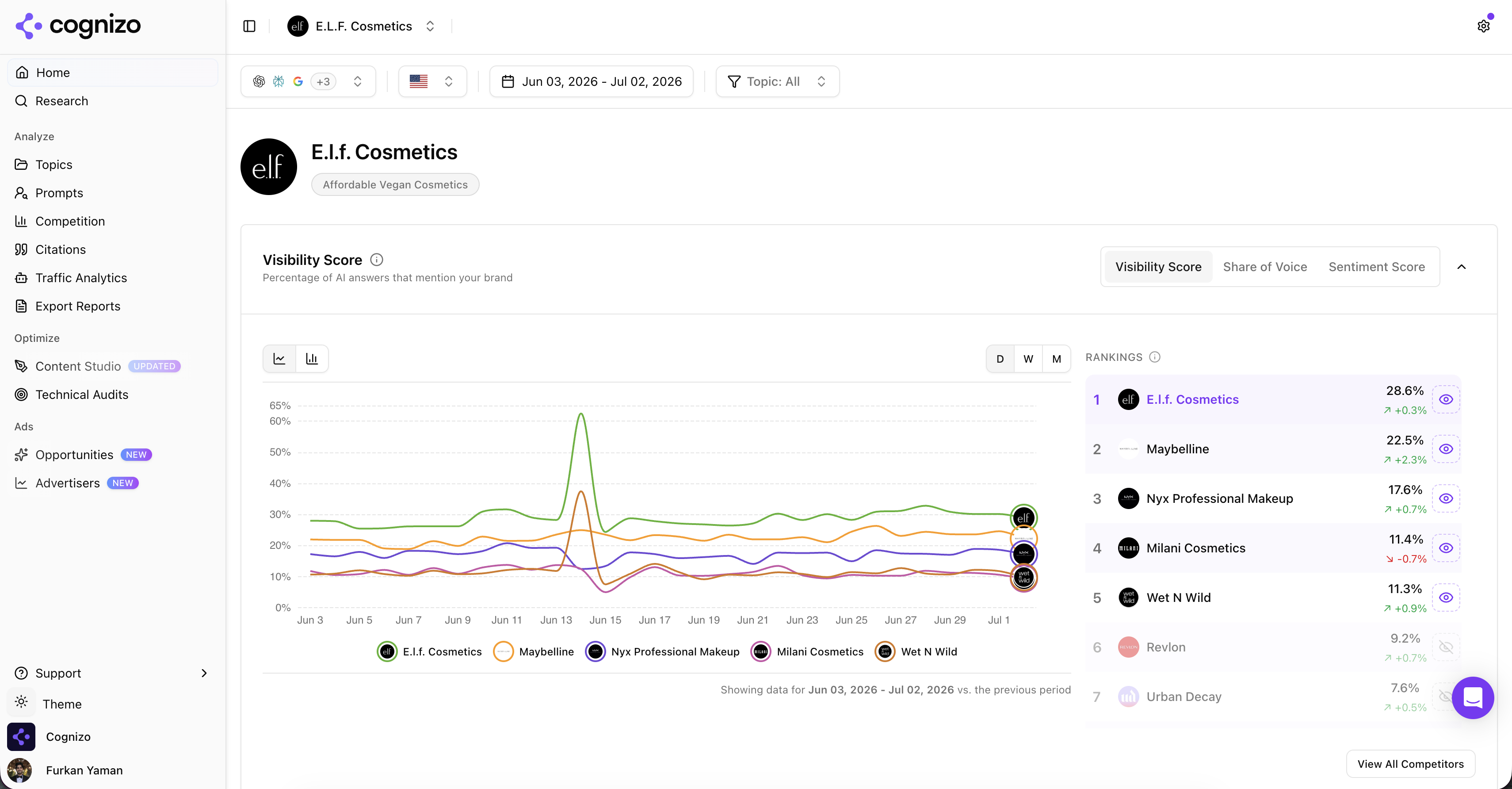
Cognizo covers the entire AI search workflow in one place, which is why it leads this list: prompt research, monitoring and benchmarking, content automation, and traffic attribution. Rather than sampling a fixed list of prompts, it tracks your brand's full prompt universe across all major AI platforms, including ChatGPT, Google AI answers, Gemini, Perplexity, Microsoft Copilot, Claude, Grok, Meta AI, and DeepSeek, so your alerts reflect the whole conversation about your brand rather than a narrow sample.
The workflow starts with discovering what your customers actually ask AI, then monitoring your visibility, citations, and sentiment as those answers change, with competitive benchmarking alongside. UI scraping captures the actual rendered answer a real user would see, rather than relying only on API responses, which improves accuracy over API-only tools. Alerts surface shifts in your Visibility Score, sentiment, and owned and earned citations, broken down by model, topic, prompt, and region, so you can see exactly where something moved.
Cognizo does not stop at telling you something changed. It automates content creation with AI agents, from briefs and outlines to full drafts, and measures AI-driven traffic so you can connect mentions to real business outcomes. It also combines this organic monitoring with paid ChatGPT advertising, so earned and paid AI presence live under one roof. Pricing starts at 499 dollars per month for the Growth plan and 999 dollars per month for the Pro plan, with a custom Enterprise tier, and every plan includes unlimited users so your whole team can watch alerts without per-seat fees. To go deeper on the wider category, see our guide to the best generative engine optimization tools.
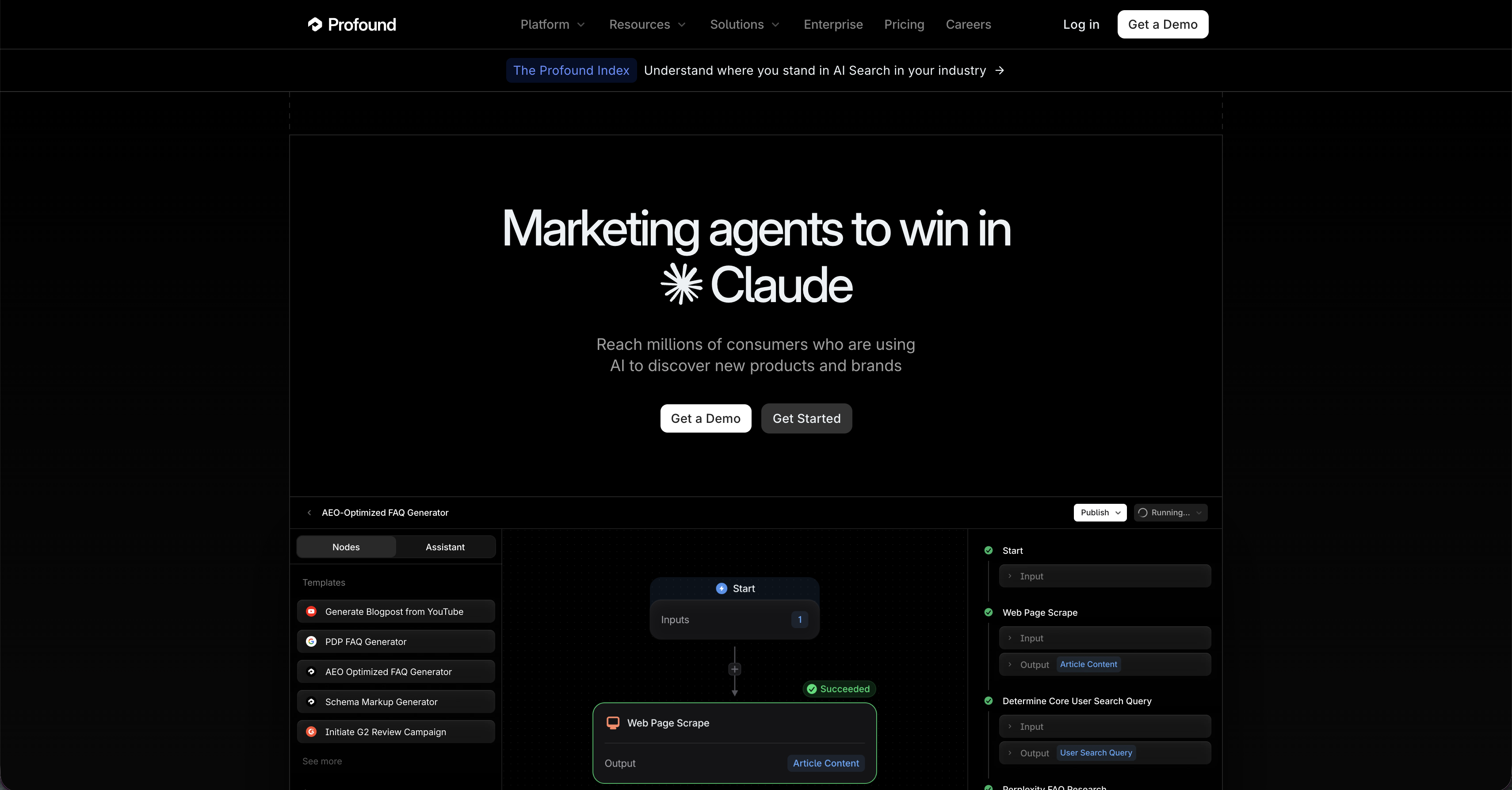
Profound monitors AI brand visibility and connects it to crawler activity, tracking bots such as GPTBot and ClaudeBot as they access your site. It reports on how brands appear across AI answer engines and surfaces the sources shaping those answers. Coverage spans a range of engines depending on plan, and the platform leans toward teams that want to tie AI mentions to crawler behavior. Pricing starts at 99 dollars per month.
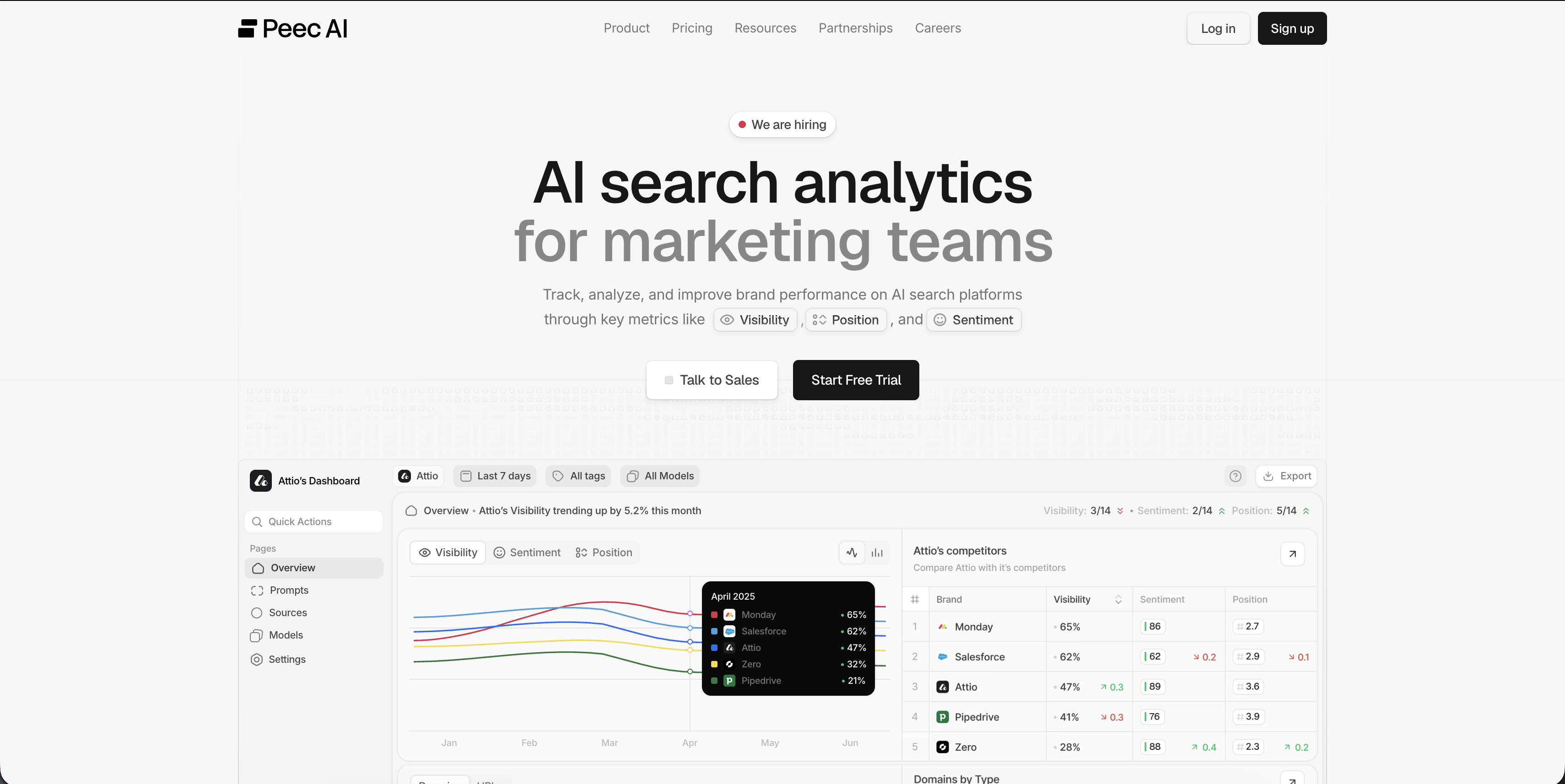
Peec AI tracks brand visibility across AI search platforms and includes competitor comparison in its reporting. It covers several engines depending on the plan and offers unlimited users on its pricing tiers. The tool focuses on monitoring how brands appear over time and benchmarking that against rivals. Pricing starts at 85 euros per month.
Semrush AI Visibility is the AI monitoring layer within the broader Semrush marketing suite. It tracks brand mentions and visibility across roughly four to six AI engines and sits alongside Semrush's traditional SEO and keyword tools, which appeals to teams already using the platform. Pricing starts at 99 dollars per month per domain.
AthenaHQ tracks brand presence across AI answer engines and offers a free entry tier for basic monitoring. Its coverage extends to five or more engines on paid plans, with reporting on how brands surface across those platforms. The free option lets smaller teams start tracking before committing budget. Paid plans start at 295 dollars per month.
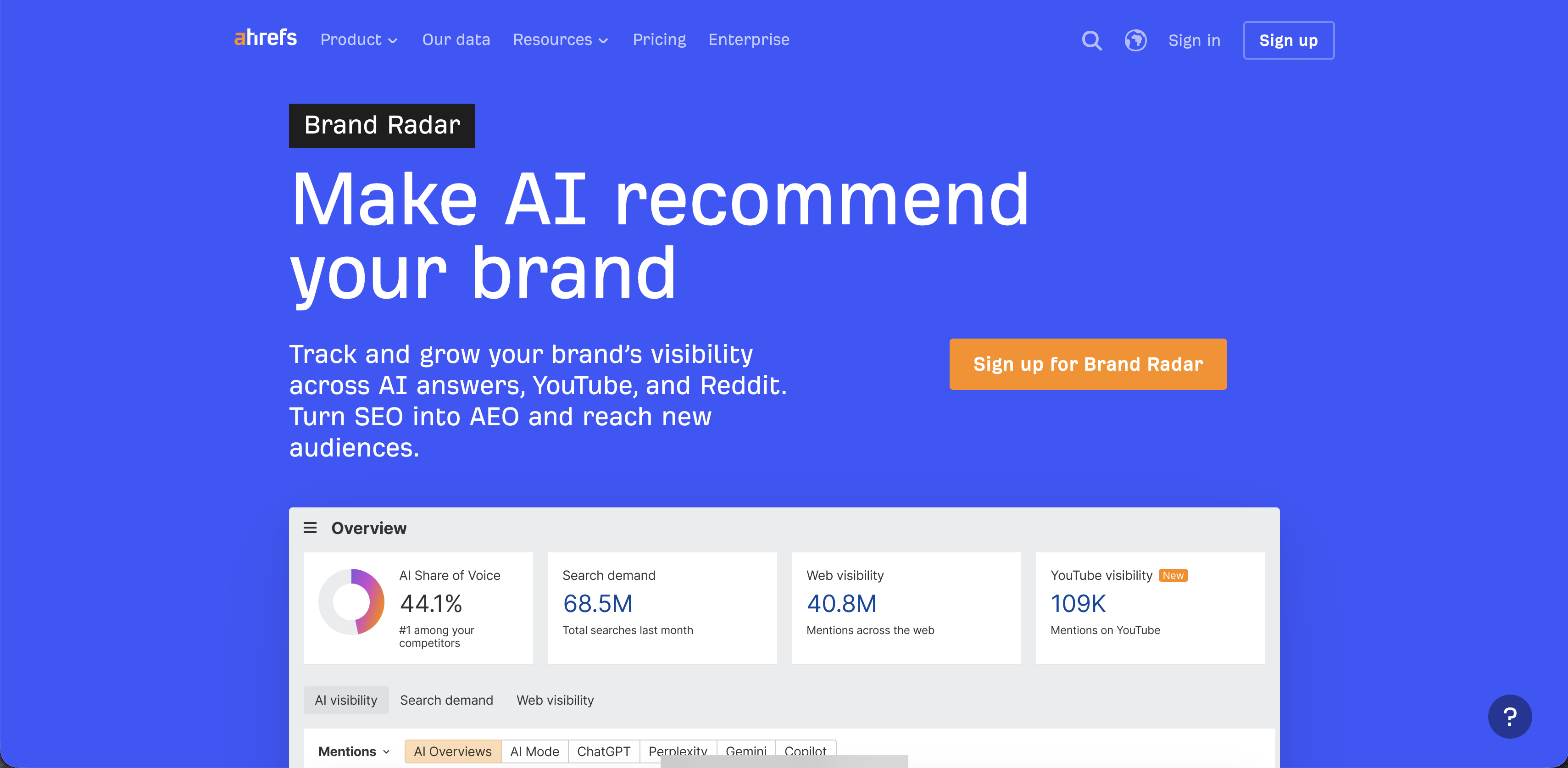
Ahrefs Brand Radar tracks brand mentions across AI answers and is part of the Ahrefs toolset used widely for backlinks and traditional SEO. It monitors brand appearances across about six AI platforms and integrates with Ahrefs data. Pricing is structured per platform, starting at 199 dollars per month per platform.
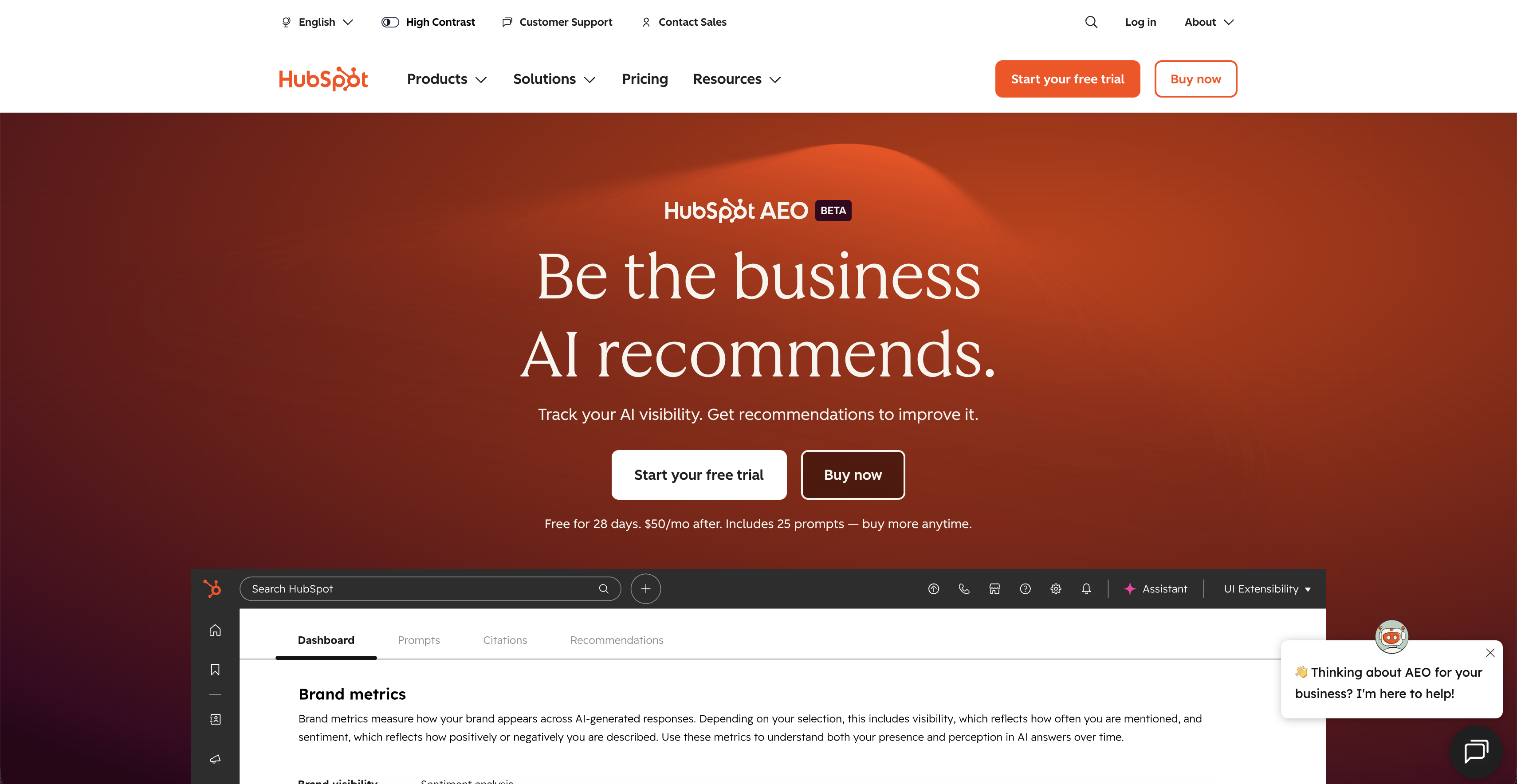
HubSpot AEO adds AI answer engine tracking to HubSpot's marketing platform, monitoring how brands appear across roughly three AI engines. It reports on brand visibility in AI-generated answers and connects to HubSpot's existing CRM and marketing data, keeping AI tracking alongside the tools some teams already use for campaigns and contacts. Pricing starts at 50 dollars per month.
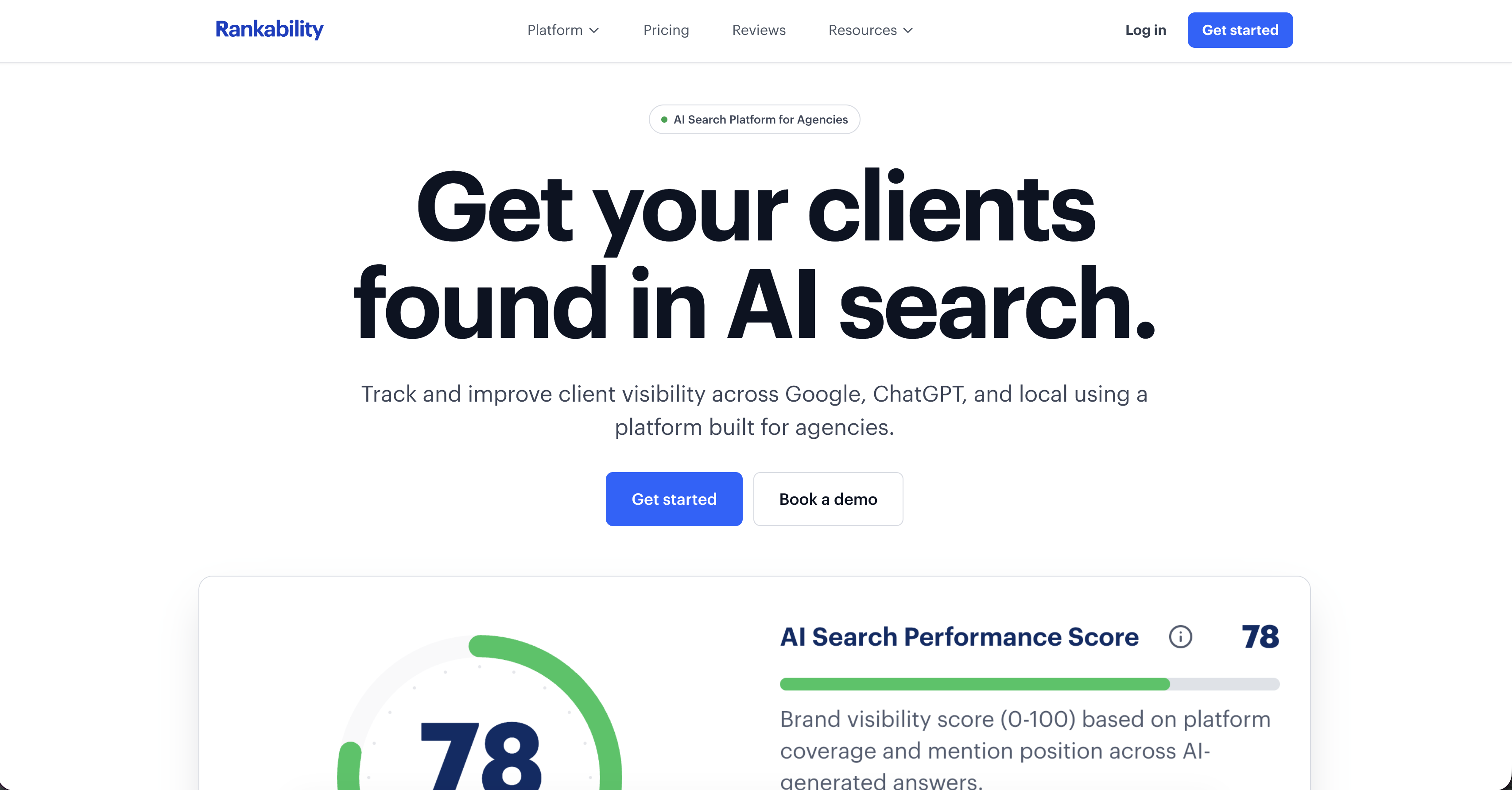
Rankability tracks AI search visibility across roughly seven engines and pairs its monitoring with content optimization features. It reports on where brands appear across supported AI platforms and is aimed at content-focused teams. Pricing starts at 79 dollars per month.
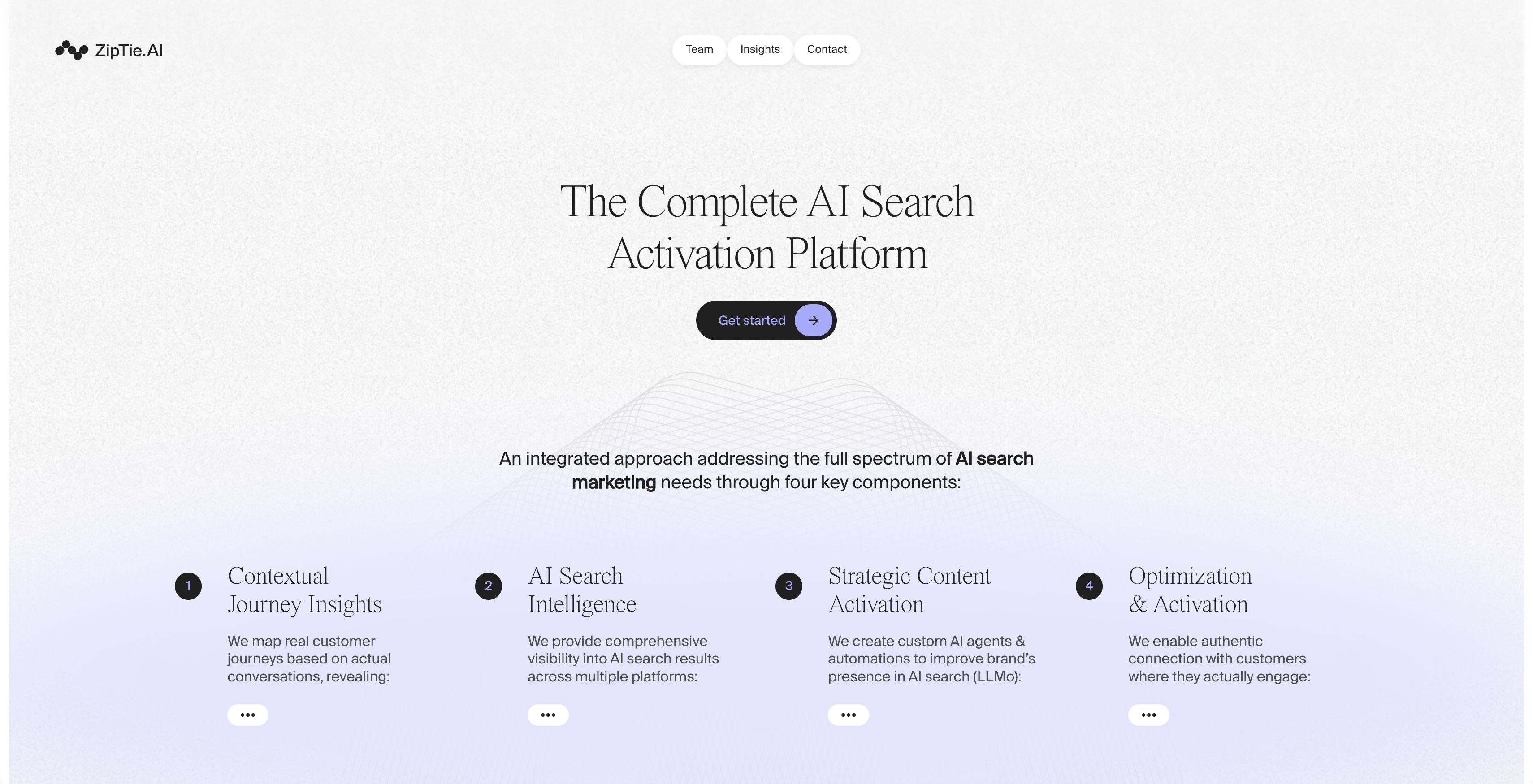
ZipTie monitors brand visibility across AI answer engines and reports on how and where brands appear. It covers about three engines and focuses on straightforward AI visibility tracking. The tool suits teams wanting a focused monitoring setup. Pricing starts at 69 dollars per month.
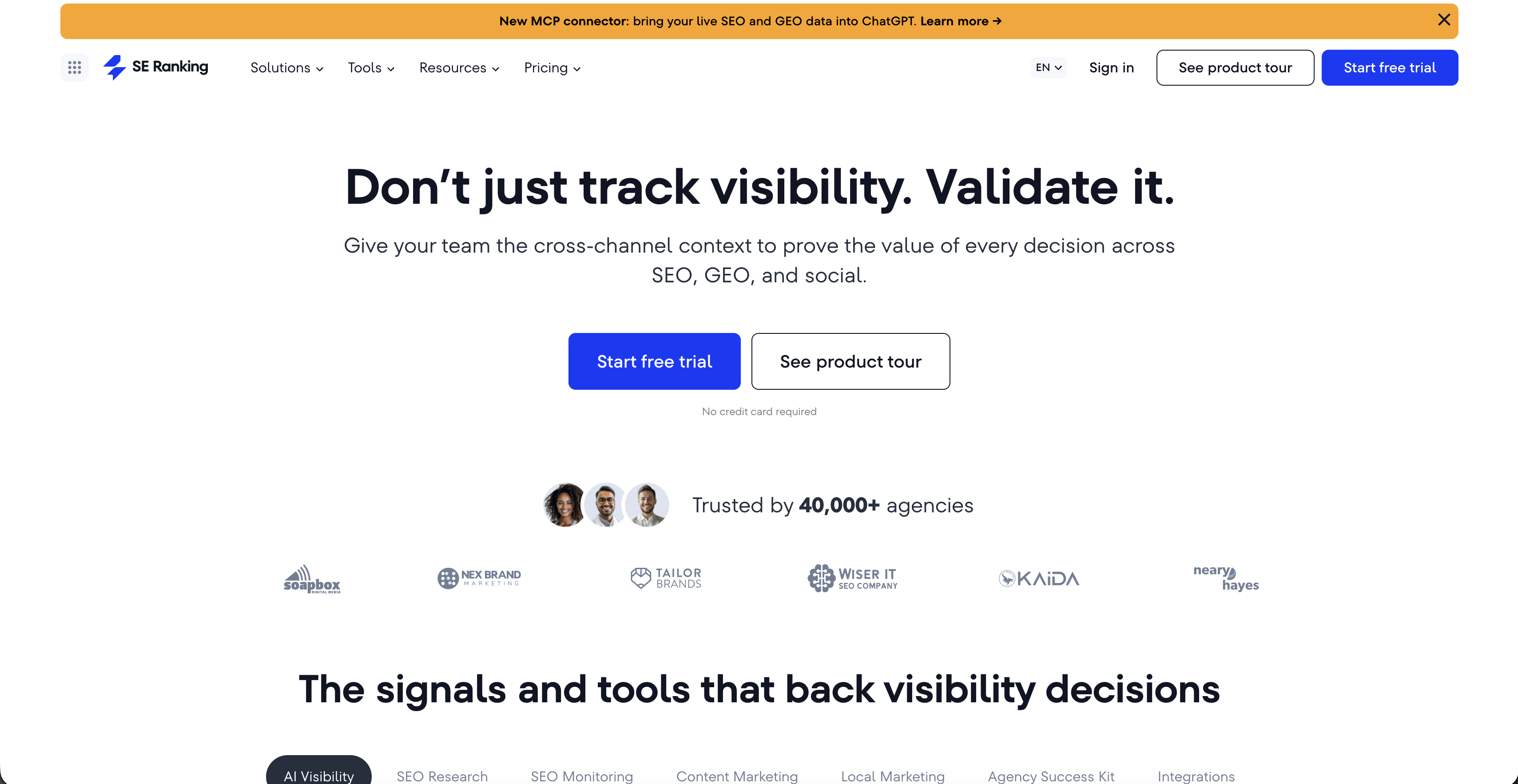
SE Ranking offers AI search tracking as an add-on to its established SEO platform, covering about four AI engines. It reports on AI visibility alongside its traditional rank tracking and keyword tools, which fits teams already managing SEO there. Pricing for the add-on starts at 103.20 dollars per month on an annual plan.
The table below summarizes starting price and AI engine coverage for each tool, so you can scan the field at a glance.
| # | Tool | Starting price | AI engines tracked |
|---|---|---|---|
| 1 | Cognizo | $499/mo | 10 |
| 2 | Profound | $99/mo | 1–10 |
| 3 | Peec AI | €85/mo | 3–7+ |
| 4 | Semrush AI Visibility | $99/mo per domain | 4–6 |
| 5 | AthenaHQ | Free / $295/mo | 5–9+ |
| 6 | Ahrefs Brand Radar | $199/mo/platform | 6 |
| 7 | HubSpot AEO | $50/mo | 3 |
| 8 | Rankability | $79/mo | 7 |
| 9 | ZipTie | $69/mo | 3 |
| 10 | SE Ranking | $103.20/mo | 4 |
Start with where your buyers ask questions. If most of them use ChatGPT and Google AI, prioritize a tool that covers both deeply and captures the real answers users see, since those two platforms drive the largest share of AI answers. From there, weigh how much depth you need: a small team validating the channel may want a lightweight tracker, while a brand treating AI search as a core channel will want sentiment, citation sources, and competitor benchmarking in one view. Whichever you pick, remember that alerts are one part of building lasting AI brand visibility, the ongoing presence your brand holds in AI answers.
Budget and team size shape the decision too. Some tools price per domain or per platform, which adds up quickly as coverage grows, while others include unlimited users so cost does not rise as your team does. Whatever you pick, the goal is the same: catch mentions early, understand how you are described, and know what to change. Cognizo is built to do all three in one place, and our overview of the best AI visibility tracking tools and guide on how to track brand mentions can help you go deeper.
You do not need a complex setup to begin. Start by listing the real questions your buyers ask AI about your category, since those prompts are what any tool will monitor on your behalf. Pick a tool whose platform coverage matches where those buyers are, connect it, and set a baseline so you can see how often you appear and how you are described today. That baseline turns every future alert into useful signal rather than noise.
From there, switch on alerts for the changes that matter most: a drop in your Visibility Score, a shift toward negative sentiment, or a competitor showing up where you are absent. Review what comes in on a regular rhythm, then route each fix to the right place, whether that is your own content or the third-party reviews and comparisons AI tools rely on. Treating alerts as a standing habit, rather than a one-time audit, is what keeps your brand accurately represented as AI answers change over time. For the strategy behind the monitoring, our guide to generative engine optimization explains how to improve what those alerts reveal.
Google Alerts notifies you when your brand appears on web pages that Google indexes, such as articles and blog posts. AI brand mention alerts watch something different: how AI tools like ChatGPT and Google AI describe your brand inside their answers. The distinction matters because an AI answer can mention you without linking to any page, so it would never trigger a traditional web alert. As buyers increasingly read AI answers instead of clicking links, monitoring the answers themselves becomes the only way to see what those buyers actually see.
It varies by tool and plan. Dedicated AI monitoring platforms typically check your tracked prompts on a regular schedule and flag changes soon after they appear, rather than in the same instant a single user sees them. The practical goal is to catch a shift within a useful window, days rather than weeks, so you can respond before it spreads. When comparing tools, look at how often they refresh your prompts and whether they notify you of changes automatically or expect you to log in and check.
Yes, and this is one of the most valuable capabilities to look for. Being mentioned is only half the picture, because an AI answer can name you alongside praise, criticism, or an unfavorable comparison. Tools that track sentiment tell you whether the description is positive, neutral, or negative, which is often more actionable than the mention itself. If you find AI describing you unfavorably, the fix usually lives off your own site, in the reviews, comparisons, and discussions the AI draws on when forming its answer.
Focus first on the platforms your buyers actually use, which for most brands means ChatGPT and Google AI. Spreading attention across every possible platform early on tends to dilute effort for little return, since some tools have small audiences relative to the leaders. Once your priority platforms are covered and you are acting on what you learn, expanding to secondary platforms like Claude or Microsoft Copilot makes sense, especially for business-focused brands. The right number of platforms is the number where your customers are, not the largest count a tool advertises.
Many can, and competitor tracking is a common feature in AI monitoring platforms. Watching how often rivals appear, and how they are described, shows you where they are winning answers you are absent from, which is useful for prioritizing your own work. Comparing your Visibility Score against competitors over time also reveals whether you are gaining or losing ground in the answers buyers read. If competitive benchmarking matters to you, confirm the tool tracks named competitors rather than only your own brand.
They complement rather than replace traditional SEO tools. Your SEO stack tracks rankings, backlinks, and organic traffic, while AI mention alerts track a separate surface: the answers AI tools generate, which often carry no click. Some platforms bundle both, adding AI monitoring alongside familiar SEO features, while dedicated AI tools focus solely on the answer layer. The two work together, since the content and reputation that help you rank also help AI tools cite you, so treating them as one connected effort tends to work better than siloing them.
.svg)

.svg)


